BLM camping refers to camping on public land managed by the Bureau of Land Management (BLM). Depending on the area, that could mean staying in a developed campground with designated campsites and basic amenities or dispersed camping outside established campgrounds, where you’re responsible for bringing everything you need and following local rules.
Whether you’re traveling in a motorhome or camping from a van, knowing where camping is allowed is only part of the planning process. This guide explains the difference between developed and dispersed BLM camping, covers the rules you should know before you go, and shows you how to find legal campsites while using recent reviews to plan a smoother trip.
TL;DR
- Dispersed BLM camping is often free, but not every area allows camping outside developed campgrounds.
- Stay limits, fire restrictions, and camping rules vary by BLM field office, so check local regulations before you arrive.
- Read recent reviews and confirm road conditions, access, and campsite suitability before leaving pavement.
What Is BLM Camping?
The Bureau of Land Management (BLM) manages more than 245 million acres of public land, most of it in the western United States. Unlike national parks, BLM land is managed for multiple uses, including recreation, grazing, energy development, conservation, and wildlife habitat. That means you can camp in these places, but the rules depend on the local field office and the specific area you’re visiting.
When camping is permitted, you’ll generally have two options: developed campgrounds or dispersed camping. Developed campgrounds offer designated campsites and basic amenities, while dispersed camping lets you camp outside established campgrounds in areas where it’s allowed. Here’s how they compare:
| Developed campground | Dispersed camping |
|---|---|
| Designated campsites with basic amenities such as picnic tables, fire rings, or vault toilets | Camping outside established campgrounds in designated areas where allowed |
| May charge a nightly fee or require reservations | Usually free, though local rules and permits may apply |
| Better suited for campers who want easier access and more facilities | Better suited for campers who are self-sufficient and comfortable without services |
| Roads are generally easier for most RVs and trailers | Access roads may be rough, narrow, steep, or unsuitable for larger rigs |
| Amenities and campground rules are clearly posted | Campers are responsible for following local regulations and Leave No Trace practices |
Where Can You Camp on BLM Land?
Not every acre of BLM land is open to camping, but many areas offer opportunities for both developed and dispersed camping. The type of camping available depends on local regulations, land use, seasonal conditions, and resource protection needs.
Developed campgrounds
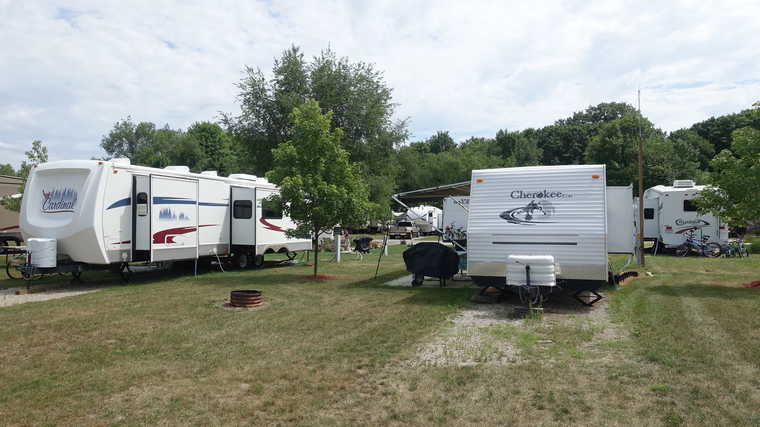
BLM developed campgrounds are the easiest option if you want a designated campsite and a few basic amenities. Depending on the campground, you may find picnic tables, fire rings, vault toilets, trash collection, and potable water.
Some campgrounds charge a nightly fee, while others are first come, first served. Reservations are available at select locations but are less common than at national and state parks.
Dispersed camping
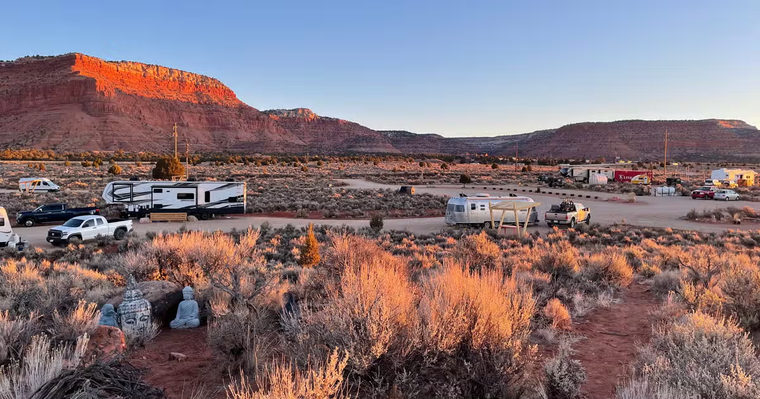
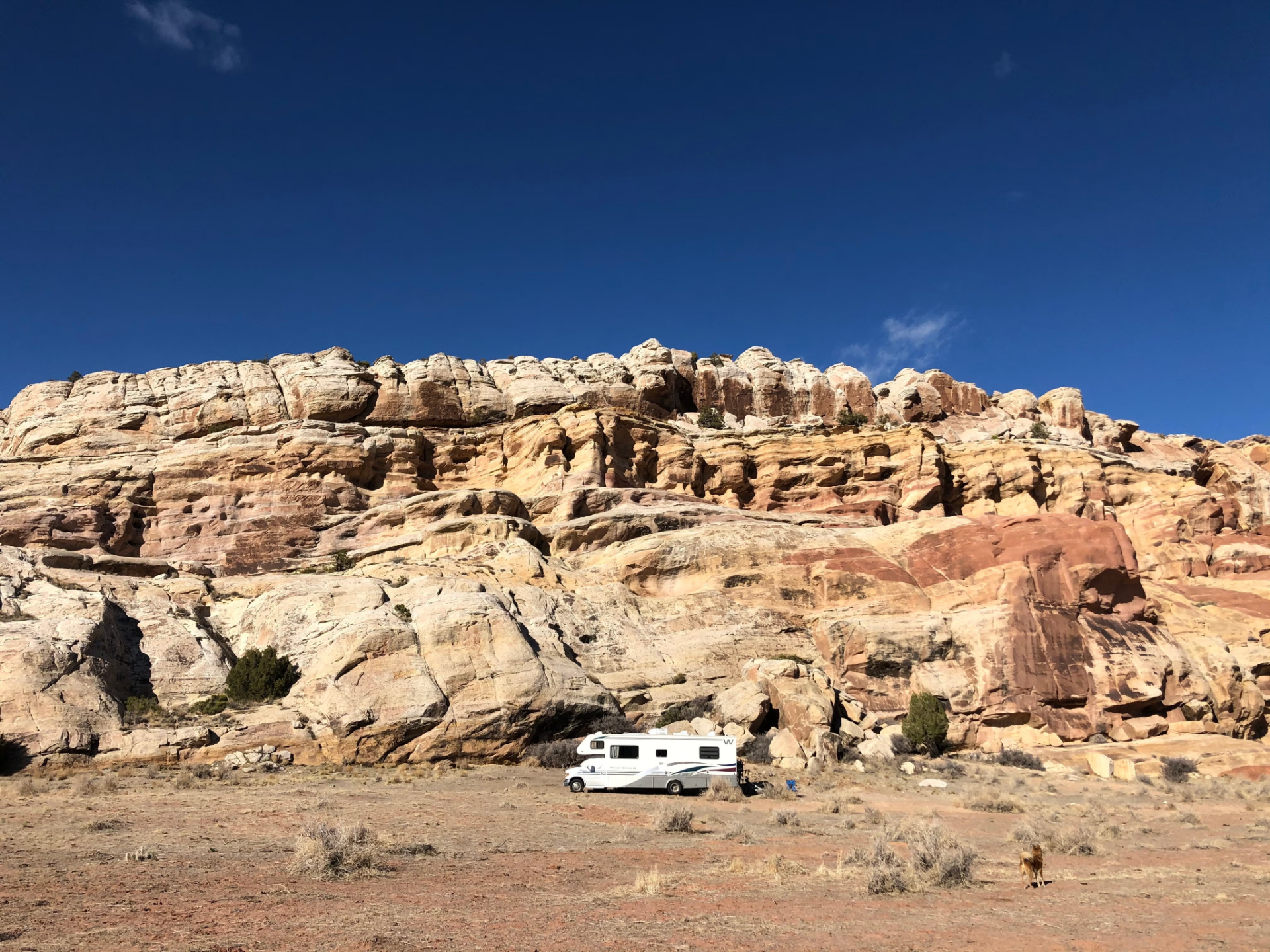
Dispersed camping lets you camp outside developed campgrounds in areas where it’s allowed. These sites typically have no hookups, restrooms, potable water, or trash service, so you’ll need to arrive prepared and pack out everything you bring in.
Many dispersed camping areas are accessible by forest or desert roads, but conditions vary widely, making it important to check recent road reports before you go.
Areas where you’re not allowed to camp
Some BLM land is closed to camping year-round or temporarily because of wildfire risk, habitat protection, restoration projects, heavy recreation use, or other management needs. Camping may also be restricted to designated sites in certain popular areas.
Before choosing a campsite, check the local BLM field office for current rules and closures rather than assuming camping is allowed simply because the land is public.
BLM Camping Rules You Should Know Before You Go
Most BLM camping rules are straightforward, but they vary by location. Before you set up camp, check the local BLM field office for current regulations, seasonal closures, and fire restrictions, since conditions can change throughout the year.
- Stay limits: Most dispersed camping areas have a 14-day stay limit within a 28-day period and relocate at least 25 miles away, though some locations have different limits.
- Leave No Trace: Camp on durable surfaces, pack out all trash, and leave your campsite in the same or better condition than you found it.
- Campfires: Fire restrictions change frequently, especially during wildfire season. In some areas, campfires may be prohibited entirely or allowed only in designated fire rings.
- Human waste: Use a restroom when one is available. In dispersed areas without facilities, dig a cathole 6 to 8 inches deep at least 200 feet from water sources, trails, and campsites, or pack waste out using a portable toilet/WAG bag where required. Never leave toilet paper behind.
- Pets: Pets are generally allowed on BLM land, but they should remain under your control at all times. Some developed campgrounds may have additional leash requirements.
- Target shooting: Recreational shooting is permitted in many BLM areas but may be restricted or prohibited because of fire danger, nearby recreation areas, wildlife protection, or local safety regulations. Always verify the rules before you go.
- Seasonal closures: Roads and camping areas may close because of snow, flooding, wildfire, habitat protection, or restoration work.
- Local regulations: Not every BLM field office follows the same rules. Always check the regulations for the specific area you plan to visit instead of assuming the rules are the same everywhere.
How to Find BLM Campsites
Finding a legal BLM campsite is easier when you have a plan before you leave home. These steps can help you narrow your options, avoid common surprises, and choose a campsite that’s a good match for your RV and travel plans.
Step 1: Start with your destination or route
Begin with the area where you want to camp or the route you plan to drive. If you’re using Campendium RV PRO, build your trip in the Trip Planner so you can view your route on the map and look for BLM campsites along the way. If you’re using the free version, search for the city, park, landmark, or region where you want to camp.
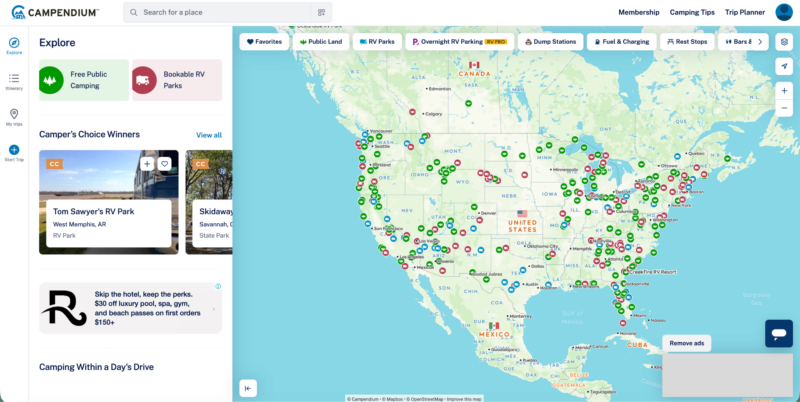
Choose a few possible camping areas before travel day. Trying to find a legal campsite after sunset is rarely the best way to start a camping trip. A map-based search also helps you compare nearby fuel stations, grocery stores, dump stations, water fills, and other useful stops.
Step 2: Filter for BLM and free camping
Search Campendium for the area you want to visit, then select the Public Land category and use the filters to narrow your results. Set the nightly rate to Free and choose BLM under Property Type to focus on public-land campsites. Campendium RV PRO members can also turn on public land overlays to see where BLM land is located.
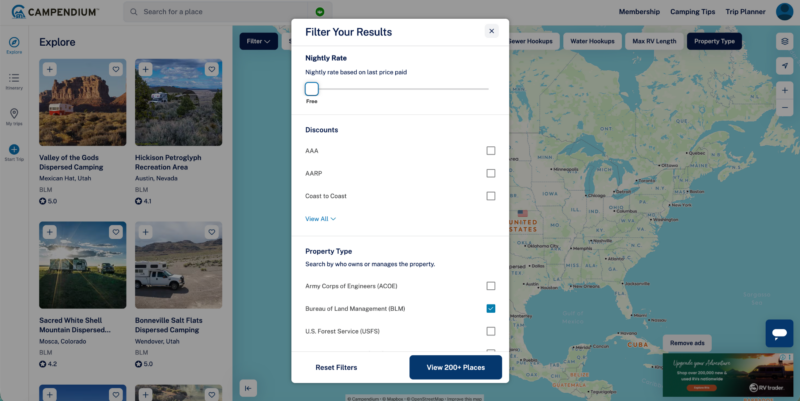
A campsite listed as free isn’t automatically open for camping. Review the listing details and confirm who manages the land before making plans.
Step 3: Compare reviews before you drive
Recent reviews often reveal conditions that maps can’t. Look for repeated comments about rough or washed-out roads, deep sand or mud, low branches, steep grades, tight turns, turnaround space, crowding, seasonal closures, and fire restrictions.
Check campsite photos to get a better sense of the terrain, and pay attention to reviews from campers with rigs similar to yours. A road that works well for a camper van may be much less comfortable for a large fifth wheel or Class A motorhome. If you’ll need to stay connected, review reported cell signal information as another planning tool rather than a guarantee.
Step 4: Save backup campsites and download maps
Save at least two backup campsites before you leave pavement. Your first choice could be occupied, temporarily closed, or inaccessible because of weather or road conditions.
If you’re traveling into an area with limited service, download the maps you’ll need before you lose reception. With Offline Maps (coming soon), Campendium RV PRO members will be able to keep their maps available even after cell service drops.
Step 5: Confirm local rules and arrive before dark
Before you head out, check the local BLM field office for current camping rules, fire restrictions, stay limits, permit requirements, and seasonal closures. Posted signs and current agency guidance always take precedence over campground reviews.
Plan to arrive with plenty of daylight remaining. You’ll have more time to evaluate road conditions, choose a suitable campsite, and turn around safely if your first option doesn’t work out.
Can Your RV Handle a BLM Campsite?
Many BLM campsites are accessible to RVs, but the road to the campsite is often more challenging than the campsite itself. Before you leave the pavement, think about whether your rig can safely handle the drive, not just whether there’s enough room to park.
Large Class A motorhomes, fifth wheels, and long travel trailers may struggle with narrow roads, steep grades, sharp switchbacks, low tree branches, soft sand, or deep ruts. Even if the campsite is spacious, there may not be enough room to turn around if the road ends or conditions deteriorate.
Smaller trailers, camper vans, truck campers, and overlanding vehicles generally have more flexibility on rough or narrow roads, but they’re not immune to mud, washouts, or seasonal damage.
If you’re uncertain about the last few miles, consider scouting the road with your tow vehicle or another smaller vehicle before committing your RV. Spending a few extra minutes checking the route is much easier than trying to back a large rig down a narrow dirt road.
Common Mistakes to Avoid in BLM Camping
Even experienced campers occasionally learn these lessons the hard way. A little planning before you leave can save you from a long backtrack or an unexpected change of plans.
- Arriving after dark: It’s much harder to judge road conditions, spot hazards, or find a suitable campsite once the sun goes down.
- Assuming all public land allows camping: Public land doesn’t automatically mean camping is permitted. Some areas require designated campsites, while others may be closed seasonally or year-round.
- Ignoring the weather forecast: A dry dirt road can quickly become muddy, washed out, or impassable after rain. Snow, flash flooding, and wildfire conditions can also change access with little notice.
- Relying on outdated reviews: Conditions on BLM land change over time. Prioritize recent reviews, especially when they mention road access, closures, or campsite conditions.
- Skipping backup campsites: Your first choice may be full, closed, or unsuitable for your RV. Saving a couple of alternatives gives you options without scrambling at the end of the day.
- Underestimating your water needs: Most dispersed campsites have no potable water or services. Free camping is only free if you bring enough water to enjoy it.
Frequently Asked Questions
BLM stands for the Bureau of Land Management, the federal agency that manages millions of acres of public land, primarily in the western United States. Many of these lands are open to camping, recreation, and other public uses.
Yes, dispersed camping is often free on BLM land where it’s permitted. However, some developed BLM campgrounds charge nightly fees or require reservations.
In many areas, yes, if camping is allowed at that location and you follow local regulations. Always check whether you’re in an area where dispersed camping or overnight stays are permitted before parking for the night.
Many dispersed camping areas have a 14-day stay limit within a 28-day period, although some locations have different rules. Check the local BLM field office for the regulations that apply to your destination.
Yes. Many BLM campgrounds and dispersed camping areas accommodate RVs, but road conditions vary. Before you go, confirm that the route and campsite are suitable for your RV’s size, clearance, and turning radius.
Most dispersed camping areas don’t require reservations. Some developed campgrounds accept reservations, while others operate on a first-come, first-served basis.
Campfires are often allowed where local regulations permit them, but restrictions can change because of wildfire risk. Always check current fire restrictions before your trip.
No. Although much of BLM land is open to camping, some areas require you to camp in designated sites, while others are closed because of resource protection, seasonal conditions, or local regulations. Always confirm the rules for the specific area you plan to visit.
Find BLM campsites near your route
The best BLM campsite isn’t always the first one you find on the map. Compare a few options before you leave by reviewing recent camper reports, checking photos, and confirming road access. Reported cell signals can also help you decide whether a site fits your travel plans, especially if you’ll need navigation or internet access.
Campendium makes it easy to browse both developed BLM campgrounds and dispersed camping areas in one place. If you’re an RV PRO member, you can use RV-Safe Navigation to follow routes based on your rig’s height, weight, and propane restrictions, and save backup campsites along the way. With Offline Maps (coming soon), you’ll be able to keep your maps available after you lose service.