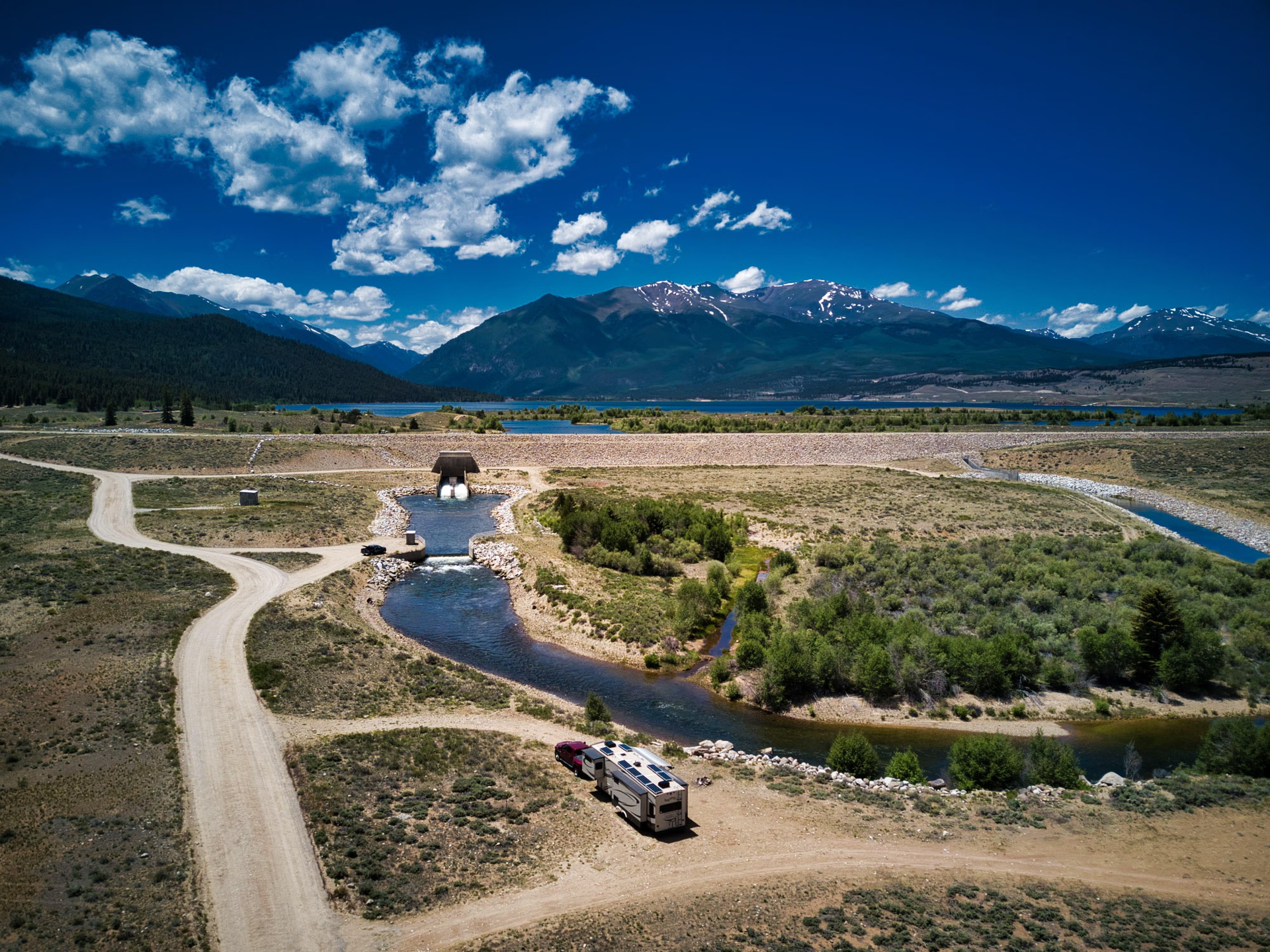
Colorado has campgrounds for nearly every camping style, from developed state parks and national park campgrounds to national forest sites, private RV parks, and dispersed camping on public land. The right choice depends on where you want to travel, how you camp, and what your setup requires.
This guide compares some of the best campgrounds in Colorado by region, camping style, RV suitability, amenities, and access to nearby recreation. Use the recommendations as a starting point, then explore more Colorado campgrounds on Campendium to compare reviews, photos, campsite details, cell signal reports, and nearby options on the map.
TL;DR
- Best overall: Mueller State Park. Its mix of tent and RV sites, electric hookups, year-round camping, showers, a dump station, and extensive hiking access makes it one of the more versatile choices for a broad range of campers.
- Best for RV camping: Chatfield State Park. The campground has 197 sites, all with electricity, including 146 seasonal full-hookup sites, plus showers, laundry, and a dump station.
- Best for mountain and national park camping: Moraine Park Campground. Inside Rocky Mountain National Park, it offers direct access to the park, accommodates some RVs and trailers up to 40 feet, and now includes electric hookups at 49 sites.
Best Campgrounds in Colorado at a Glance
Colorado’s campground options vary considerably in setting and facilities. Some state parks have electric or full-hookup sites, while national park campgrounds may have limited hookups in exchange for easier access to trails and park attractions.
| Campground | Area | Best for | Tent/RV | Hookups |
|---|---|---|---|---|
| Mueller State Park | Divide | Families and mountain camping | Both | Electric sites available |
| Moraine Park Campground | Rocky Mountain National Park | National park camping | Both | Electric at select sites |
| Chatfield State Park | Denver area | RV camping and convenient amenities | Both | Electric and seasonal full hookups |
| Golden Gate Canyon State Park | Golden / Front Range | Mountain camping near Denver | Both | Electric and full-hookup sites available |
| Eleven Mile State Park | Lake George | Lakeside camping and fishing | Both | Electric at select sites |
| Ridgway State Park | Ridgway / Ouray | Southwest Colorado and RV camping | Both | Electric and full-hookup sites available |
| Morefield Campground | Mesa Verde National Park | Mesa Verde access | Both | 15 full-hookup RV sites |
| St. Vrain State Park | Longmont | RV camping, fishing, and Front Range access | Both | Electric and full-hookup sites available |
| Boyd Lake State Park | Loveland | Larger RVs and lake recreation | Both | Electric |
| Glacier Basin Campground | Rocky Mountain National Park | Hiking and Bear Lake Road access | Both | None |
Mueller has basic, backcountry, and electric sites, while Chatfield has 146 full-hookup sites among its 197 campsites, although full hookups operate seasonally. Moraine Park now has electric hookups at 49 sites, while Glacier Basin remains a non-hookup campground and limits vehicles to 35 feet.
For southwest Colorado, Ridgway offers both 30-amp electric sites and 50-amp full-hookup sites, while Morefield Campground inside Mesa Verde has 15 full-hookup RV sites and accepts reservations without requiring them for most campsites. Golden Gate Canyon also offers electric and full-hookup camping, while Eleven Mile combines basic, electric, lakeshore, and backcountry sites.
Best Campgrounds in Colorado
Moraine Park Campground
Best for: Rocky Mountain National Park access
Moraine Park Campground is a strong choice for campers who want to stay inside Rocky Mountain National Park and remain close to Bear Lake Road, hiking trails, and the park shuttle system. It accommodates tents and RVs, with electric hookups available at select sites. Larger rigs should check individual site dimensions before booking.
Glacier Basin Campground
Best for: Hiking and Bear Lake Road access
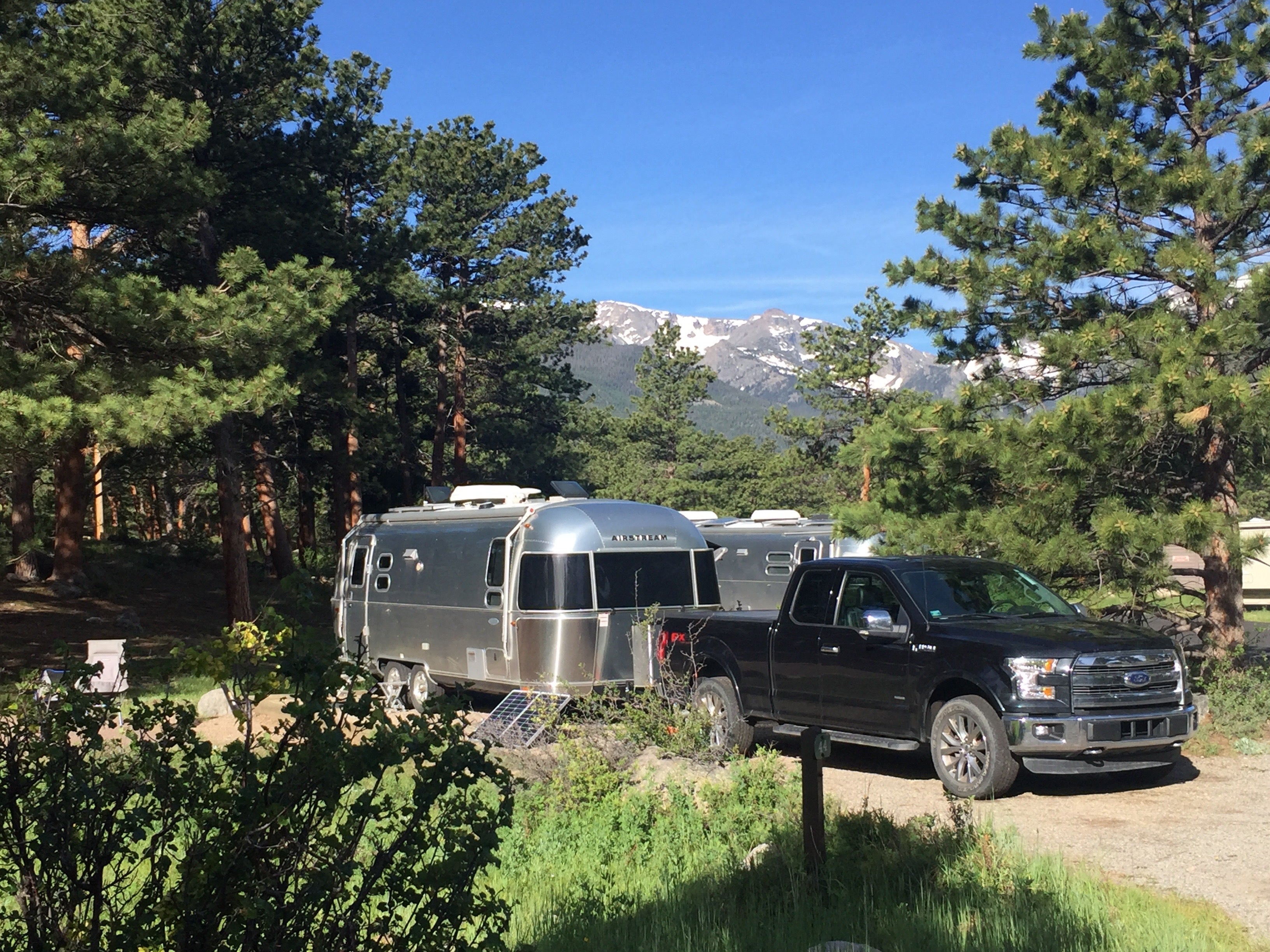
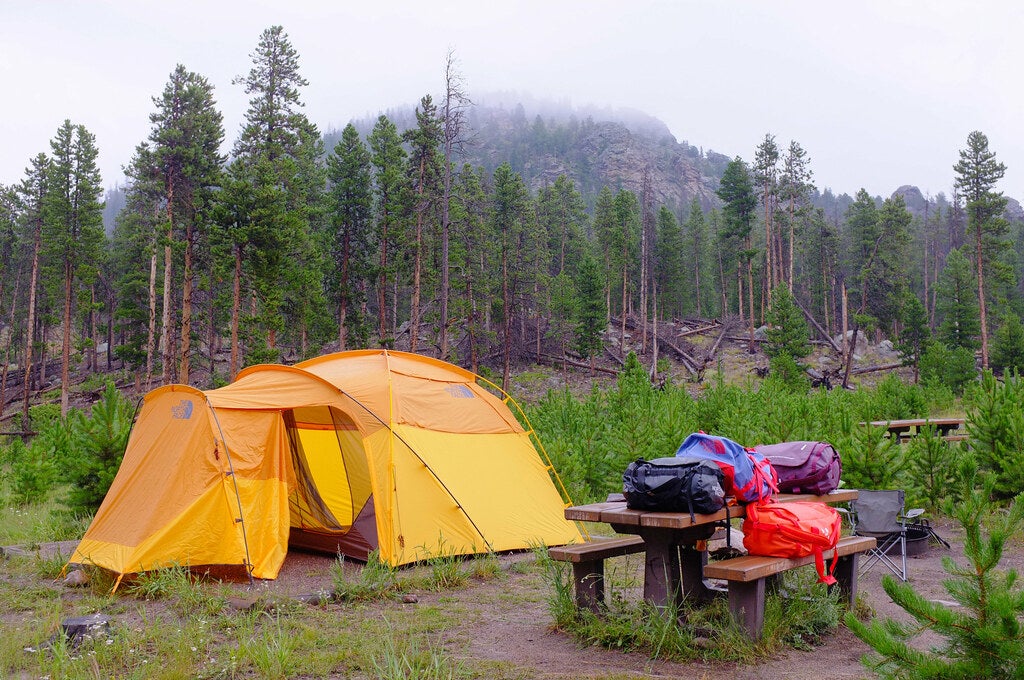
Glacier Basin Campground works well for campers planning to spend most of their time hiking and exploring the Bear Lake Road corridor. It accommodates tents and moderately sized RVs, but there are no hookups, so it is better suited to campers who value location over campground amenities.
Boyd Lake State Park
Best for: RV camping and lake recreation
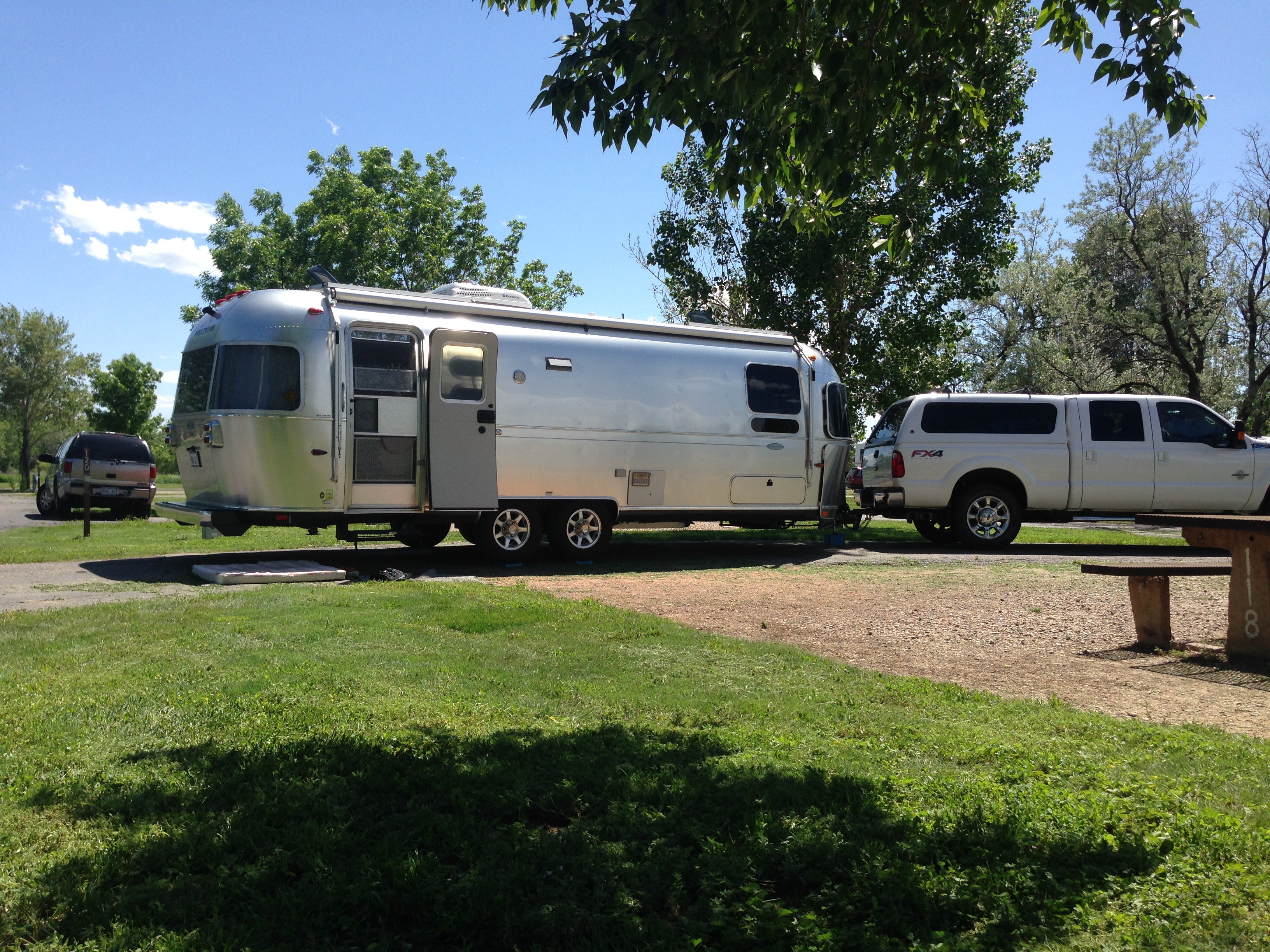
Boyd Lake State Park near Loveland combines lake access with a more developed campground setup. RVers can find electric sites, paved campsites, pull-through options, showers, laundry, and a dump station, making it a practical northern Colorado base for boating, fishing, and shorter trips.
Denver, Boulder, and the Front Range
Reverend’s Ridge Campground
Best for: Mountain camping near Denver
Located in Golden Gate Canyon State Park, Reverend’s Ridge gives campers a mountain setting within reasonable reach of the Denver metro area. The campground has tent and RV sites, including electric options, along with showers, laundry, and access to park trails. Its high elevation also means cooler temperatures and a shorter camping season than lower-elevation Front Range options.
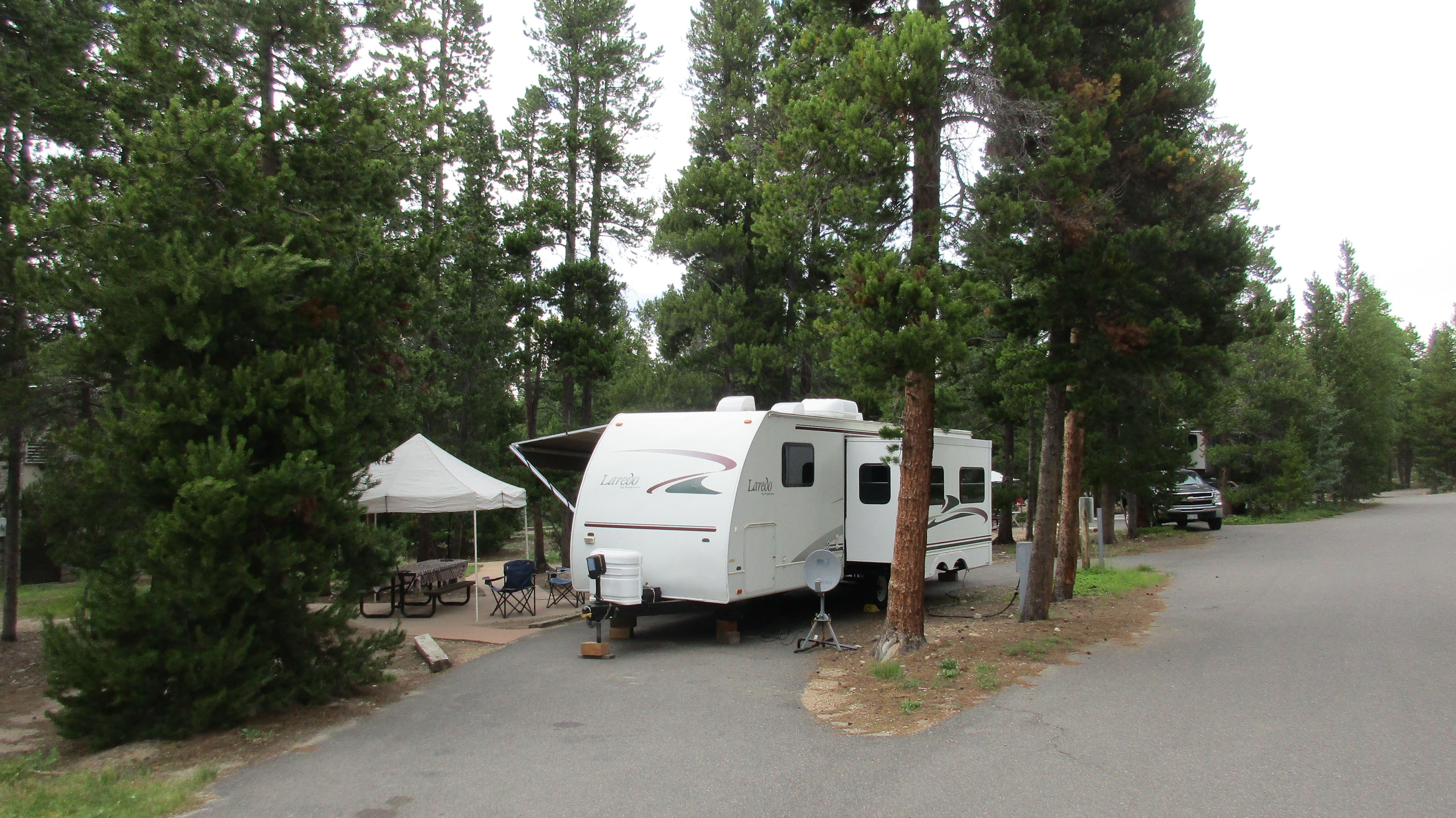
Chatfield State Park Campground
Best for: Full-hookup RV camping near Denver
Chatfield is one of the more practical choices for RVers who want developed facilities close to Denver. The campground has electric and seasonal full-hookup sites, showers, laundry, a dump station, and easy access to reservoir recreation. Larger RVs should pay attention to which park entrance they use because of clearance restrictions.
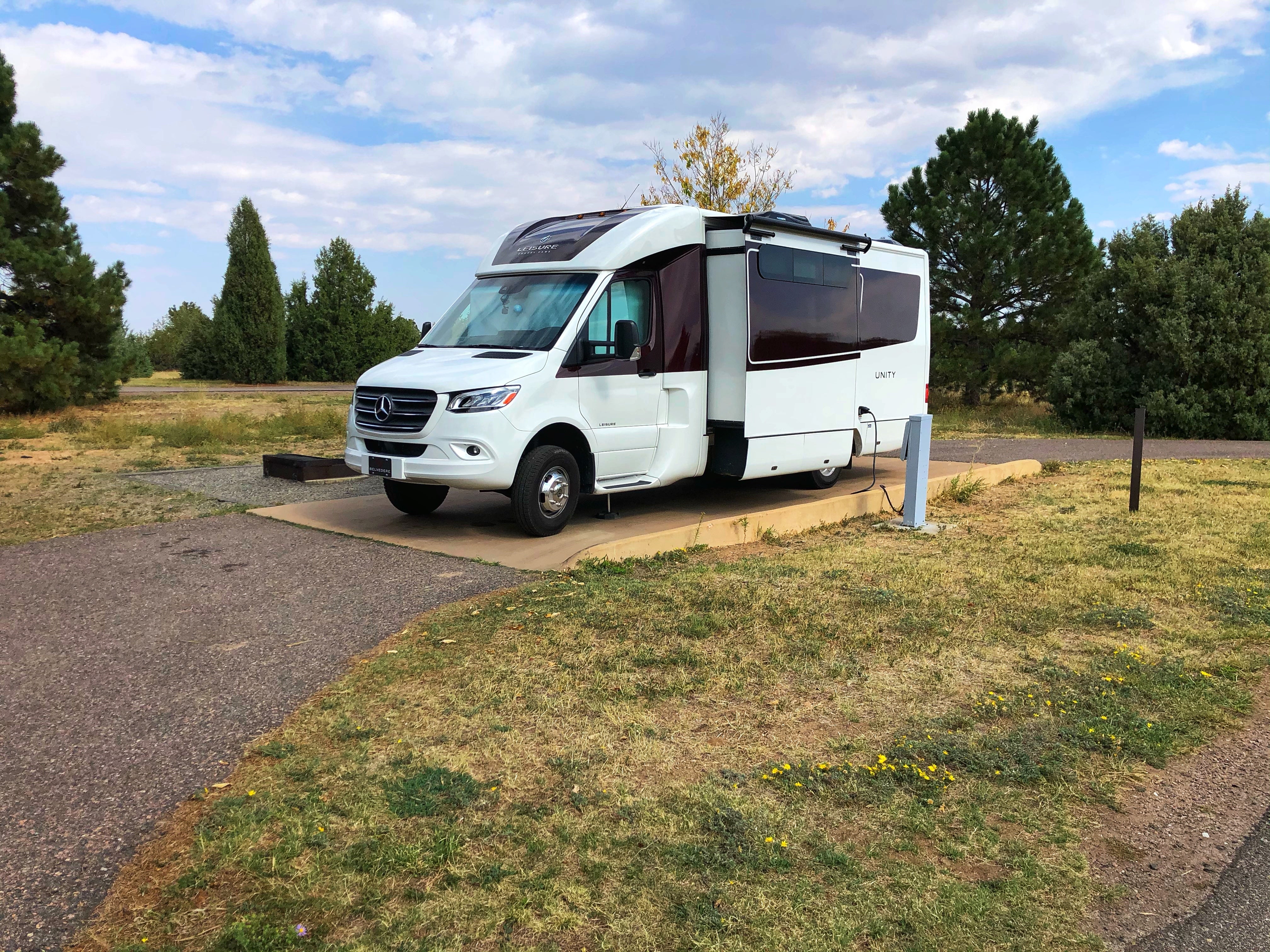
Cherry Creek State Park Campground
Best for: Convenient Denver-area camping
Cherry Creek works well for campers who want quick access to Denver without giving up a developed campground. It offers both basic and full-hookup sites, along with showers, laundry, trails, and reservoir access. The tradeoff is that some sites can pick up traffic noise from the surrounding metro area.
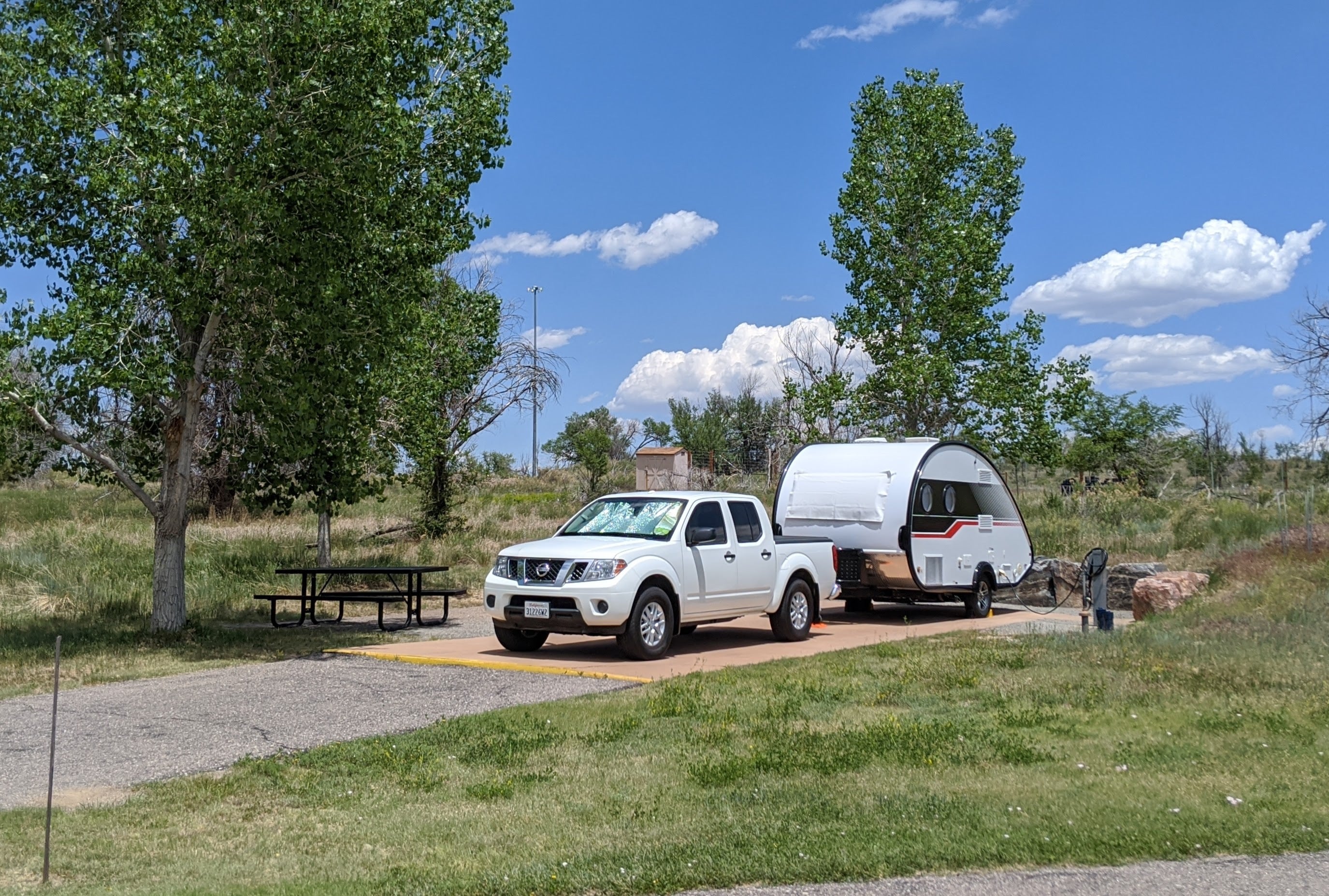
Central Colorado and the mountains
Mueller State Park
Best for: Families and developed mountain camping
Mueller State Park combines a high-elevation setting with enough campground infrastructure to suit both tent campers and RVers. Electric sites, showers, a dump station, and an extensive trail system make it one of the more versatile mountain camping options in central Colorado.
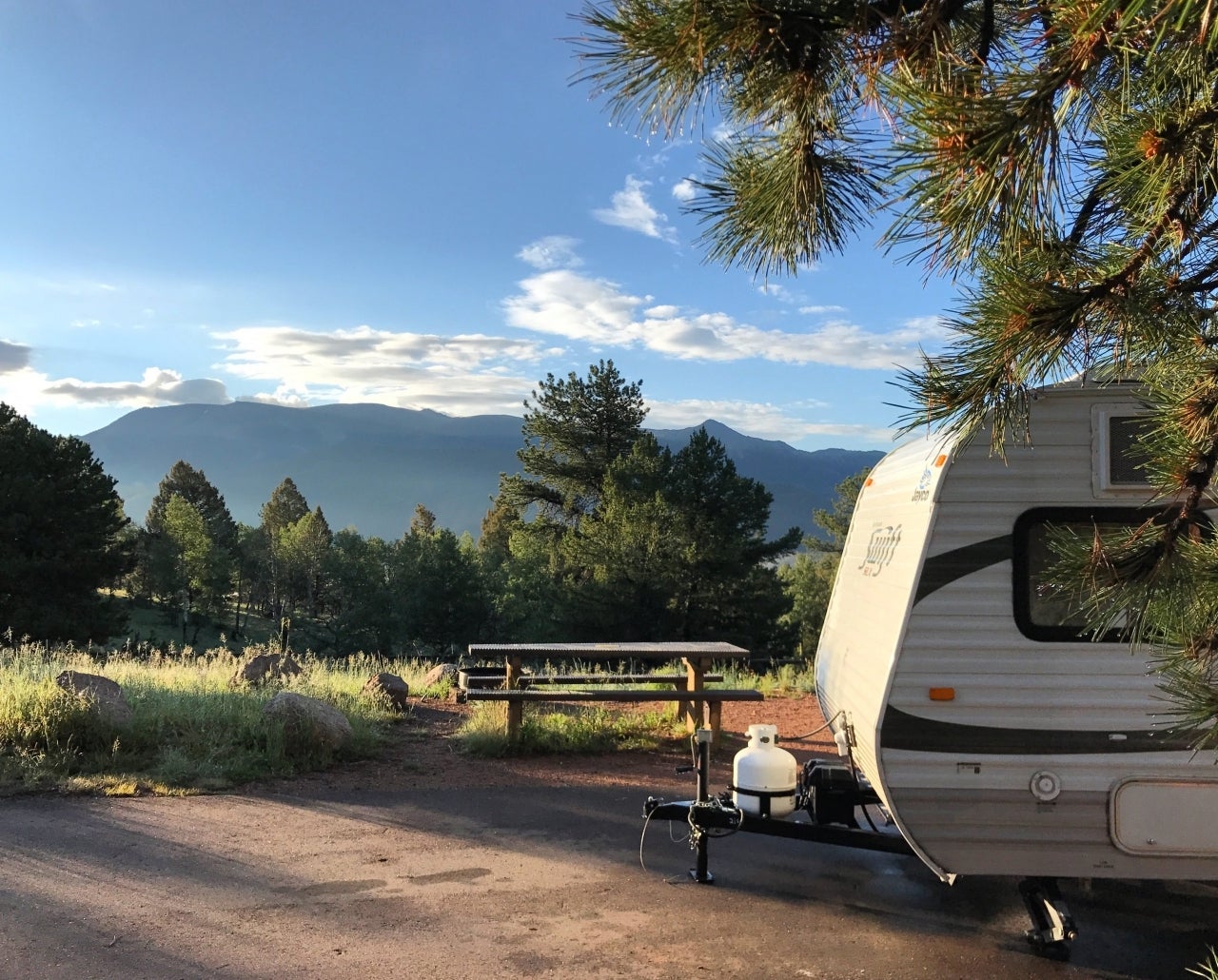
Eleven Mile State Park
Best for: Fishing and lakeside camping
Eleven Mile State Park is centered on reservoir access, making it a strong fit for fishing, paddling, and waterside camping. Sites range from simpler dry camping to select electric options, but road conditions and site quality can vary by campground, so recent reviews are especially useful before choosing a spot.
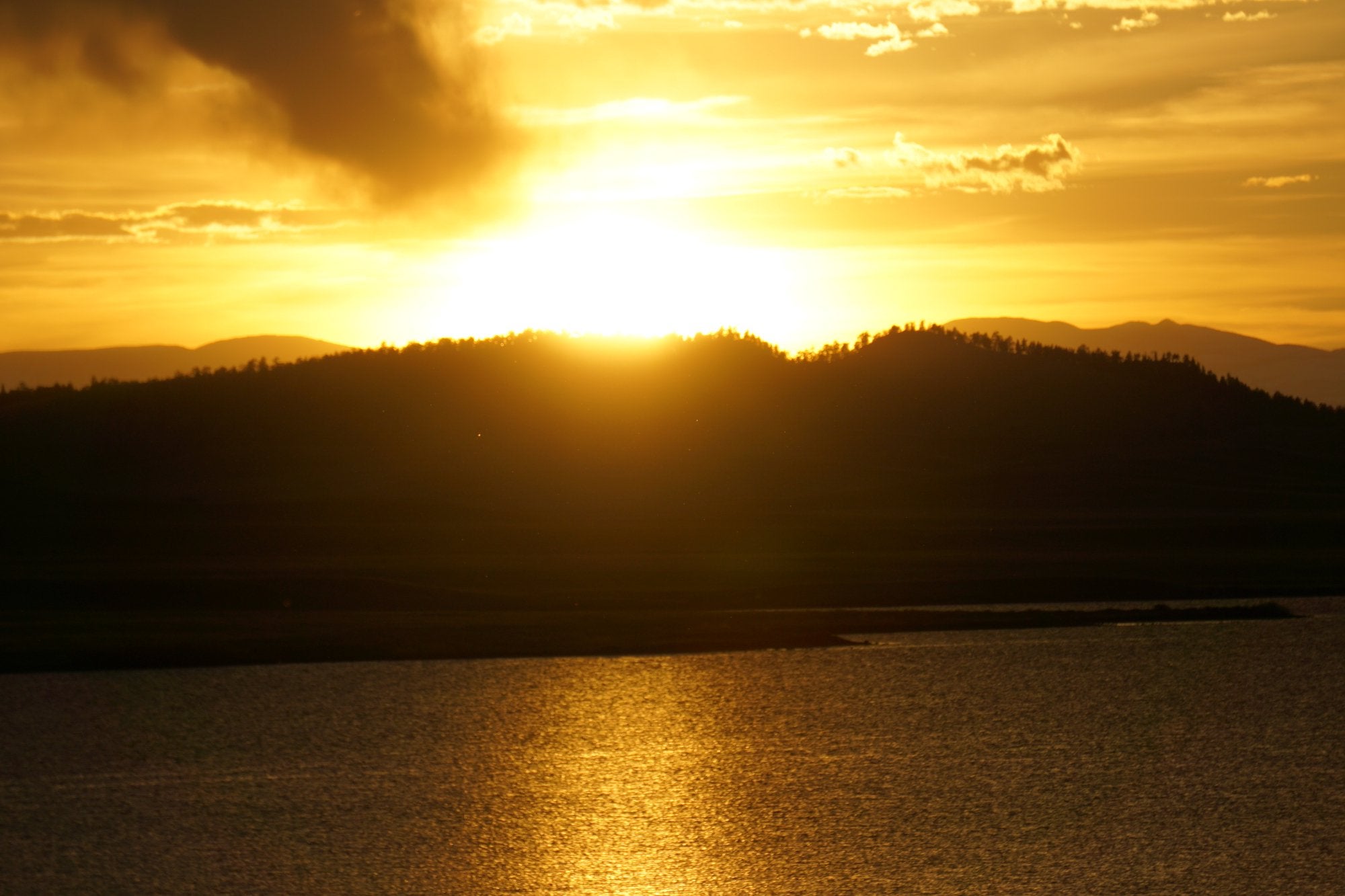
Ruby Mountain Campground
Best for: Arkansas River and Buena Vista access
Ruby Mountain Campground sits in the Arkansas Headwaters Recreation Area near Buena Vista and Browns Canyon National Monument. Its location works well for rafting, fishing, hiking, and other river-based recreation. Facilities are relatively simple, so it suits campers who care more about access to the area than hookups.
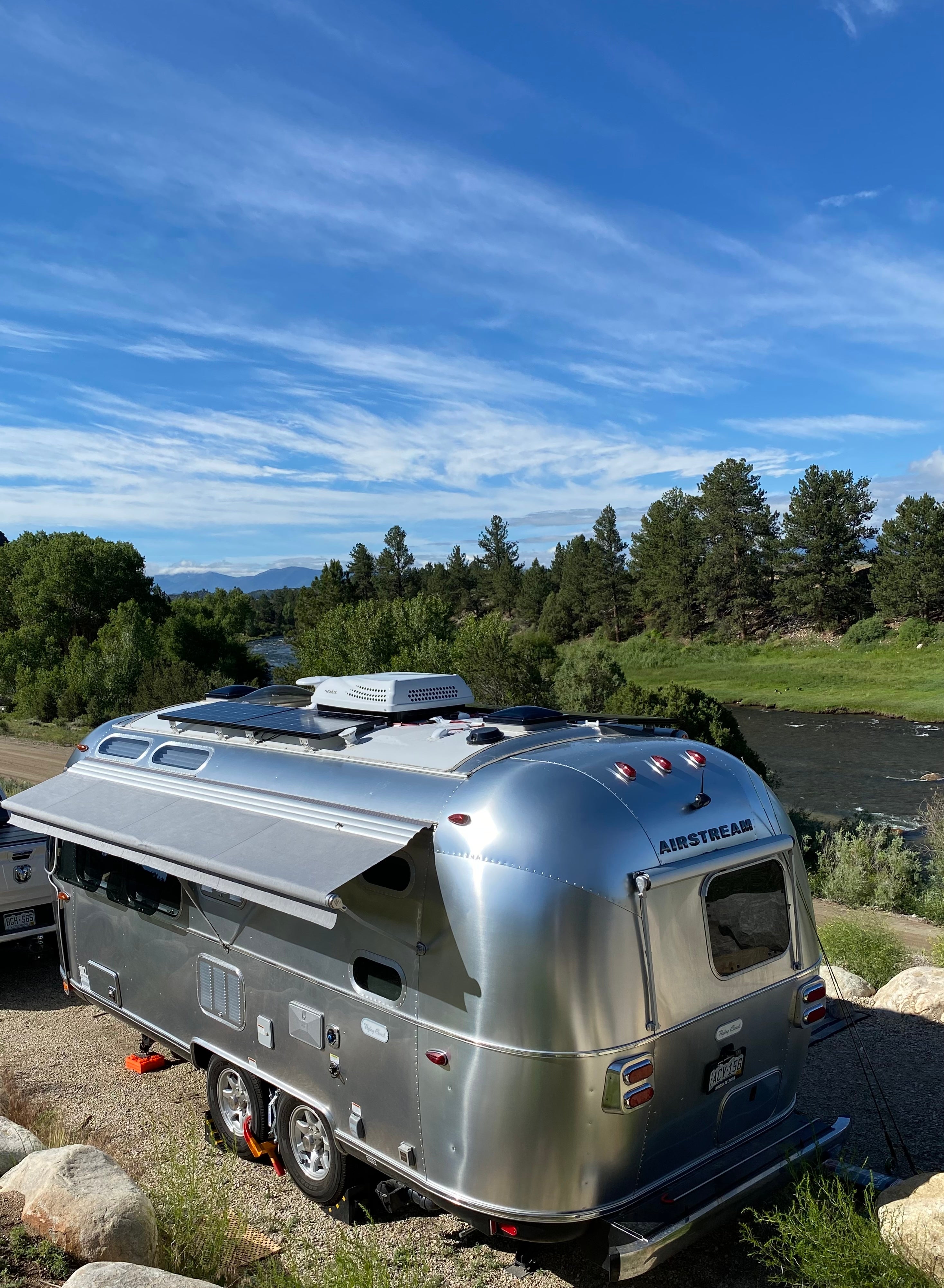
Southwest Colorado
Junction Creek Campground
Best for: Durango, hiking, and mountain biking
Junction Creek Campground sits just outside Durango near the Colorado Trail. The wooded setting and access to hiking and mountain biking make it a useful base for outdoor-focused trips, while select electric sites give some RVers a little more flexibility. The approach road can be rough, so recent access reports are worth checking.
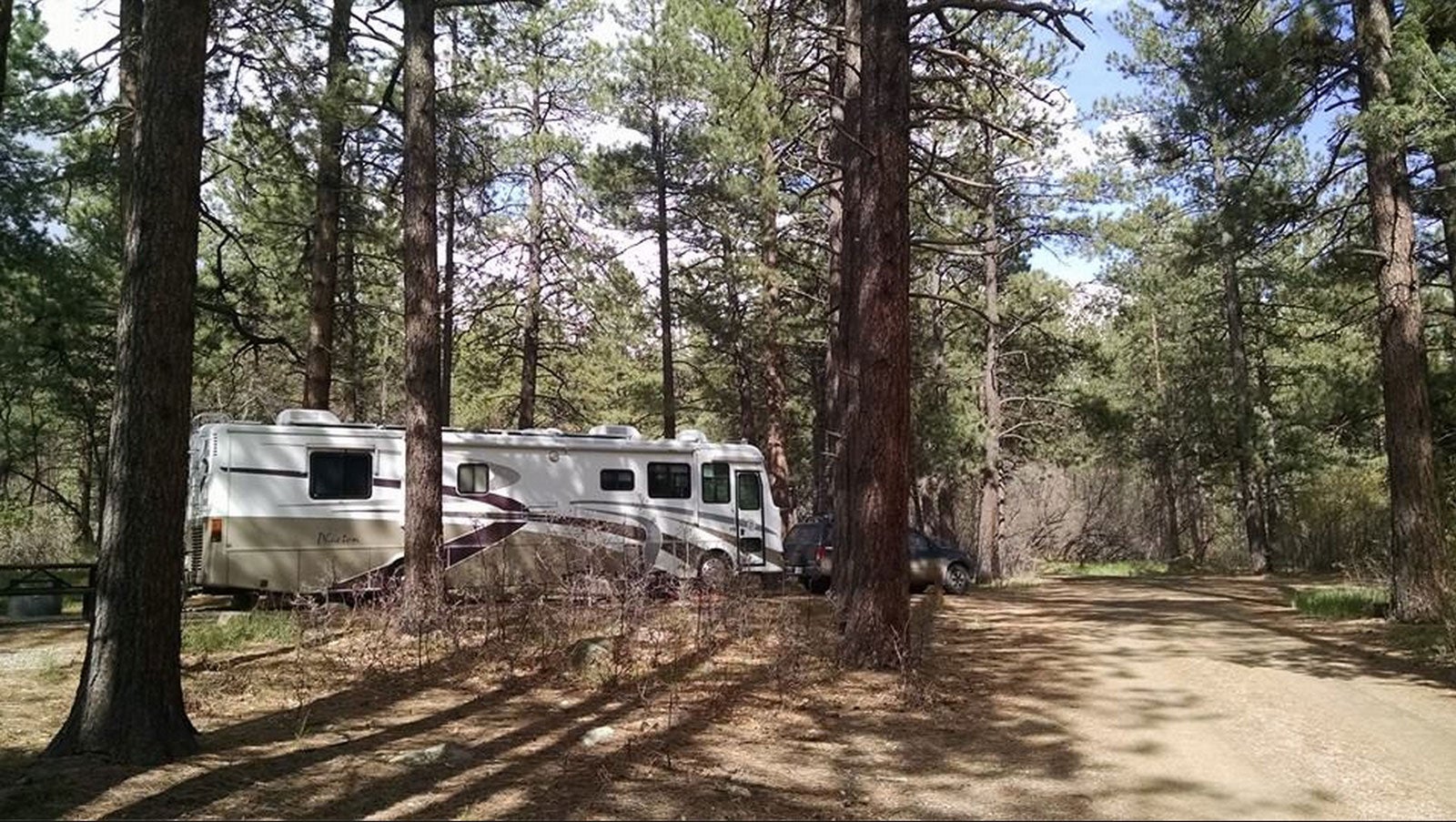
Morefield Campground
Best for: Mesa Verde National Park
Morefield is the main developed campground inside Mesa Verde National Park, making it convenient for travelers who want to spend several days exploring the park. It accommodates tents and RVs and has a limited number of full-hookup sites, plus showers, laundry, and a dump station.
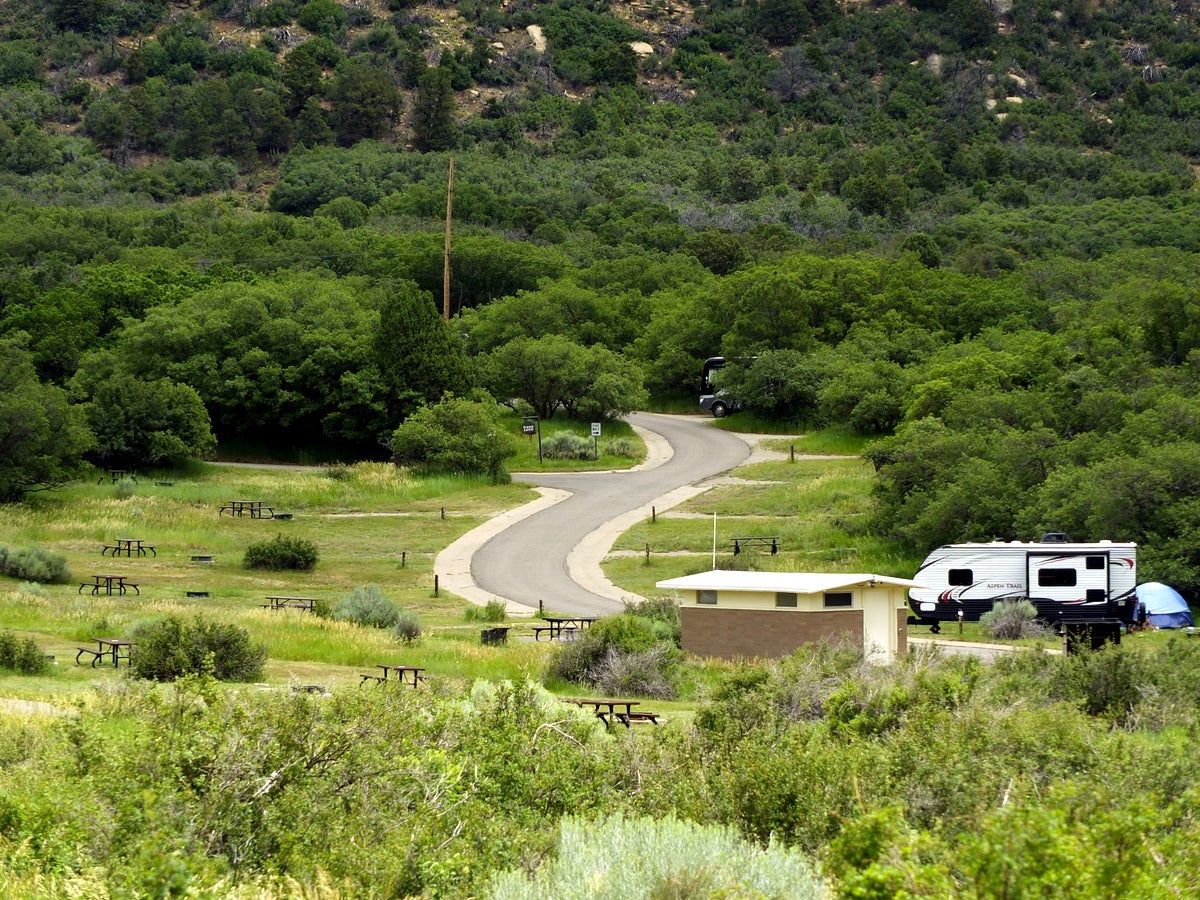
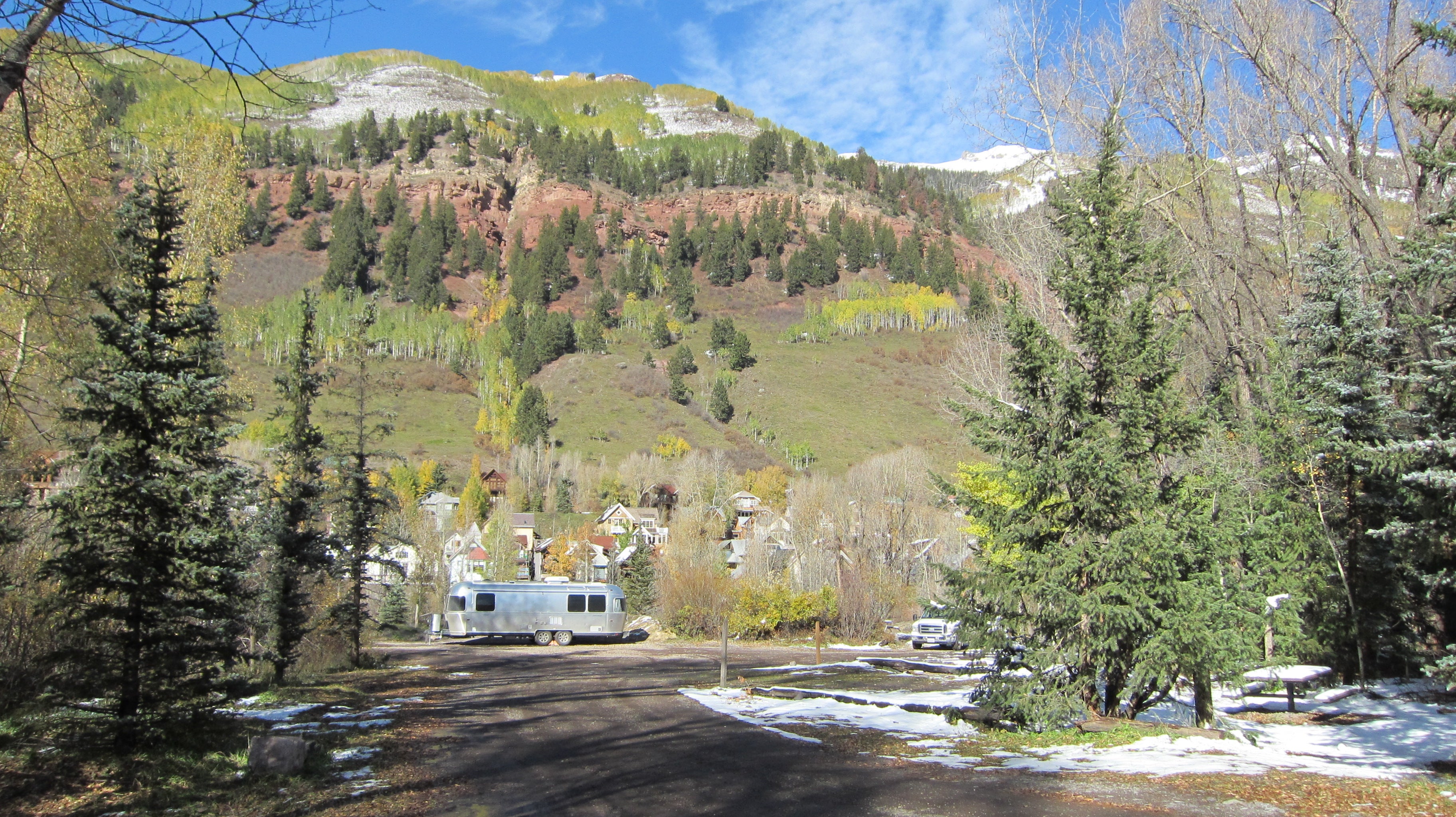
Telluride Town Park Campground
Best for: Walking access to Telluride
Telluride Town Park Campground puts campers within walking distance of town, trails, and the river. It is better suited to tents and smaller RVs because sites can be tight and uneven, but the location is difficult to match for campers who want to explore Telluride without driving each day.
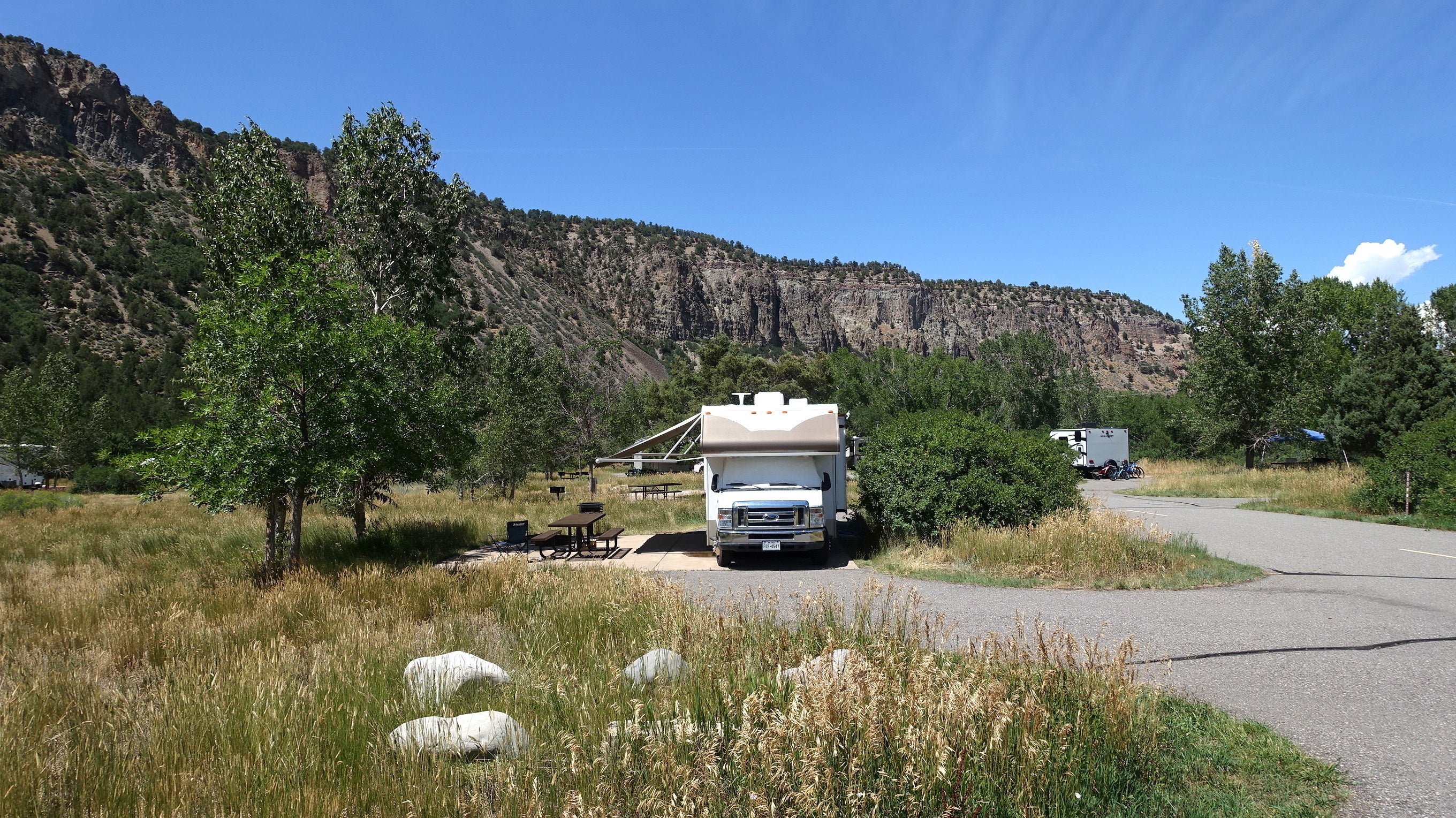
Pa-Co-Chu-Puk Campground
Best for: RV camping near Ouray and Ridgway
Part of Ridgway State Park, Pa-Co-Chu-Puk is a good fit for RV travelers exploring the San Juan Mountains. Select sites have full hookups, and the campground also offers paved sites, pull-through options, showers, laundry, and nearby fishing access. Some sites can pick up road noise from US 550.
Western Colorado
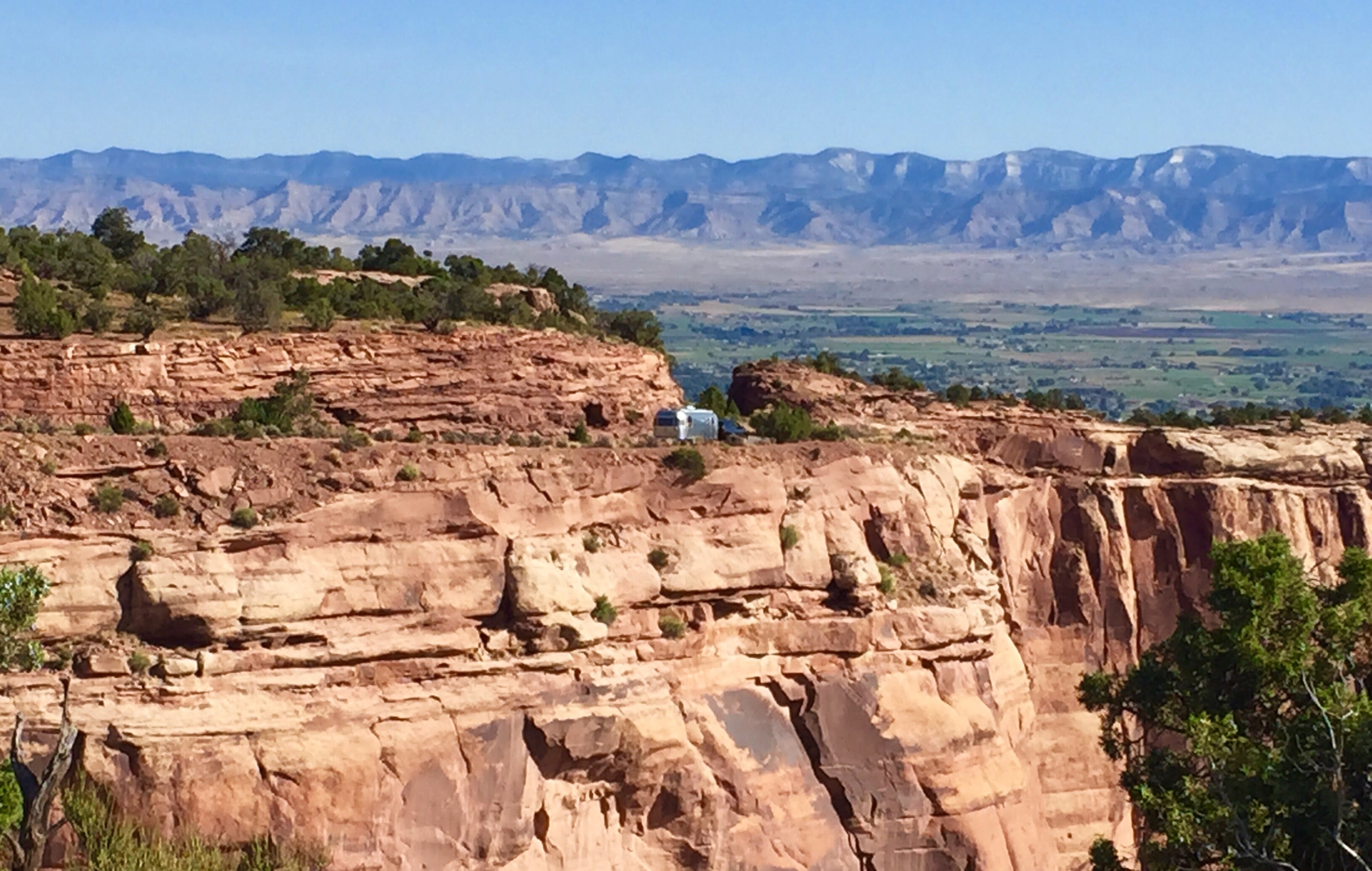
Saddlehorn Campground
Best for: Colorado National Monument access
Saddlehorn Campground sits inside Colorado National Monument, giving campers direct access to Rim Rock Drive, hiking trails, and the monument itself. There are no hookups, and taller RVs should check tunnel clearance and route guidance before arrival.
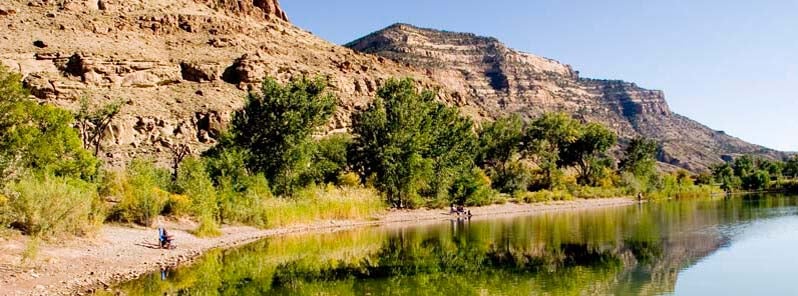
James M. Robb Colorado River State Park, Fruita
Best for: RV amenities near Fruita and Grand Junction
The Fruita campground at James M. Robb Colorado River State Park works well as a developed RV base for exploring Fruita, Grand Junction, and Colorado National Monument. It offers both electric and full-hookup sites, although some services and hookup availability are seasonal.
Best Colorado campgrounds by camping style
The best campground often depends less on the region than on how you plan to camp. These picks narrow the options by RV needs, tent setup, family facilities, recreation, and proximity to Denver.
Best for RV camping
For RVers, the biggest differences are usually hookups, site size, road approach, and access to services. Developed state parks tend to make those details easier to compare.
- Chatfield State Park: A strong choice for RVers who want electric or seasonal full hookups, a dump station, showers, laundry, and easy access to Denver.
- James M. Robb Colorado River State Park, Fruita: Useful for RV travelers who want electric or full-hookup sites near Fruita, Grand Junction, and Colorado National Monument.
- Pa-Co-Chu-Puk Campground: Works well for RVers exploring Ouray and Ridgway, with full-hookup sites, paved pads, pull-through options, and campground facilities.
- Boyd Lake State Park: A practical northern Colorado option with electric sites, paved campsites, pull-throughs, and a dump station.
Best for tent camping
Tent campers can usually focus more on setting, shade, trail access, and campsite layout than on hookup availability.
- Moraine Park Campground: Good for tent campers who want to stay inside Rocky Mountain National Park with quick access to trails and shuttle stops.
- Glacier Basin Campground: A strong fit for hikers who want a simple, non-hookup campground near the Bear Lake Road corridor.
- Ruby Mountain Campground: Best suited to campers who want a simpler setup near the Arkansas River, Browns Canyon, and Buena Vista.
- Telluride Town Park Campground: A good tent option for campers who want to walk into Telluride and reach nearby trails without driving.
Best for families
Family-friendly campgrounds usually benefit from developed facilities, easy recreation, predictable reservations, and enough nearby activities to keep a shorter trip simple.
- Mueller State Park: Electric sites, showers, restrooms, trails, and developed facilities make it one of the easier mountain campgrounds for family trips.
- Chatfield State Park: Families get reservoir access, developed campground facilities, and proximity to Denver-area services.
- Boyd Lake State Park: Boating, fishing, showers, laundry, and easy campground access make it a practical choice for shorter family trips.
- Eleven Mile State Park: Works well for families whose trip is centered on fishing, paddling, and time around the reservoir.
Best near Denver
Campers planning a weekend from the Denver area can choose between convenient metro-area campgrounds and higher-elevation options that feel farther from the city.
- Chatfield State Park: One of the most convenient developed campgrounds for RVers and families staying near the southwest side of Denver.
- Cherry Creek State Park: A useful choice for campers who want to stay within the metro area while retaining access to trails and reservoir recreation.
- Reverend’s Ridge Campground: Better for campers who want a mountain setting without driving far beyond the Front Range.
Best for hiking and mountain access
For trail-focused trips, staying close to the trail system can save a surprising amount of driving each day.
- Moraine Park Campground: Strong for exploring Rocky Mountain National Park and reaching the Bear Lake Road trail system.
- Glacier Basin Campground: Another useful in-park base for hikers spending much of their trip around Bear Lake Road.
- Junction Creek Campground: Well placed for hiking and mountain biking near Durango and the Colorado Trail.
- Mueller State Park: Gives campers access to a large trail network directly from a developed state park campground.
Best for lakeside camping
Colorado’s reservoir campgrounds are a good fit for trips built around fishing, paddling, boating, or simply spending more time near the water.
- Eleven Mile State Park: One of the stronger choices for campers who want fishing, paddling, and campsites near a large reservoir.
- Boyd Lake State Park: Combines lake recreation with more developed RV facilities.
- Chatfield State Park: A convenient Front Range option for boating, paddling, and reservoir-based camping.
Best for larger RVs
Large rigs need more than an “RV allowed” label. Site length, turning room, pull-through availability, road access, and entrance clearances all matter.
- Chatfield State Park: Large sites, pull-through options, and full-hookup inventory make it one of the more practical choices for bigger rigs, though RVers should use the appropriate entrance for their height.
- Pa-Co-Chu-Puk Campground: Paved sites, pull-throughs, and full-hookup options make it a strong southwest Colorado choice for larger RVs.
- James M. Robb Colorado River State Park, Fruita: Developed electric and full-hookup sites provide a more manageable setup for larger rigs in western Colorado.
- Boyd Lake State Park: Pull-throughs and paved sites can work well for larger RVs, but travelers should still confirm the dimensions of the individual campsite before booking.
Looking for free or dispersed camping in Colorado?
Dispersed camping is different from staying in a developed campground. Instead of reserving a designated campsite with established facilities, you camp outside developed campgrounds on public land where dispersed camping is permitted. Amenities are usually limited or nonexistent, and local rules, road access, fire restrictions, and stay limits can vary by managing agency.
For more detail, see our Colorado dispersed camping guide, explore free camping in Colorado, or read the BLM camping guide and National Forest camping guide before choosing a site. Campendium’s Colorado map can also help you compare free and public-land camping options alongside developed campgrounds.
Reservations, fees, and Colorado camping rules
Colorado campground rules depend on who manages the land, so systems, fees, and policies can differ from one campground to the next. Check the current rules for the specific campground before you book, especially if you are traveling with a larger RV or planning around seasonal conditions.
- Colorado state park reservations: Colorado Parks and Wildlife says state park campsites are reservation-only, with reservations available up to six months before arrival. Popular parks can fill well ahead of weekends and summer dates, so booking early gives you more choice of site type and location.
- National park and federal campground reservations: Many federal campgrounds use Recreation.gov, but booking rules vary by campground. Some require reservations, while others may keep limited first-come, first-served availability, so check the current listing before you travel.
- Camping fees: Colorado state park campsite prices vary by site type. The brief cites current CPW ranges of $13–$18 for backcountry sites, $22–$28 for basic sites, $27–$36 for electric sites, and $32–$41 for full-hookup sites. Park entrance fees may be charged separately.
- RV access: “RV allowed” does not mean every site works for every rig. Check the road approach, campsite length, turning room, entrance clearances, and recent camper reviews before booking, especially if you tow a long trailer or travel in a larger motorhome.
How to choose a campground in Colorado
Colorado has enough campground variety that narrowing your options first can save a lot of scrolling. Start with where you want to camp, then work through your setup, season, and the details that could affect the stay.
- Choose your region. Decide whether your trip centers on Rocky Mountain National Park, the Front Range, central Colorado, southwest Colorado, or the Western Slope. That immediately narrows the campground pool.
- Choose your camping style. Pick the type of stay that fits your trip: a private RV park, developed public campground, primitive campground, or dispersed campsite.
- Check your rig requirements. RVers should confirm site length, hookups, road access, turning room, and any entrance or clearance limits before booking.
- Check the season and elevation. Higher-elevation campgrounds can open later, close earlier, and see colder conditions than lower-elevation options.
- Compare recent camper reviews. Look for current comments about site quality, road conditions, noise, cell signal, campground facilities, and whether larger rigs had trouble getting in.
- Save a backup. Popular campgrounds can fill, and weather or access conditions can change. Keep at least one nearby alternative in mind before you leave.
Use Campendium to compare Colorado campgrounds on the map, check recent camper reviews and photos, and narrow options by RV length, hookups, cell signal, public land, and other trip needs. Save a few possible campsites before you go so you have a backup if your first choice is full or conditions change.
Frequently asked questions
Public campgrounds are often less expensive than private RV parks, especially if you do not need hookups. Colorado also has free and low-cost dispersed camping on some BLM and National Forest land where camping is allowed. Use Campendium’s free camping resources and Colorado dispersed camping guide to compare options before you go.
Chatfield State Park, Pa-Co-Chu-Puk Campground, Boyd Lake State Park, and James M. Robb Colorado River State Park in Fruita are good places to start. They offer combinations of electric or full hookups, larger sites, pull-through options, dump stations, and easier access for RV travelers.
June through September generally provides the widest range of higher-elevation camping options, but elevation matters more than any single month. Some mountain campgrounds open later or close earlier depending on snow and weather; Rocky Mountain National Park’s 2026 campground schedule, for example, ranges from May openings to September or October closures.
Yes, but free camping is more commonly found as dispersed camping on eligible public land than as a developed campground with facilities. Some free developed campsites also exist, but availability is limited. Always confirm land ownership, current restrictions, and whether overnight camping is permitted before setting up.
Yes, in some places. Winter availability is much more limited, especially at higher elevations where campgrounds and roads may close seasonally. Some developed and lower-elevation campgrounds remain accessible, while others switch to reduced winter operations; Moraine Park, for example, has a separate winter camping season.
Find more Colorado campgrounds on Campendium
The campgrounds in this guide are starting points, not the full list of places to camp across Colorado. Explore the Colorado campground map on Campendium to compare more public campgrounds, private RV parks, national forest sites, and free or dispersed camping options across the state.
Use filters to narrow the map by RV length, hookups, big-rig friendly sites, pet-friendly camping, cell signal, dump stations, public land, and free camping. Then check recent camper reviews and photos for details that may not appear in a standard campground listing, including road access, site fit, noise, connectivity, and current campground conditions.