Camping in Ocala National Forest can look very different depending on where you stay. You can camp beside clear freshwater springs, settle into an RV-friendly recreation area, choose a primitive forest campground with fewer amenities, or head farther from developed sites for dispersed or backcountry camping.
This guide breaks down the main Ocala National Forest camping options by experience, amenities, and camping style so you can narrow down the campgrounds that best fit your trip instead of sorting through every available campsite.
TL;DR
- Best for first-time visitors and spring access: Alexander Springs and Juniper Springs are strong starting points if swimming, snorkeling, or paddling are priorities, with developed campgrounds close to the water.
- Best for RV hookups: Salt Springs Recreation Area is the main choice for RVers who want full hookups while camping in Ocala National Forest.
- Primitive and dispersed camping: Ocala has rustic campgrounds as well as dispersed camping outside developed sites, but amenities, road conditions, and seasonal restrictions vary. Check current Forest Service rules before choosing a site.
Ocala National Forest Campgrounds at a Glance
Ocala National Forest campgrounds range from developed spring recreation areas to quieter lakefront sites and minimally developed forest camping. Use this comparison to narrow your options before checking individual site details, availability, and current conditions.
| Campground | Best For | Tent/RV | Hookups | Reservations |
|---|---|---|---|---|
| Alexander Springs Recreation Area | Swimming, snorkeling, and first-time visitors | Tent + RV | None | Yes |
| Juniper Springs Recreation Area | Paddling, swimming, and classic spring camping | Tent + RV | None | Yes |
| Salt Springs Recreation Area | RV camping and full hookups | Tent + RV | Full hookups available at RV sites | Yes |
| Clearwater Lake Recreation Area | Quieter developed camping and lake access | Tent + RV | None | Yes |
| Fore Lake Campground | Fishing, paddling, and a quieter forest stay | Tent + RV/trailers | None | Yes |
| Hopkins Prairie Campground | Primitive-style camping and Florida Trail access | Tent + RV, with access limitations for taller rigs | None | Yes |
| Lake Delancy West Campground | OHV riding and rustic camping | Tent + small trailers | None | Check current booking status |
Alexander Springs, Juniper Springs, Clearwater Lake, Fore Lake, Hopkins Prairie, Salt Springs, and Lake Delancy West all have current federal recreation listings. Alexander, Juniper, Clearwater Lake, and Fore Lake are reservable through Recreation.gov, while Hopkins Prairie’s current listing states that reservations are required. Salt Springs has reservable campsite inventory, including full-hookup RV sites.
Lake Delancy West is the least developed option in this comparison and is especially oriented toward OHV users and small-trailer or tent camping. Its Recreation.gov information currently contains conflicting reservation messaging, so campers should verify the latest booking procedure before arriving.
Best Campgrounds in Ocala National Forest
The best campground in Ocala National Forest depends on how you want to spend your trip. Some put you steps from a spring, while others are better for RV hookups, fishing, paddling, trail access, or a quieter forest setting.
The options below highlight where each campground fits best so you can narrow your shortlist quickly.
Alexander Springs Recreation Area
Best for: First-time visitors, swimming, snorkeling, and spring access
Alexander Springs is a strong choice if you want one of Ocala National Forest’s signature spring experiences within walking distance of your campsite. Four shaded camping loops accommodate tents and RVs, and the recreation area has flush toilets, showers, and a small general store. There are no hookups.
The spring stays at about 72°F and supports swimming, snorkeling, paddling, and permitted scuba diving. During busy summer weekends and holidays, additional vehicle-access reservations may apply, so check current requirements before your trip. The main tradeoff is popularity: this is not the place to choose if solitude is your priority.
Juniper Springs Recreation Area
Best for: Canoeing, kayaking, swimming, and heavily shaded camping
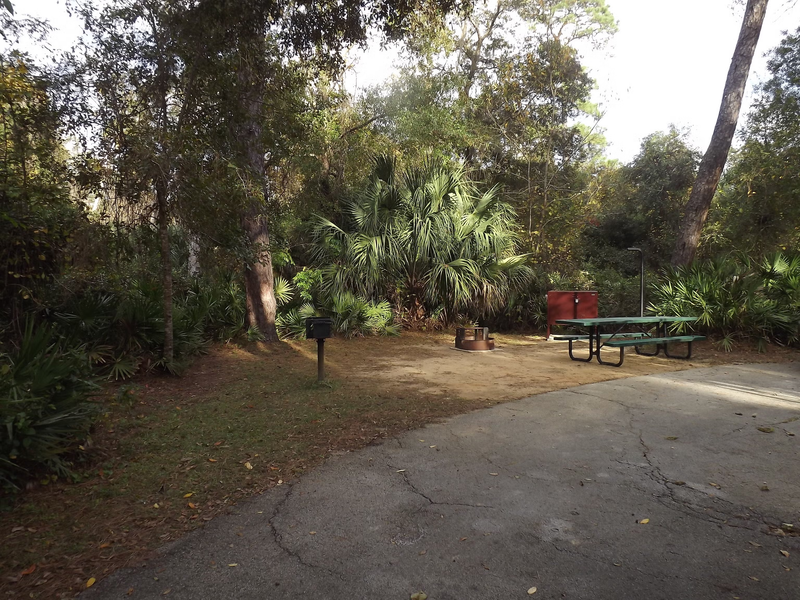
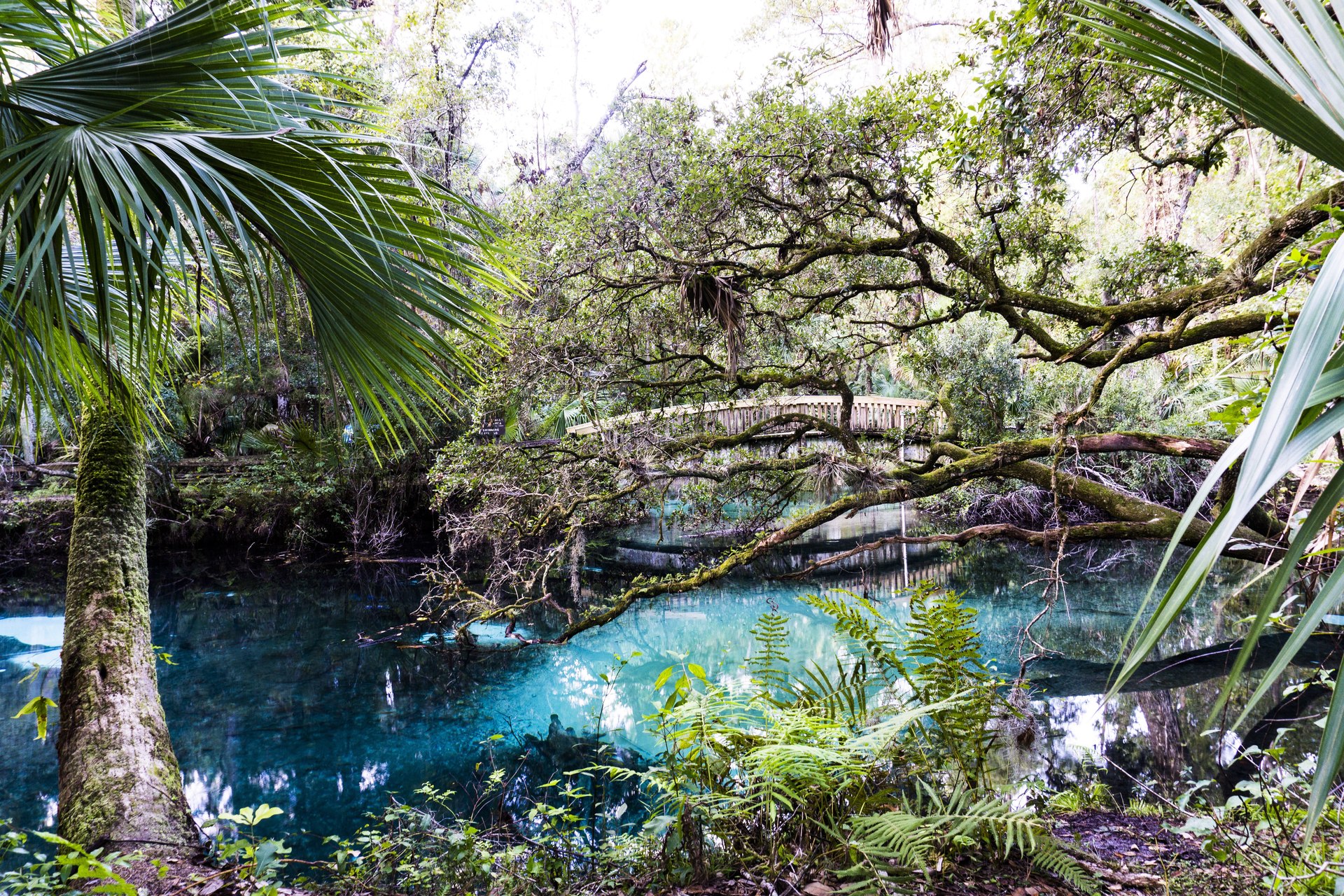
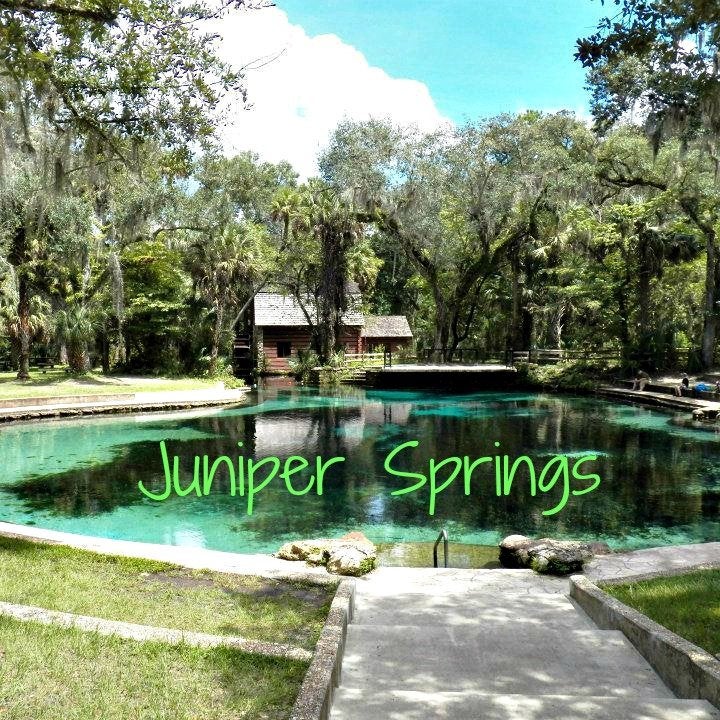
Juniper Springs combines a developed campground with easy access to the spring and Juniper Run, making it one of the better bases for campers planning to paddle. Campsites sit beneath dense tree cover and support tents as well as some RVs and trailers, although individual length limits vary.
There are no full hookups, but campers have access to hot showers, flush toilets, and a dump station. Its main appeal is being able to camp in the forest and spend much of the trip around the spring or on the water without driving elsewhere.
Salt Springs Recreation Area
Best for: RVers who want hookups without giving up spring access
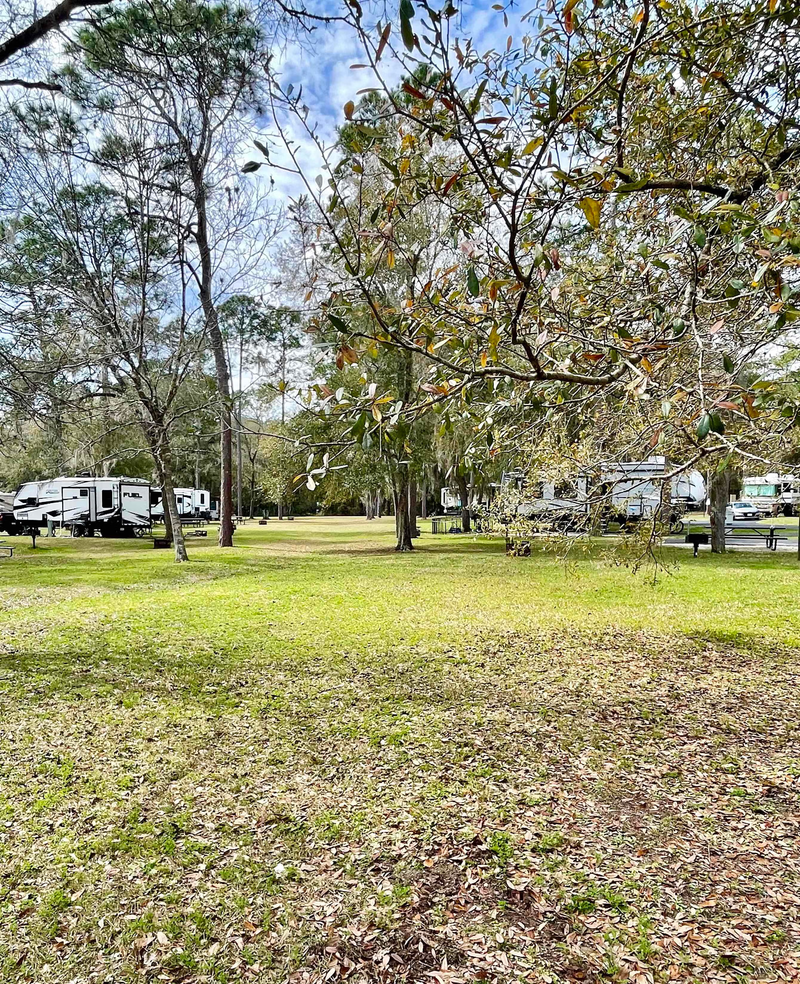
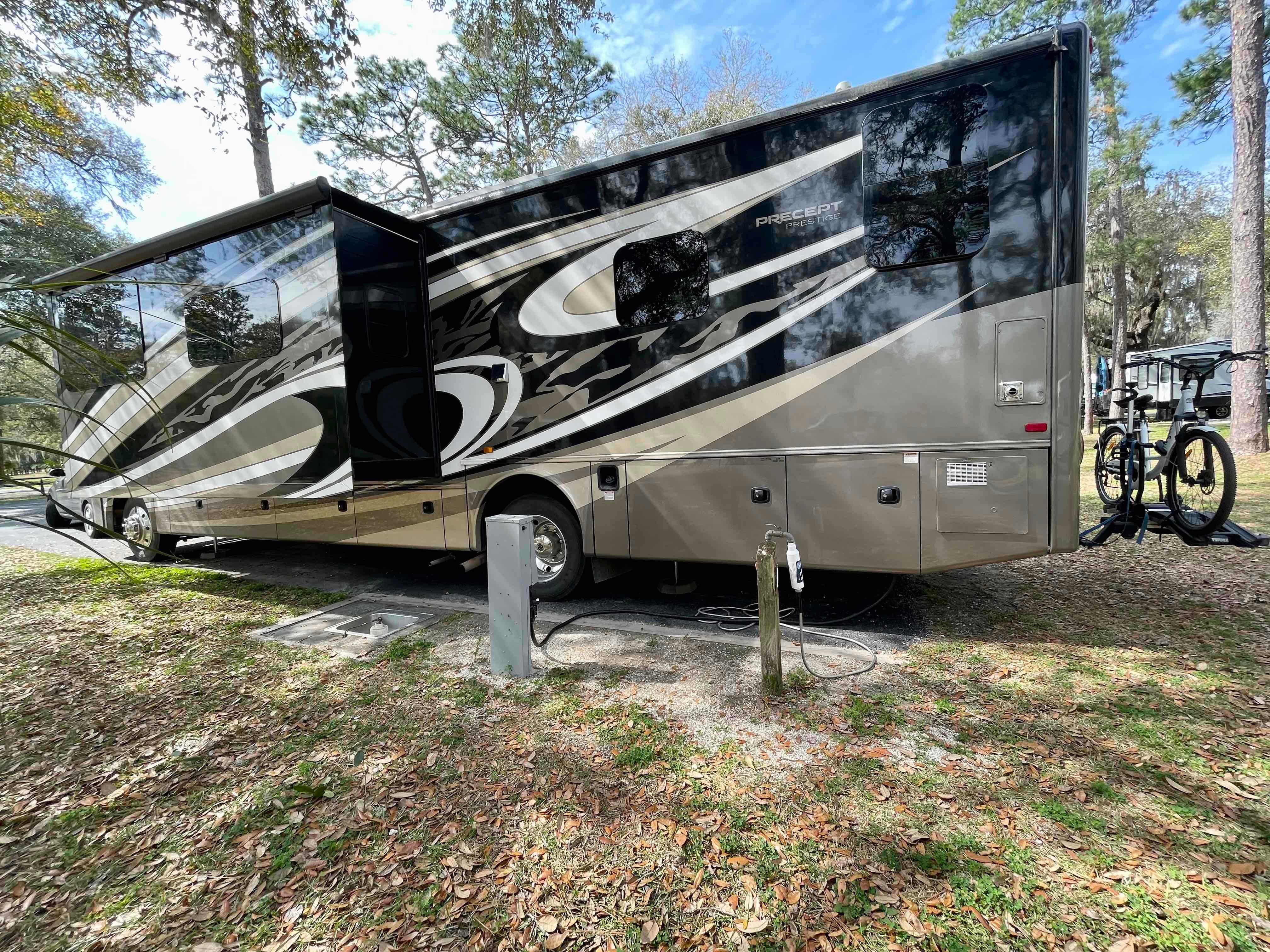
Salt Springs is the clearest choice for RV camping in Ocala National Forest. It is the forest’s largest campground and the only one with full-hookup RV sites, while a separate tent area gives non-RV campers another option.
The campground is shaded and sits near Salt Springs, with swimming, snorkeling, boating, fishing, and hiking nearby. For travelers who want water, sewer, and electric connections rather than dry camping, Salt Springs belongs near the top of the shortlist.
Clearwater Lake
Best for: Lakefront camping, smaller crowds, and a developed campground without spring-area activity
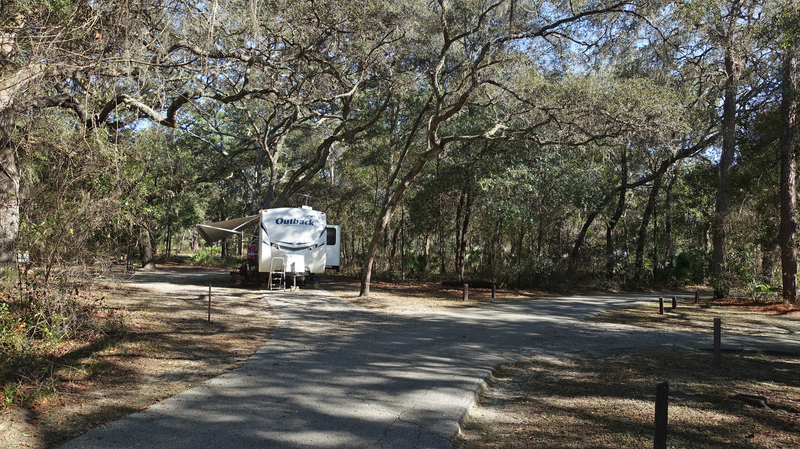
Clearwater Lake offers a calmer alternative to the better-known spring recreation areas. Shaded sites accommodate tents, trailers, and RVs, including some lakefront sites, while the campground provides flush toilets and showers. There are no hookups.
Campers can swim, fish, paddle, hike the Clearwater Lake Loop Trail, or connect with the Florida Trail. Site dimensions vary considerably, so RVers should check the specific site rather than assuming every campsite can accommodate the same rig length.
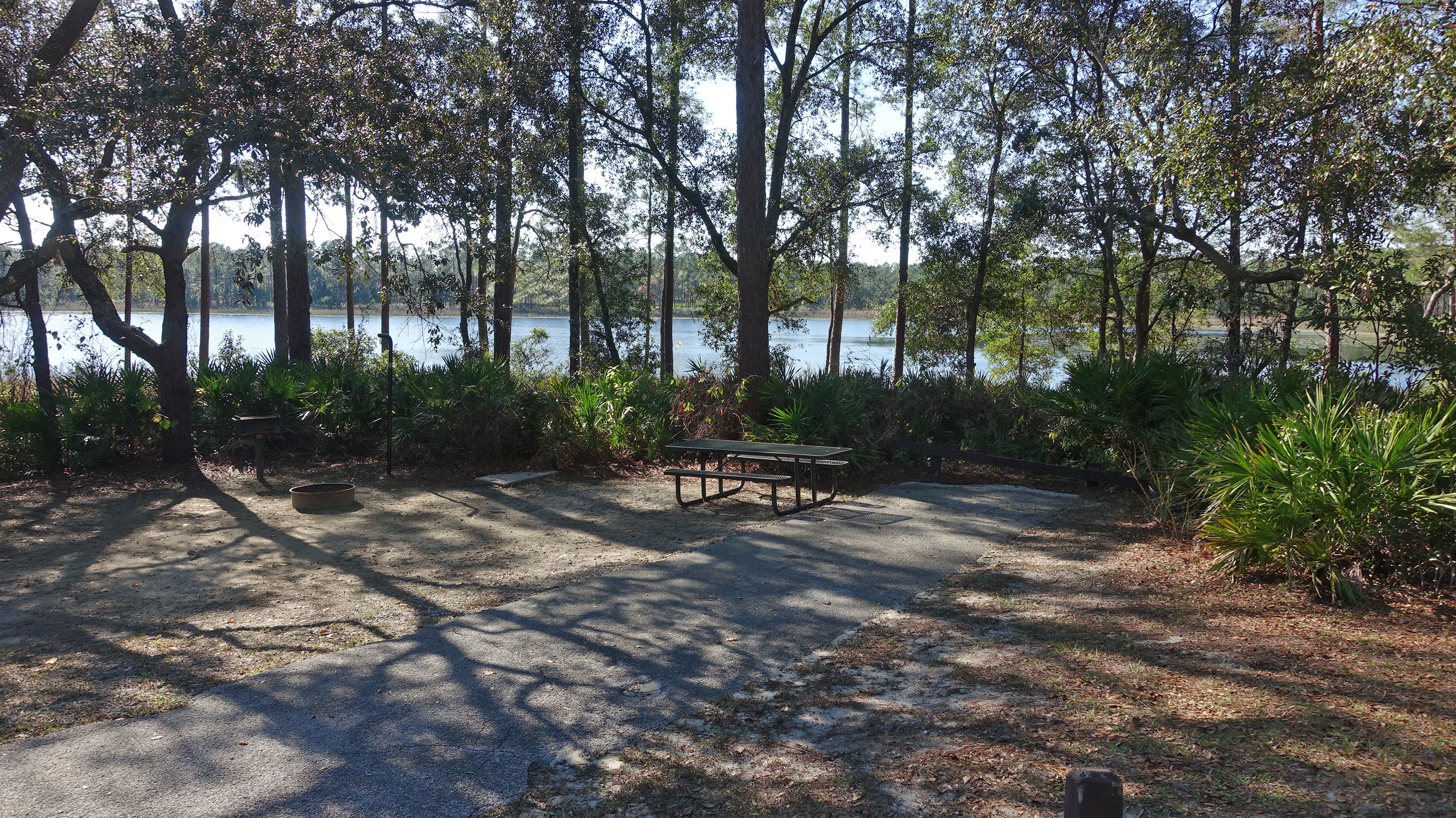
Fore Lake
Best for: Fishing, birding, paddling, and low-key lake camping
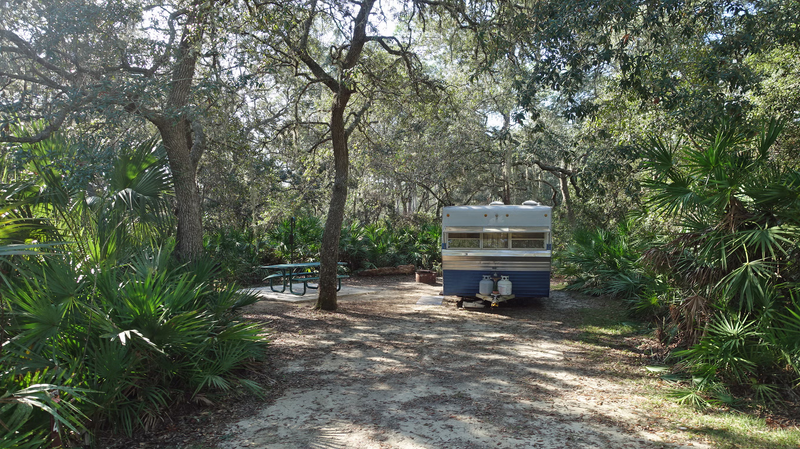
Fore Lake has 31 campsites tucked among oak and saw palmetto near a marsh-edged lake. The fishing pier and canoe launch make it particularly useful for anglers and paddlers, while a swimming and picnic area adds another option close to camp.
Both tents and camping trailers are welcome. Most sites are non-electric, although several currently listed sites provide 30-amp electric hookups, and paid campers can use the dump station.
Hopkins Prairie
Best for: Rustic camping, hiking, birding, and a less-developed setting
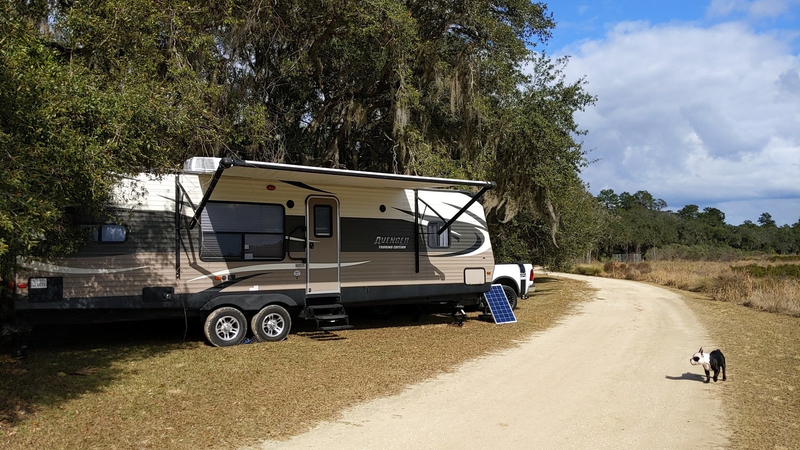
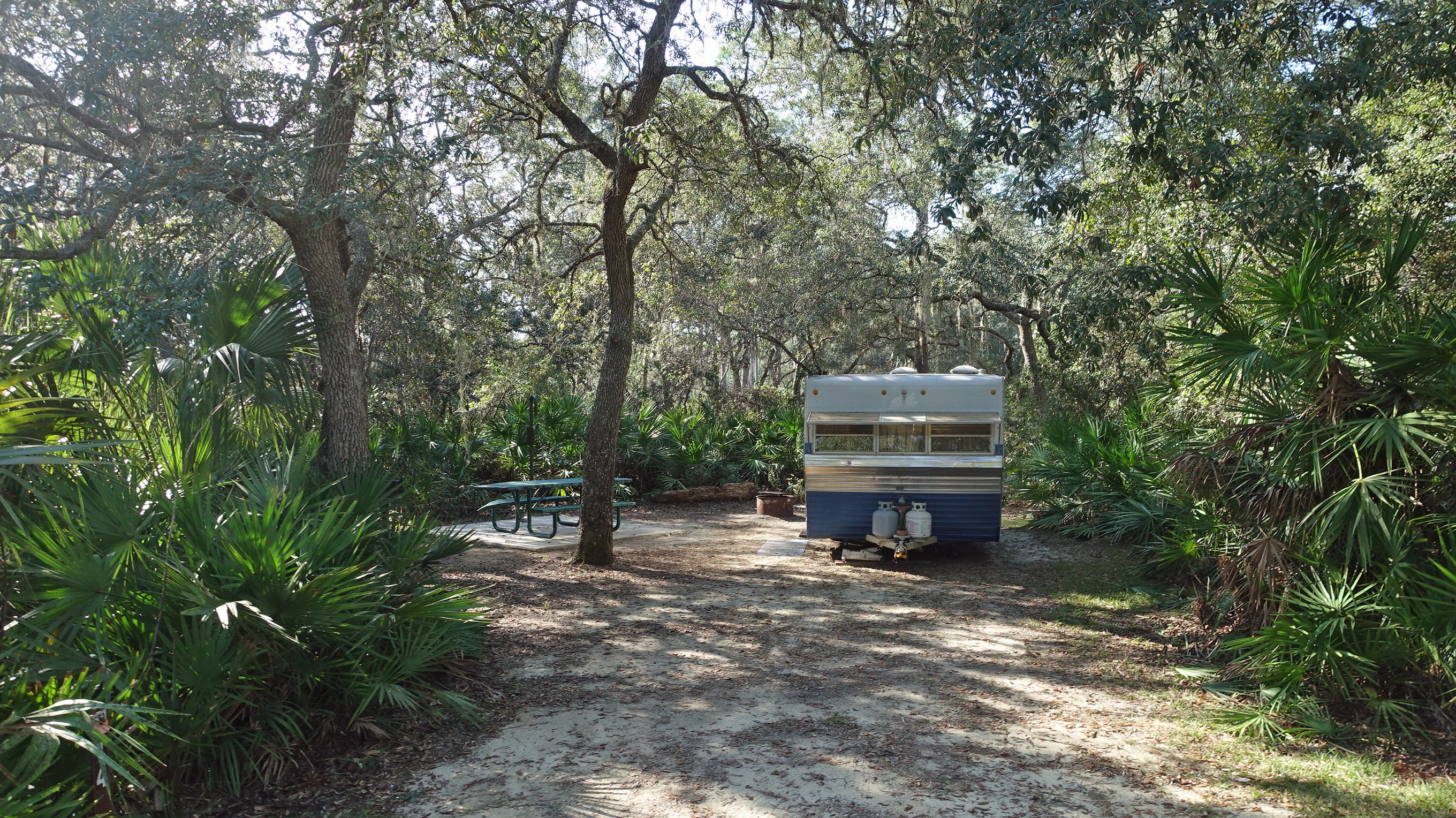
Hopkins Prairie feels noticeably more primitive than Ocala’s developed spring campgrounds. Its 21 shaded sites sit in an oak hammock beside a broad prairie directly along the Florida Trail. Facilities are limited to basics such as vault toilets and hand-pump water, and there are no hookups.
Tents, RVs, and trailers are permitted, but individual sites vary in size. The campground operates seasonally, and water levels can affect paddling and the character of the prairie.
Lake Delancy West
Best for: OHV riders, small trailers, tents, and campers seeking fewer amenities
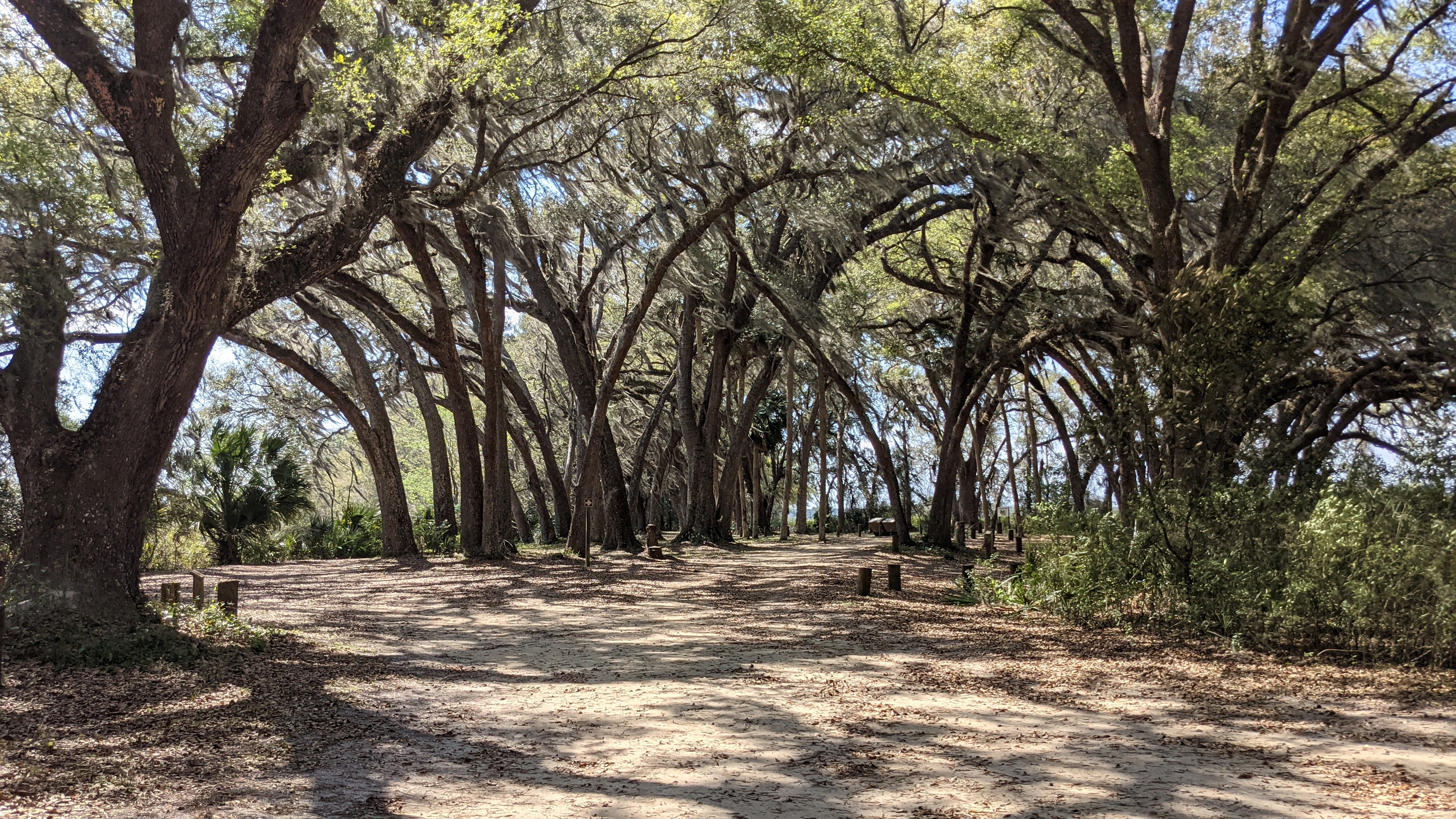
Lake Delancy West is a more rustic option tied closely to the Ocala North OHV Trail System. Tent and small-trailer camping is available in the pine forest along the western shore, with direct access to OHV trails and the Florida Trail. Parts of the campground also use dispersed-style camping within a designated area.
Amenities are limited, and bears frequent the area, so proper food storage is required. Because trail operations and access can change, check current Forest Service or Recreation.gov notices before heading out.
RV Camping in Ocala National Forest
RV camping in Ocala National Forest ranges from full-hookup sites to dry camping in wooded recreation areas. The right choice depends on your rig size, how much utility access you want, and whether you’re comfortable driving farther onto forest roads.
- Full and partial hookups: Salt Springs is the main option for RVers who want full hookups. Recreation.gov identifies it as the only Ocala National Forest campground with full-hookup RV sites, including electric, water, and sewer connections. Fore Lake is a middle ground: most of its sites are non-electric, but several have 30-amp electric service without individual water hookups. Alexander Springs and Juniper Springs do not have full-hookup sites.
- RV size and site fit: Don’t treat a campground’s RV-friendly label as a guarantee that every site will fit your rig; dimensions may vary. For example, current Alexander Springs listings include individual sites with maximum RV lengths ranging from 29 to 35 feet, while some Salt Springs hookup sites accommodate RVs or trailers up to 40 feet. Hopkins Prairie permits RVs and trailers but specifically warns about low-hanging branches that can make access difficult for taller rigs.
- Dump stations and water: Utility access also differs by campground. Juniper Springs has a dump station despite having no full hookups, while Fore Lake provides a dump station for paid campers and water faucets around the campground. Salt Springs full-hookup sites remove much of that planning by providing water and sewer at the campsite.
- Forest road access: Developed spring campgrounds are generally easier choices for larger RVs than some of Ocala’s more remote camping areas, but access becomes more variable once you leave the main paved routes. Hopkins Prairie, for example, is reached by unmarked, unimproved roads, and its official listing warns about overhead clearance.
Dispersed and Primitive Camping in Ocala National Forest
Ocala National Forest has both dispersed camping and primitive campgrounds, but they are not the same experience. The main difference is whether you are staying in a designated campground or outside developed campground infrastructure.
Is dispersed camping allowed?
Yes. Dispersed camping is generally allowed in Ocala National Forest outside developed recreation areas, but seasonal restrictions apply. During General Gun Hunting Season, dispersed camping is prohibited except in designated campgrounds and certain designated areas such as Juniper Prairie Wilderness. Check current Forest Service orders and hunting-season information before choosing a site.
Dispersed vs. primitive campground camping
Dispersed camping means camping outside a developed campground, usually without assigned sites, hookups, restrooms, or other campground facilities.
Primitive campground camping takes place at a designated campground or campsite with limited amenities. You may still have an established site, basic restroom facilities, or a water source even though hookups and other conveniences are unavailable.
Buck Lake Group Camp, for example, is officially described by the Forest Service as primitive camping and has restrooms but no potable water.
Where to look for dispersed camping
Use current Forest Service maps, alerts, and forest orders to confirm where camping is permitted rather than relying on an old campsite list. Campendium can then help you compare public-land camping locations, recent camper reports, road-access notes, and nearby alternatives before driving into the forest.
What to expect
Dispersed camping means planning to be self-sufficient. Expect no hookups and few, if any, facilities, so bring enough water and have a plan for trash and human waste. Forest roads may be sandy, rutted, or difficult after rain, and cell service can be limited.
Store food securely because black bears are present in the forest, follow current fire restrictions, use previously disturbed sites where possible, and follow Leave No Trace practices. Forest Service guidance also prohibits dispersed camping near developed recreation areas and within 100 feet of streams and other water sources.
Reservations, Fees, Seasons, and Camping Rules
Camping rules and booking procedures vary across Ocala National Forest, so check the exact campground and current Forest Service notices before your trip.
- Reservations: Developed campgrounds such as Alexander Springs can be reserved through Recreation.gov, while some smaller or seasonal campgrounds may operate without online reservations or use first-come availability. Check the individual campground listing rather than assuming one policy applies forest-wide.
- Best time to camp: Fall through spring generally brings cooler, more comfortable camping weather. Summer is hotter, wetter, and more humid, although the forest’s 72°F springs remain popular for swimming and paddling.
- Stay limits: Current Ocala campground listings commonly state a maximum stay of 14 days within a 30-day period. Posted site-specific rules still apply, so confirm the limit for your campground before settling in.
- Bears and wildlife: Florida black bears live throughout the forest, and Forest Service food-storage rules require campers to secure food, garbage, and other attractants. Raccoons are another common campsite visitor, while alligators may be present around lakes, springs, and wetlands, so keep food secured and give wildlife plenty of space.
How to Choose Your Ocala National Forest Campground
The easiest way to narrow your options is to start with the kind of trip you want.
- Want full RV hookups? → Salt Springs
Salt Springs is the main choice for RVers who want electric, water, and sewer connections at their campsite. - Want spring swimming? → Compare Alexander Springs, Juniper Springs, and Salt Springs
All three put you close to clear spring water, but they differ in campground feel, RV amenities, and nearby activities. - Want paddling? → Prioritize the spring-run campgrounds
Juniper Springs and Alexander Springs are strong choices if canoeing or kayaking is a major part of the trip. - Want quieter camping? → Look beyond the three major spring recreation areas
Clearwater Lake, Fore Lake, and other smaller campgrounds can offer a more low-key forest or lakeside stay. - Want primitive camping? → Consider rustic forest campgrounds
Places such as Hopkins Prairie and Lake Delancy provide a more basic camping experience with fewer amenities. - Want dispersed camping? → Check current USFS restrictions and public-land options
Dispersed camping is available in parts of Ocala National Forest, but seasonal rules and location restrictions apply. Confirm current Forest Service guidance before choosing a site.
Once you know which camping style fits your trip, use Campendium to compare campground reviews, photos, RV details, amenities, cell coverage, and nearby public-land options.
Frequently Asked Questions
There isn’t one best campground for every trip. Alexander Springs is a strong choice for swimming and snorkeling, Juniper Springs for paddling, Salt Springs for RV hookups, and Clearwater Lake or Fore Lake for a quieter developed campground.
No. Camping is allowed in developed campgrounds and in qualifying dispersed areas, but some recreation areas, roadsides, environmentally sensitive locations, and seasonally restricted areas are off-limits. Check current Forest Service maps and orders before setting up outside a designated campground.
Yes, dispersed camping is allowed in parts of Ocala National Forest outside developed campgrounds. However, location and seasonal restrictions apply, including additional rules during hunting seasons. Confirm current Forest Service orders before your trip rather than assuming any undeveloped spot is open for camping.
Salt Springs Recreation Area is the only Ocala National Forest campground with full RV hookups, including electric, water, and sewer connections. Fore Lake also has a limited number of electric-only sites.
Florida black bears are native to Ocala National Forest, so campers should plan for bear-safe food storage. Forest Service rules require food, garbage, and other attractants to be secured so wildlife cannot access them. Never leave food or coolers unattended around camp.
Find Your Ocala National Forest Campsite With Campendium
Ocala National Forest gives campers several ways to stay, from spring-focused campgrounds such as Alexander Springs and Juniper Springs to full-hookup RV camping at Salt Springs, quieter lake campgrounds, primitive sites, and dispersed camping on eligible public land. The best choice comes down to the experience you want, your rig or tent setup, the amenities you need, and how far you’re comfortable traveling on forest roads.
Explore Ocala National Forest campgrounds on Campendium to compare recent camper reviews, campsite photos, RV amenities, cell coverage, and nearby public-land camping options on the map. Check recent reviews before you go for updates on access, site conditions, campground availability, and rig fit.