Glamping means “glamorous camping,” a style of outdoor stay that combines camping with more comfort and ready-to-use accommodations. Instead of pitching your own tent, you might sleep in a furnished safari tent, yurt, dome, cabin, treehouse, or stationary Airstream. Beds are common, but other amenities vary by property.
This guide explains what qualifies as glamping, which amenities you might find, how glamping differs from traditional camping, and the most common types of glamping accommodations.
TL;DR
- Glamping combines camping with added comfort: Expect a nature-focused stay with a furnished, ready-to-use accommodation rather than pitching your own basic tent.
- There isn’t one universal amenity checklist: Beds are common, while electricity, private bathrooms, kitchens, heating, air conditioning and other extras vary.
- Glamping comes in many forms: Safari tents, yurts, domes, cabins, treehouses and stationary Airstreams can all qualify depending on the setup.
What Does Glamping Mean?
Glamping is a form of camping that combines an outdoor setting with more comfort and ready-to-use accommodations. Instead of bringing and setting up all your own sleeping gear, you typically stay in a furnished structure such as a safari tent, yurt, dome, cabin, treehouse, or stationary trailer. Amenities vary by property.
Why is it called glamping?
It is called glamping because the word combines “glamorous” and “camping.” The name refers to outdoor stays that keep the nature-focused setting of camping while adding comforts such as furnished shelter, a real bed, electricity, or other amenities, depending on the property.
What Qualifies as Glamping?
There is no official checklist of amenities that every glamping stay has to include. In general, a glamping experience has three characteristics: an outdoor or nature-focused setting, a ready-to-use place to sleep, and more comfort or convenience than basic tent camping.
- A connection to the outdoors: The setting is still part of the experience, whether the accommodation is a tent, yurt, cabin, dome, or trailer.
- A ready-to-use place to sleep: The shelter is typically set up and furnished before you arrive.
- More comfort or convenience than basic tent camping: This may mean a real bed, furniture, electricity, climate control, or bathroom access, depending on the property.
Does it count as glamping?
| Accommodation/setup | Usually glamping? | Why |
|---|---|---|
| Furnished safari tent | Yes | Prepared shelter, bed, and outdoor setting |
| Yurt or dome | Usually | Furnished lodging in a nature-focused setting |
| Treehouse or cabin | Often | Depends on the setting, furnishings, and overall experience |
| Stationary Airstream | Often | Ready-to-stay accommodation supplied by the property |
| Personal RV | Usually considered RV camping | You bring your own accommodation |
| Tent you pitch yourself | Usually traditional camping | You provide and set up the shelter |
The line can be fuzzy. A rustic cabin with little more than a bed may be marketed as glamping, while another cabin may feel closer to a standard vacation rental. The label matters less than checking what is actually included before you book.
Glamping vs. Camping
Glamping and traditional camping both keep you close to the outdoors, but the amount of setup, gear, and comfort can be very different. It usually provides more of the accommodation for you, while traditional camping tends to be more hands-on.
| Glamping | Traditional camping | |
|---|---|---|
| Shelter | Usually provided | Usually brought and set up by the camper |
| Bed | Often a real mattress or bed | Sleeping pad, cot, or air mattress |
| Setup | Minimal | Camper usually handles setup |
| Electricity | Sometimes available | Depends on the campsite |
| Bathroom | Private or shared, depending on the property | Campsite facilities vary |
| Kitchen | Sometimes included | Camper usually brings cooking gear |
| Experience | Outdoors with added comfort | More hands-on, DIY outdoor experience |
The biggest difference is how much of the accommodation and setup is handled for you. Glamping usually provides the shelter and sleeping space before you arrive, while traditional camping often means bringing your own gear and setting up camp yourself.
There is still plenty of overlap. A glamping stay may have no private bathroom or electricity, while a developed campground can offer power, showers, and other conveniences. The type of shelter, setup, and included amenities usually matters more than the label.
Is glamping the same as luxury camping?
Broadly, yes. “Luxury camping” and “glamping” are often used to describe the same idea, but glamping covers a wider range of comfort levels. Some stays are simple furnished tents with a bed, while others include private bathrooms, kitchens, heating, air conditioning, or resort-style amenities.
What Amenities Do Glamping Sites Have?
Glamping amenities vary widely by property, so it is worth checking the listing details before you book. A furnished sleeping space is common, but features such as electricity, private bathrooms, kitchens, and climate control are not guaranteed.
- Sleeping: Real beds, mattresses, linens, or other furnished sleeping spaces are common.
- Electricity: Many glamping stays have electricity, but some do not, especially in more remote settings.
- Bathrooms: Bathrooms may be private, shared with other guests, or located separately from the accommodation.
- Kitchen: Some stays have no cooking facilities, while others include a kitchenette or full kitchen.
- Heating and air conditioning: Availability depends on the property, accommodation type, and location.
- Outdoor amenities: Fire pits, decks, outdoor seating, grills, and hot tubs may be included, but these features vary by property.
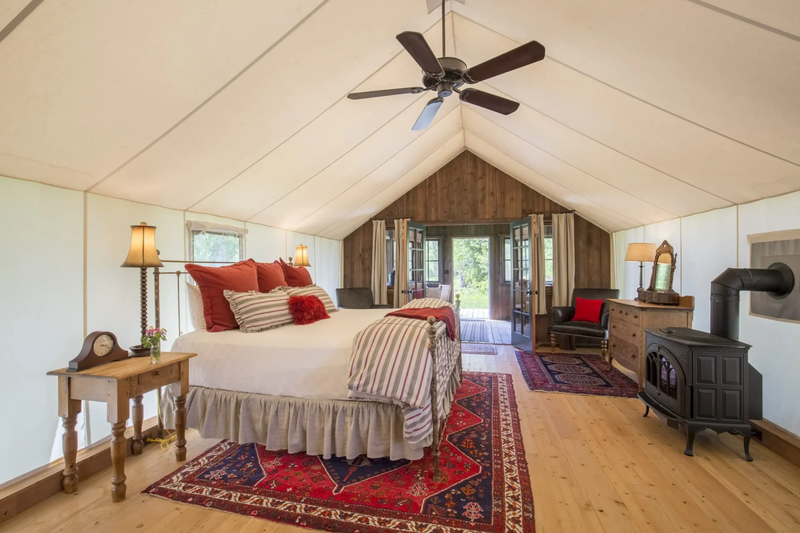
Common Types of Glamping
Glamping can take many forms, but most stays fall into a handful of recognizable accommodation types. The main difference is the structure itself and how much comfort, privacy, and convenience it provides.
Safari and canvas tents
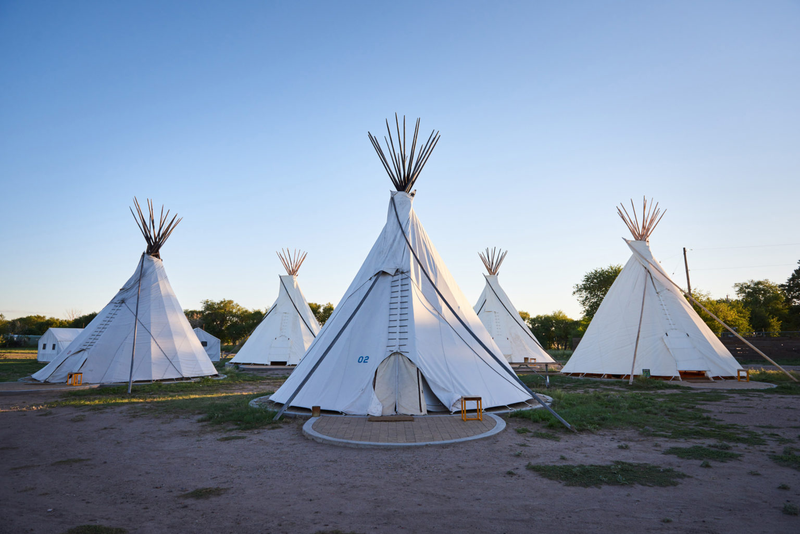
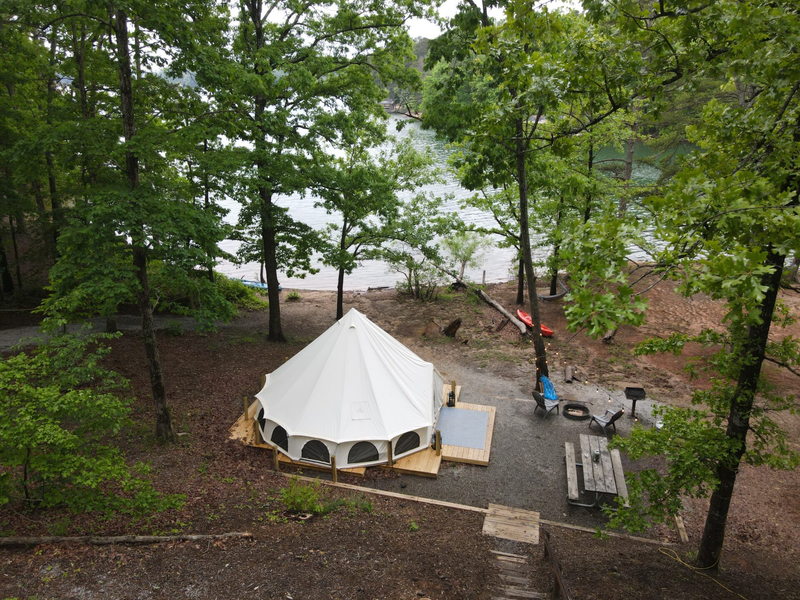
Safari and canvas tents are among the most recognizable forms of glamping. Unlike a tent you pitch yourself, these shelters are already set up and usually furnished with a bed, lighting, seating, and other basic comforts. Some properties add electricity, private bathrooms, decks, or kitchen facilities, while simpler versions may rely on shared campground amenities.
Yurts and domes
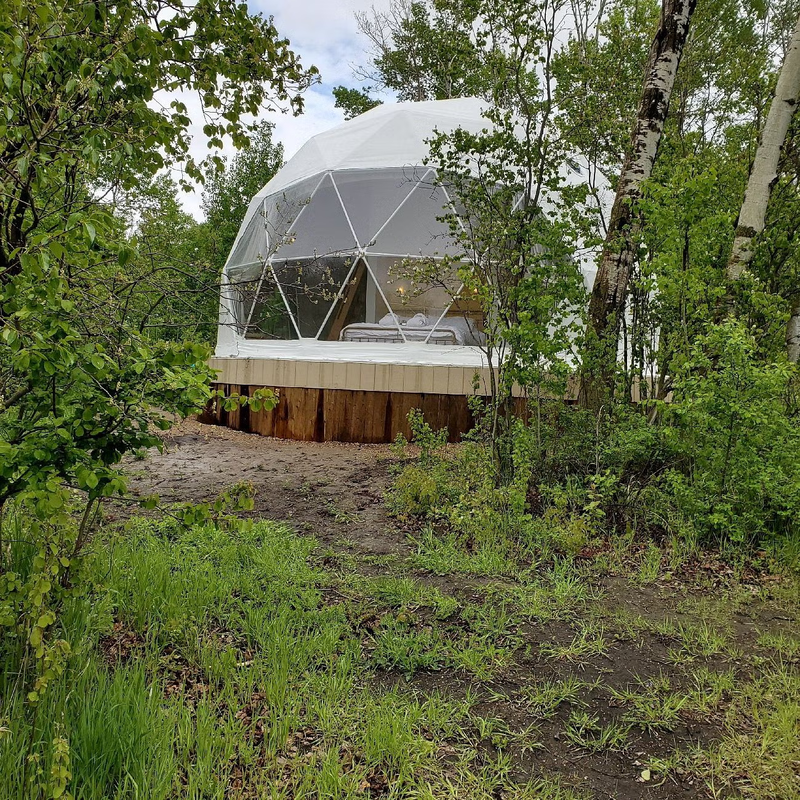
Yurts and geodesic domes provide an enclosed sleeping space while keeping guests close to an outdoor setting. They often include beds and furniture, with some properties adding electricity, heating, air conditioning, or private bathrooms. Others are more basic. Their enclosed construction can offer more protection from weather than a traditional tent, though features vary considerably between locations.
Cabins and treehouses
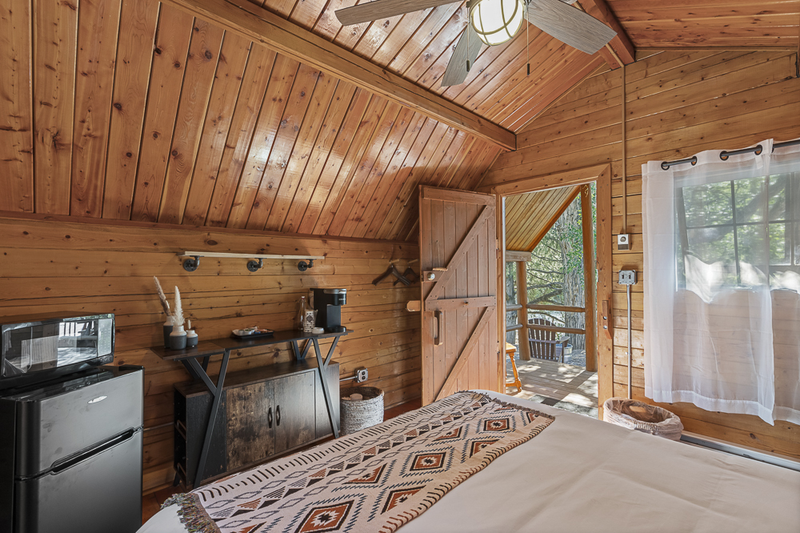
Cabins and treehouses can qualify as glamping when the stay is centered on an outdoor setting and provides furnished, ready-to-use lodging. Accommodations range from simple one-room cabins to treehouses with bathrooms, kitchens, heating, or outdoor decks. Not every cabin is marketed as glamping, so the setting, included amenities, and type of experience usually determine how a property describes it.
Airstreams, trailers, and stationary RVs
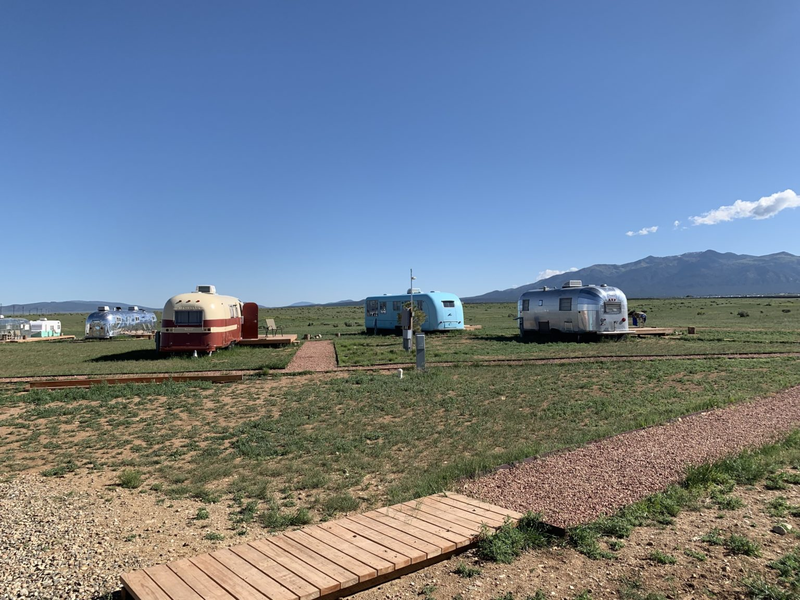
Airstreams, travel trailers, and other stationary RVs can be offered as glamping accommodations when they are already parked, furnished, and prepared for guests. These stays may include beds, kitchens, bathrooms, electricity, and climate control. The key distinction is that the property provides the accommodation. Bringing your own RV to a campsite is generally considered RV camping instead.
Tiny homes and other unique stays
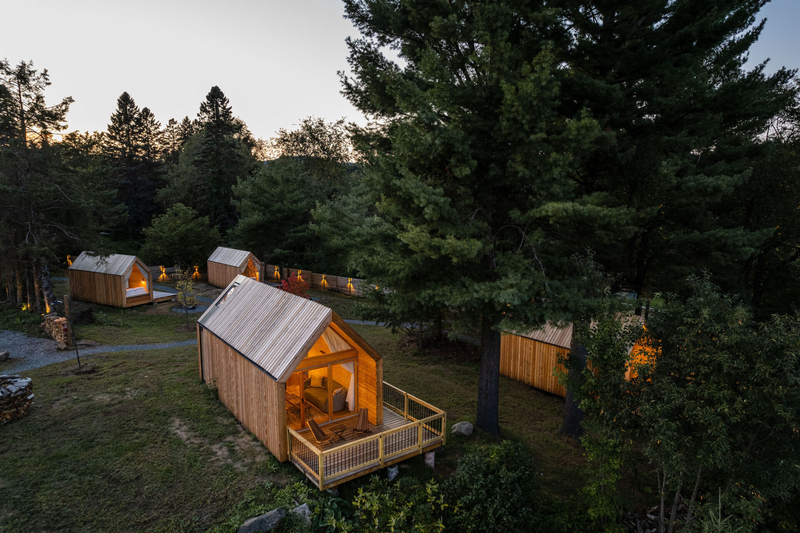
Tiny homes and other unusual structures can also fall under the glamping umbrella when they combine ready-to-use lodging with an outdoor-focused setting. Depending on the property, that could include pods, converted structures, or other compact accommodations. Amenities range from simple sleeping quarters to stays with kitchens and private bathrooms, so check the listing rather than assuming a certain level of comfort.
How to Find Glamping and Unique Stays
Start with the type of stay you want, then compare the details that will affect your trip. Glamping amenities can vary widely, even between similar accommodation types.
- Choose your accommodation type: Look for safari tents, yurts, cabins, treehouses, stationary Airstreams, tiny homes, or other unique stays.
- Check the actual amenities: Confirm what is included rather than assuming that every glamping stay has electricity, a kitchen, or a private bathroom.
- Read recent reviews: Look for current information about the stay, property, facilities, and overall experience.
- Compare photos: Photos can help you understand the sleeping space, bathroom setup, outdoor areas, and how close accommodations are to one another.
- Confirm practical details: Check bathroom access, heating or air conditioning, road access, and any other features that matter to your trip.
- Compare nearby alternatives: Save a few options in case another property offers a better mix of location, amenities, and accommodation style.
Explore glamping-style stays and unique camping options on Campendium to compare reviews, photos, amenities, locations on the map, and nearby alternatives before you book.
Not sure where to start? These U.S. regions and campgrounds are worth checking first.
Popular Glamping Regions in the U.S.
Glamping options range from furnished tents near national parks to Airstream rentals, wagons, yurts, and other ready-to-use stays. If you are not sure where to start, these regions have glamping properties that you can also find on Campendium.
Zion and Southern Utah
Southern Utah has several glamping options near Zion and the surrounding red-rock country. Zion White Bison Resort in Virgin combines RV camping with covered wagons, tipis, and cliff-dwelling accommodations. Its Campendium listing places it near Zion National Park and includes reviews from travelers who stayed in the glamping units.
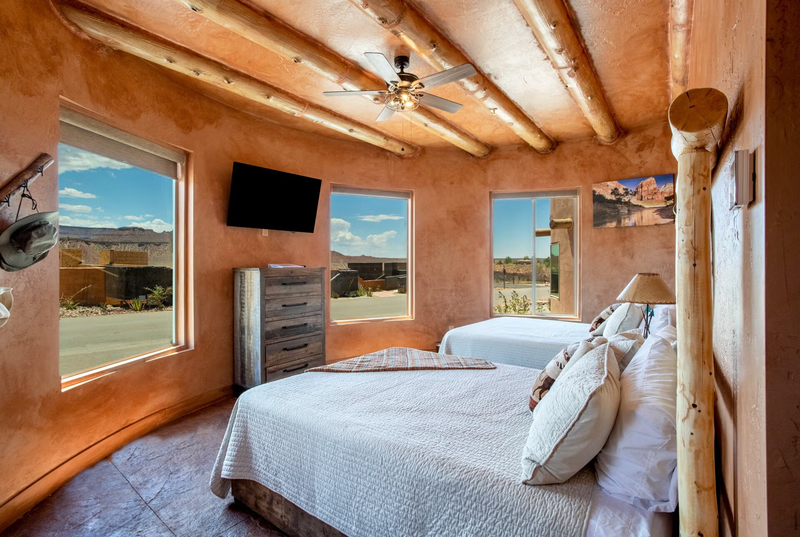
Another option is Zion Glamping Adventures in Hildale, where the Campendium listing describes 22 sites and furnished tents with bedding and access to showers and restrooms. It gives travelers a tent-based alternative to the RV resorts and cabins found elsewhere in the region.
Yosemite and the Sierra Nevada
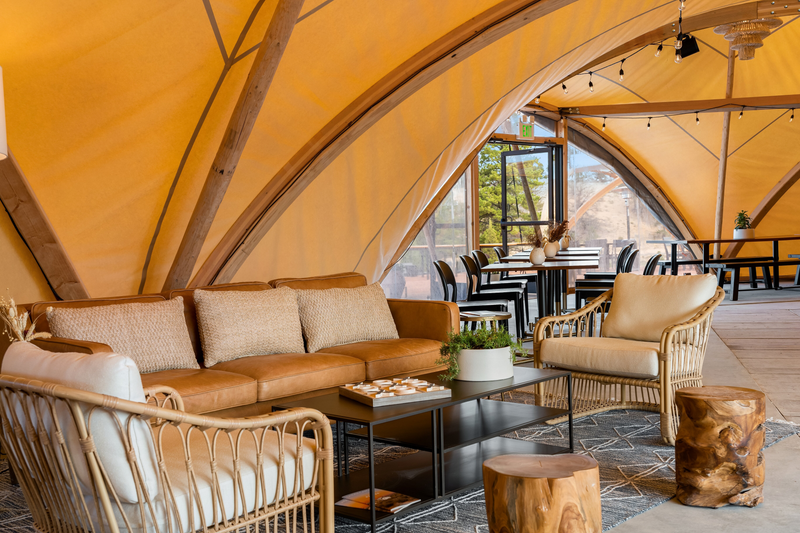
Near Yosemite, Under Canvas Yosemite in Groveland offers furnished tent accommodations on forested land close to the park’s Big Oak Flat entrance. Its Campendium entry lists king-size beds and ensuite bathrooms, making it an example of the more amenity-rich end of tent glamping.
Also in Groveland, Yosemite Pines RV Resort combines regular RV and tent camping with yurts, retro trailers, cabins, and Conestoga wagons. That mix makes it useful for groups where some travelers want a traditional campsite while others prefer ready-to-use lodging.
Great Smoky Mountains
On the Townsend side of the Smokies, Little Arrow Outdoor Resort has RV sites alongside glamping tents, tiny homes, cabins, and other accommodations. Campendium reviews also mention safari-style glamping tents, making this a good example of glamping offered within a larger RV resort.
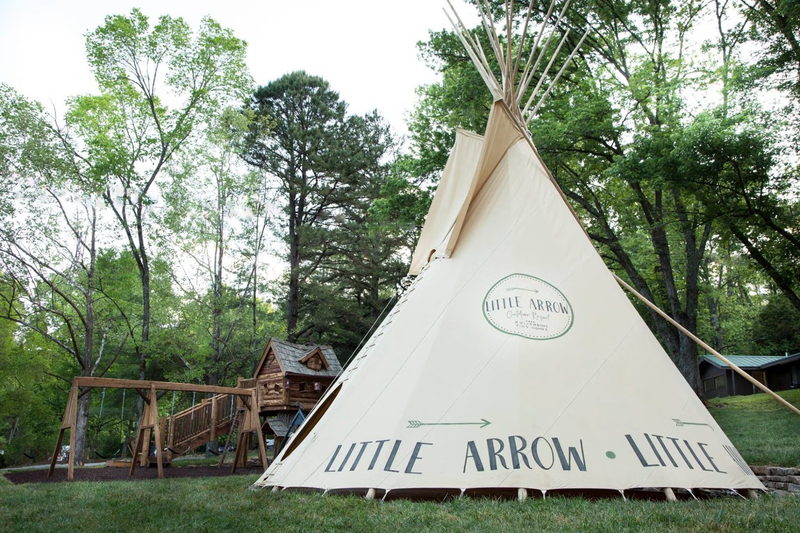
Closer to Pigeon Forge and Sevierville, The Ridge Outdoor Resort offers canvas glamping tents and tiny-home cabins alongside RV sites. Its Campendium listing also places it within easy reach of the Great Smoky Mountains area, giving travelers another option if they want campground facilities without bringing their own accommodation.
Maine and the Northeast
In coastal Maine, Sandy Pines Campground in Kennebunkport has one of the broader mixes of unique stays in this list. Its Campendium entry mentions an Airstream, a shepherd’s hut, a glass house, a dome, and Conestoga wagons in addition to conventional camping.
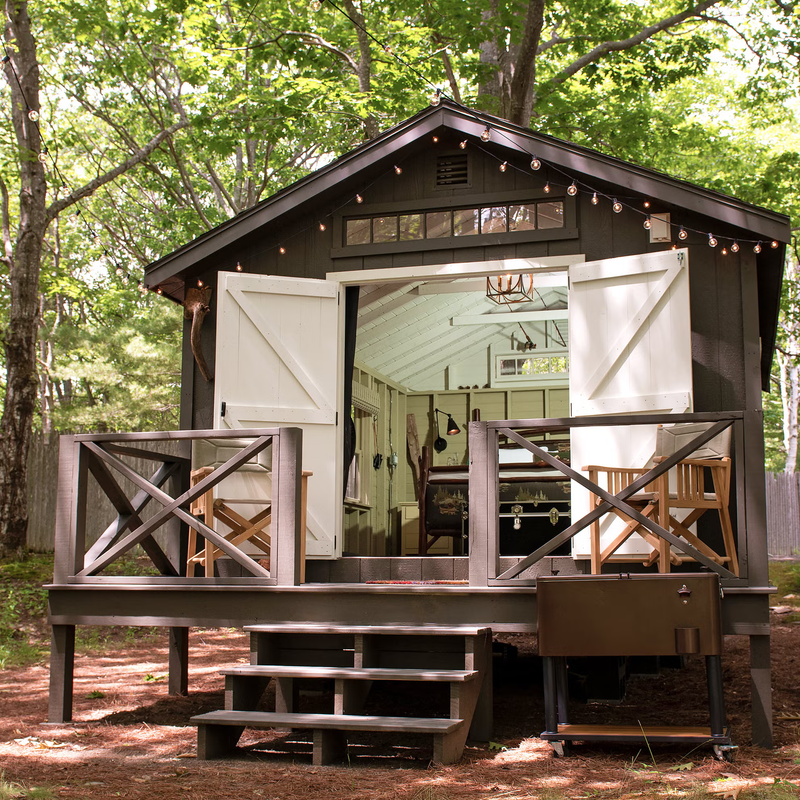
Farther inland, Point Sebago Resort on Sebago Lake offers cabins, cottages, RV sites, and glamping tents. This is another example of glamping existing within a full campground or resort rather than as a separate property devoted only to furnished tents.
Pacific Northwest
On Washington’s San Juan Island, Lakedale Resort combines traditional campsites with log cabins and furnished canvas cabins. Campendium describes the canvas cabins specifically as a glamping option, and camper reviews also mention yurts and other accommodations around the property’s lakes.
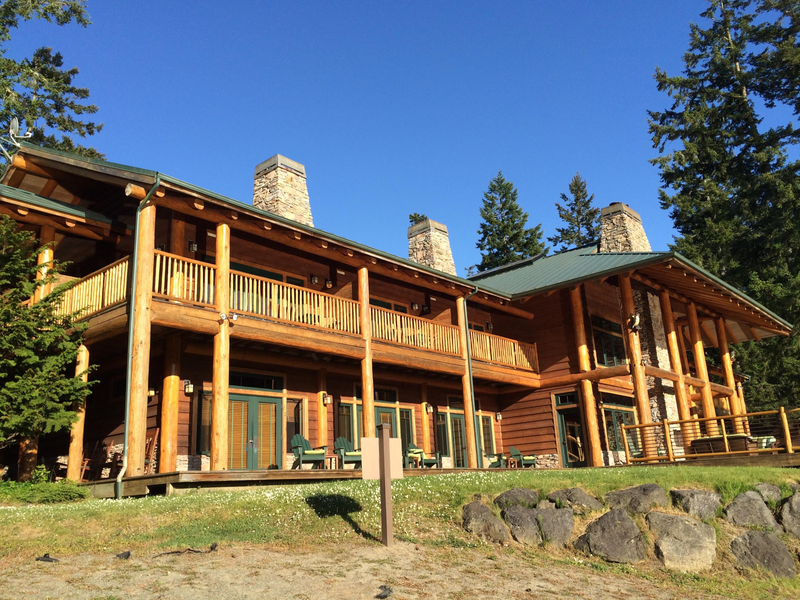
On the southern Oregon Coast, Bay Point Landing in Coos Bay mixes RV camping with stationary Airstream vacation rentals and cottages. Campendium’s listing and camper reports make it a useful example of the distinction discussed earlier in this guide: renting an Airstream already set up as lodging can fall under glamping, while arriving in your own RV is RV camping.
Texas Hill Country
Near Marble Falls and Lake Travis, Talula Mesa Glamping Resort focuses on furnished tent accommodations spread across a Hill Country property. It has its own Campendium map listing, making it one of the more straightforward examples for readers specifically searching for tent-based glamping.
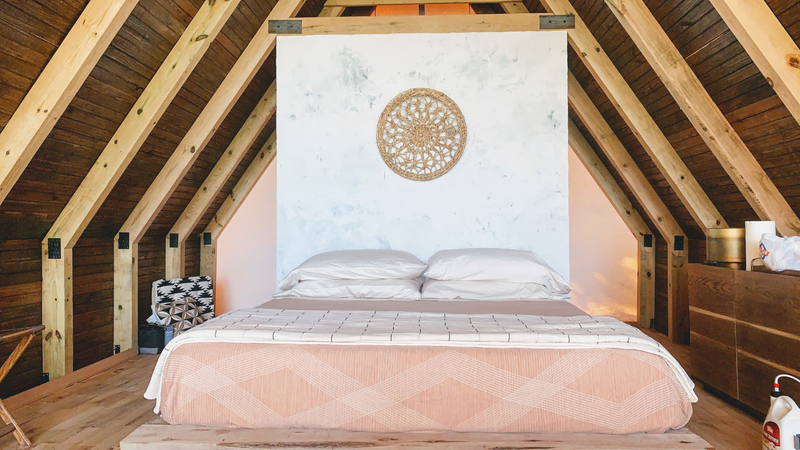
Farther west in Mason, Dos Rios RV Park offers RV sites alongside cabins, tiny homes, vintage Airstreams, and glamping tents near the Llano River. The variety makes it another useful example of how RV camping and glamping can exist at the same property without meaning the same thing.
Frequently Asked Questions
Glamping gets its name from combining the words “glamorous” and “camping.” The term describes outdoor stays that keep the nature-focused setting of camping while adding more comfort, furnished accommodation, or convenient amenities than you would normally expect from basic tent camping.
Sometimes. A glamping stay may have a private bathroom inside the accommodation, a shared bathhouse, or separate restroom facilities nearby. Some properties use composting toilets, especially in remote areas. Because there is no universal standard, check the property details before booking.
Glamping generally has three features: a connection to the outdoors, a ready-to-use place to sleep, and more comfort or convenience than basic tent camping. The exact shelter and amenities can vary, so a furnished yurt, safari tent, cabin, dome, or stationary trailer may all qualify.
Glamping usually provides the shelter, sleeping space, and at least some furnishings before you arrive. Traditional camping is more hands-on and often involves bringing your own tent, sleeping gear, and cooking equipment. Both can offer an outdoor experience, but glamping generally requires less setup and provides more built-in comfort.
It depends on the setup. A stationary, furnished Airstream, trailer, or RV rented as the accommodation can be considered glamping. If you bring and stay in your own RV, the experience is normally described as RV camping because you are providing the accommodation yourself.
Find Your Glamping Stay With Campendium
Glamping can be as simple as a furnished canvas tent or as comfortable as a cabin, dome, or stationary Airstream with private facilities. What matters most is checking what the stay actually includes, since beds are common but bathrooms, electricity, kitchens, heating, and other amenities vary by property.
Once you know the type of experience you want, compare the practical details before you book. Explore glamping-style stays and unique camping options on Campendium to check reviews, photos, amenities, locations on the map, and nearby alternatives that fit your trip.