Olympic National Park camping takes some planning because the park’s campgrounds are spread across very different areas. A campsite near the Pacific coast can put you hours from Hurricane Ridge, while staying near Lake Crescent may be less convenient for a trip centered on the Hoh Rain Forest.
The right campground also depends on how you camp. This guide compares the main Olympic National Park campgrounds by location, setting, RV fit, amenities, and reservation requirements, with nearby alternatives for trips that need more space, hookups, or easier access.
TL;DR
- Choose Kalaloch for Pacific coast access or Mora if Rialto Beach, La Push, and Forks are higher on your list.
- Hoh Rain Forest Campground puts you close to the Hoh trails and cuts down on driving for rainforest-focused trips.
- Fairholme works well for Lake Crescent and the park’s north side, but RVers who need hookups should also compare nearby alternatives.
Olympic National Park campgrounds at a glance
Olympic National Park campgrounds vary widely by location, scenery, reservation rules, and RV access. Most park-operated campgrounds do not have hookups, and several are better suited to tents, vans, and smaller RVs than large motorhomes or trailers.
| Campground | Area | Setting | Tent/RV | Hookups |
|---|---|---|---|---|
| Kalaloch | Southwest coast | Pacific bluff and coastal forest | Tent + RV | No |
| Mora | West side | Coastal forest near Quillayute River | Tent + RV | No |
| Hoh Rain Forest | Hoh Valley | Temperate rainforest and river | Tent + RV | No |
| Fairholme | Lake Crescent | Lakeside forest | Tent + RV | No |
| Heart O’ the Hills | Port Angeles / Hurricane Ridge | Old-growth forest | Tent + RV | No |
| Sol Duc Campground | Sol Duc Valley | Forest near Sol Duc River and hot springs | Tent + RV | No |
| Sol Duc RV Park | Sol Duc Valley | Resort RV area | RV | Water + electric |
| Staircase | Southeast Olympic | Old-growth forest and Skokomish River | Tent + RV | No |
| South Beach | Southwest coast | Pacific bluff | Tent + RV | No |
Reservation periods and RV limits above reflect current 2026 National Park Service information. Site dimensions vary within each campground, so RVers should check the individual campsite before booking, especially with a longer trailer or motorhome.
Best Campgrounds in Olympic National Park
The best Olympic National Park campground depends more on your itinerary than on any single ranking. The park is large enough that choosing a campground close to the places you actually plan to visit can save a considerable amount of driving.
Kalaloch Campground: Best for Pacific Coast camping
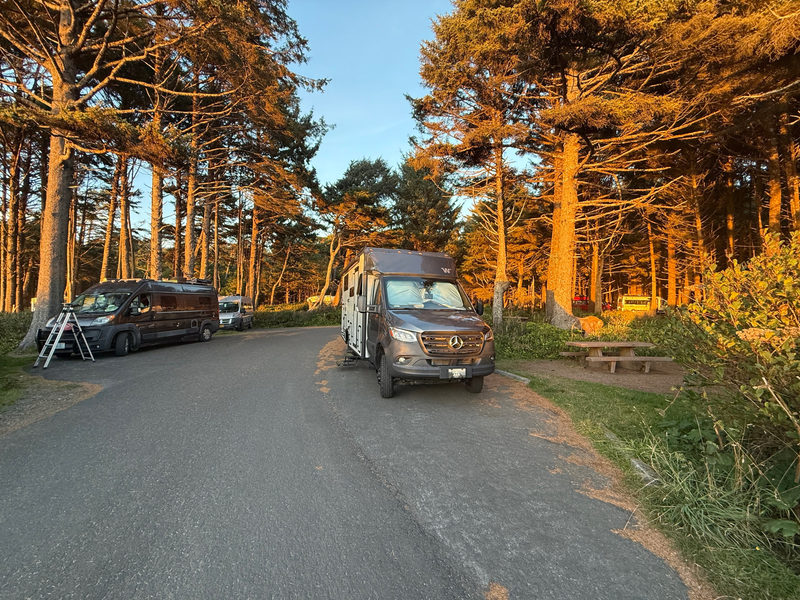
Kalaloch is one of the strongest choices for campers who want the Pacific coast to be the focus of the trip. The campground sits on a bluff above the ocean, with some campsites overlooking the water and access to nearby beaches. It accommodates tents and RVs, with most RV sites suited to vehicles around 21 feet and a smaller number accommodating rigs up to about 35 feet.
Facilities include potable water, flush toilets, and a dump station. Reservations are required during the summer reservation period, while camping shifts to first-come, first-served outside that window.
Kalaloch works especially well for a coast-centered itinerary, but its southwest location means more driving if Hurricane Ridge, Port Angeles, or Lake Crescent are major parts of your trip. Campendium reviews and site photos are useful here because campsite exposure, forest cover, and RV fit can vary. Recent reviewers also note the appeal of being close to the beach and the lack of campsite hookups.
Hoh Rain Forest Campground: Best for rainforest camping
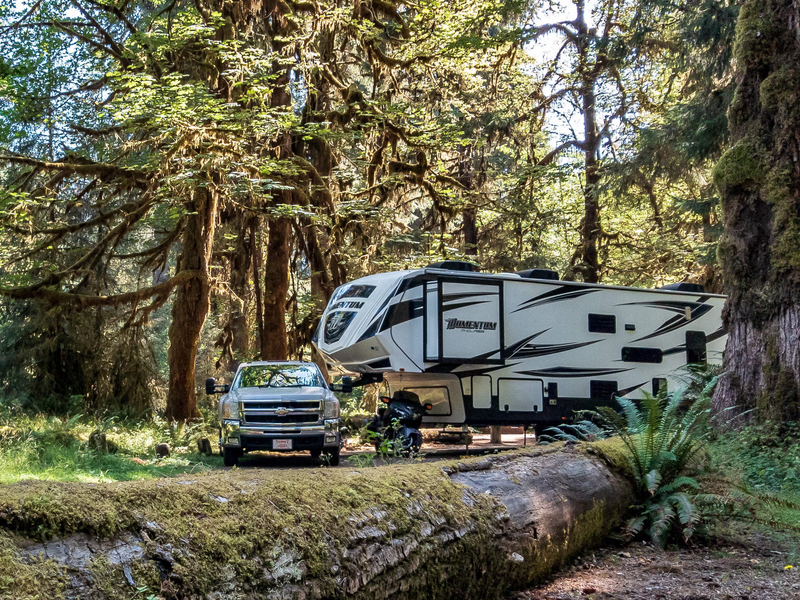
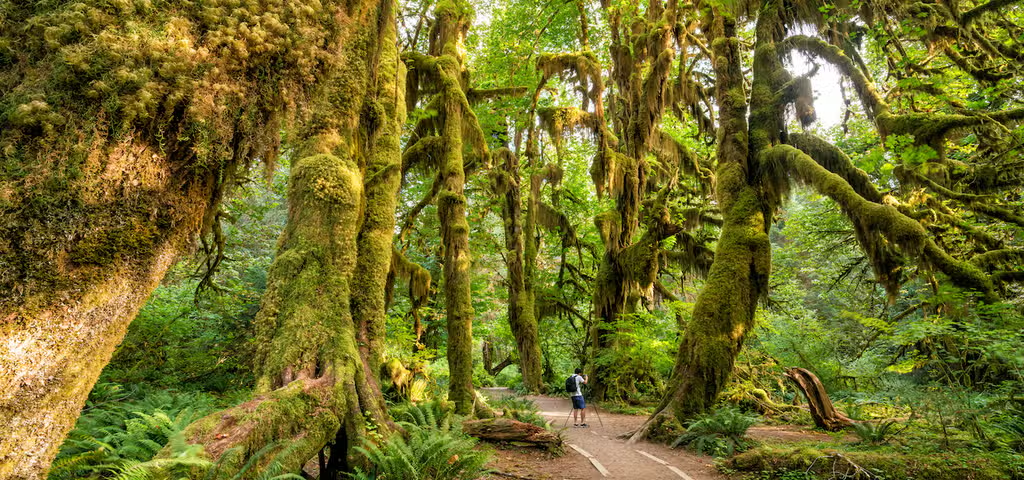
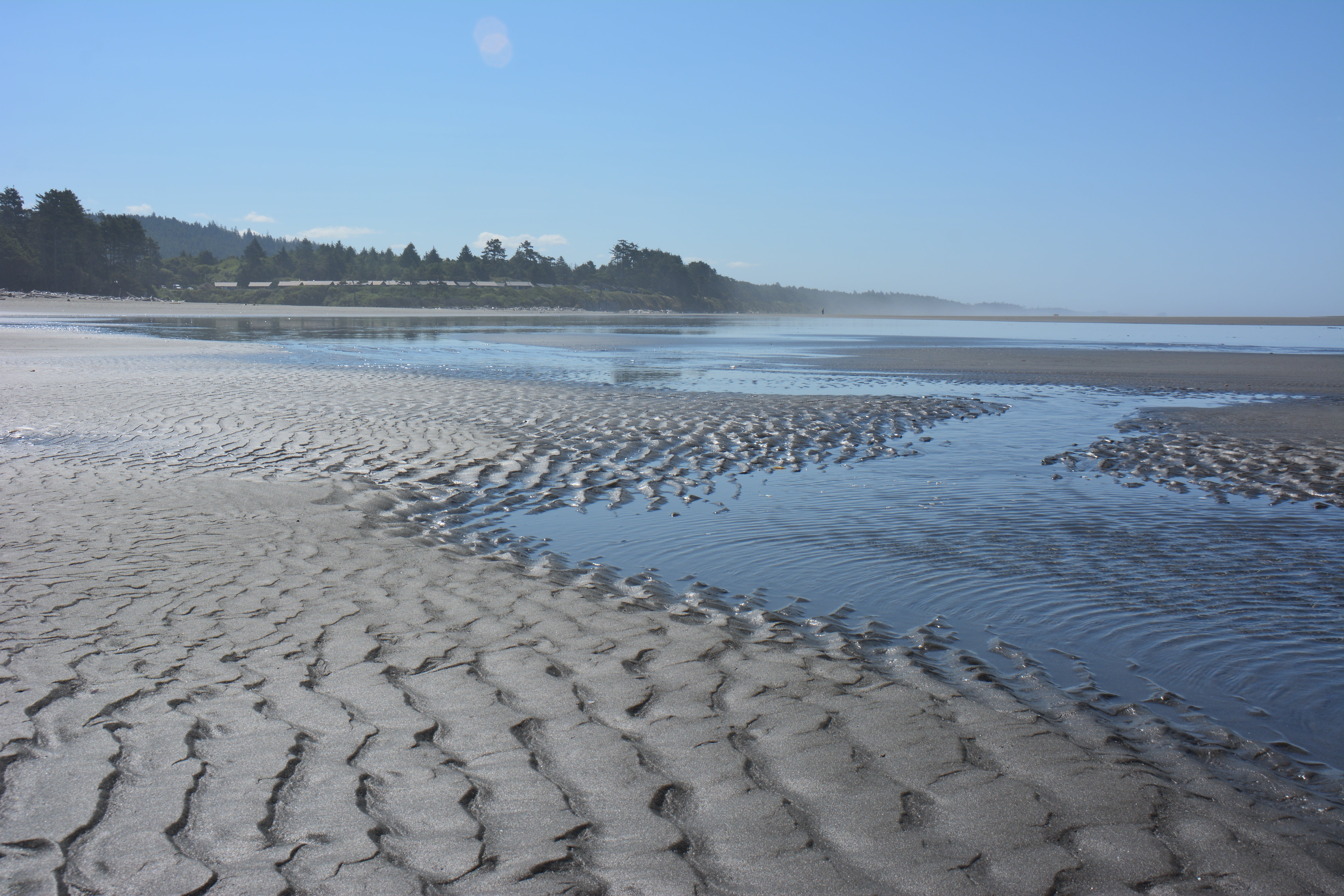
Hoh Rain Forest Campground is the clear choice when the Hoh is the main reason for your stay. You camp directly within the rainforest area, close to the trails and visitor facilities, rather than making the drive in from the coast or northern side of the park. Some campsites also sit along the Hoh River.
The campground has potable water and flush toilets but no dump station. Most RV sites accommodate vehicles around 21 feet, with only a few longer options reaching about 35 feet. Reservations are required during the summer reservation period.
The tradeoff is location. Staying here cuts down on driving for Hoh activities but leaves you farther from Lake Crescent, Hurricane Ridge, and several coastal areas. It makes the most sense when the rainforest is a central part of the itinerary rather than one stop in a packed peninsula loop.
Fairholme Campground: Best for Lake Crescent
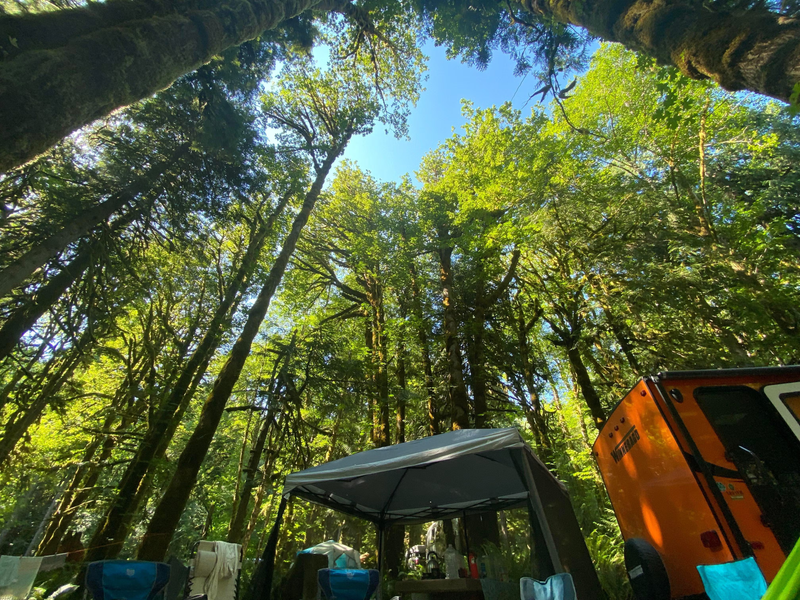
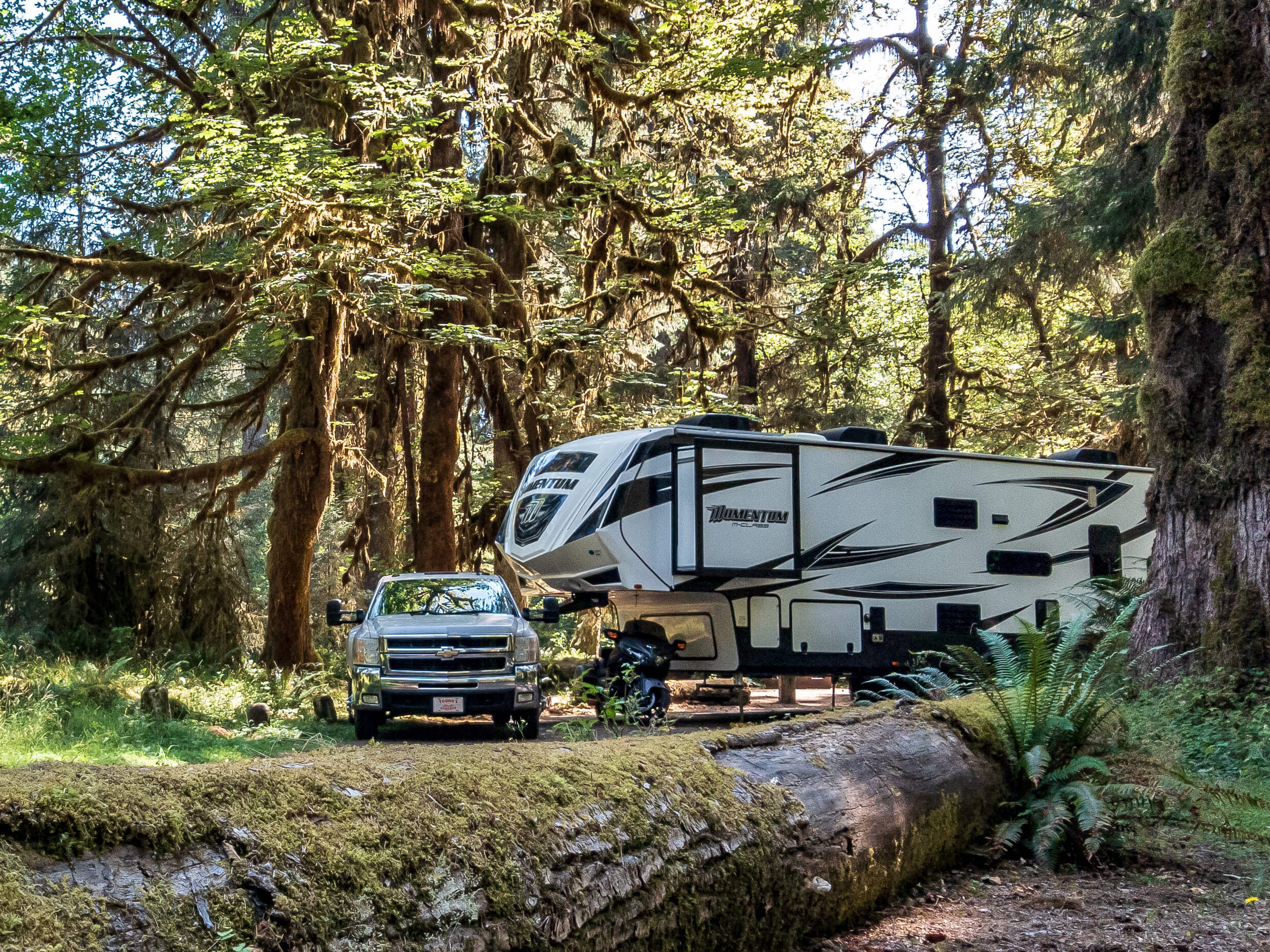
Fairholme puts campers beside Lake Crescent, with lakeside sites and a nearby boat launch. Its location also makes it a practical base for trips focused on the northern and northwestern parts of Olympic.
The campground works for tents, families, and smaller or mid-size RVs. Most sites accommodate vehicles around 21 feet, while some extend to about 35 feet. Facilities include potable water, flush toilets, and a dump station.
Fairholme’s Campendium listing shows the value of checking individual site reports rather than relying only on the campground-wide maximum. Campers have reported travel trailers around 30 feet, but site dimensions and maneuvering room differ.
For RVers who need hookups, nearby Log Cabin Resort is another Lake Crescent option, with full-hookup RV sites for rigs up to about 35 feet.
Mora Campground: Best for Rialto Beach and the west side
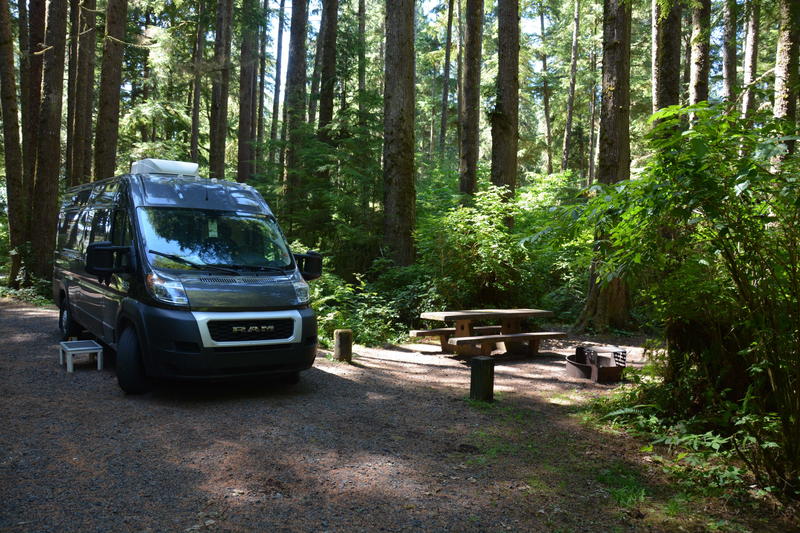
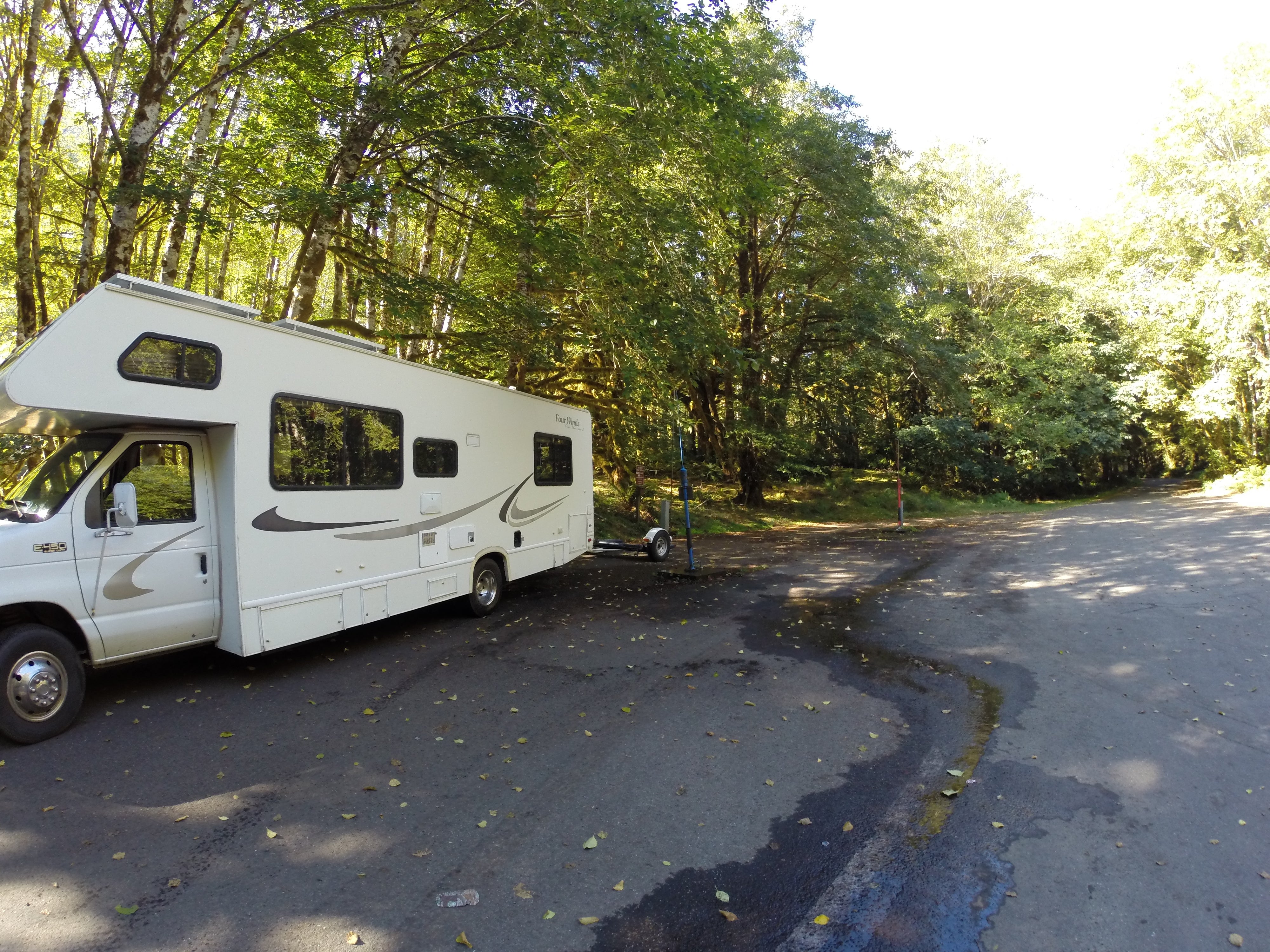
Mora is a better coastal base than Kalaloch when your plans center on Rialto Beach, La Push, Forks, and the park’s northwestern coast. The campground sits in coastal forest about two miles from Rialto Beach, with some sites overlooking the Quillayute River.
It accommodates tents and RVs, with most sites sized for vehicles around 21 feet and a few reaching about 35 feet. Potable water, flush toilets, and a dump station are available. Reservations are required during the summer reservation period.
The main distinction between Mora and Kalaloch is geography. Choose Mora for Rialto Beach and the Forks area. Choose Kalaloch when the southern Pacific coast and beaches farther south are the priority. Campendium reports also provide useful rig-size context, including stays from RVs up to 35 feet.
Heart O’ the Hills Campground: Best for Port Angeles and Hurricane Ridge
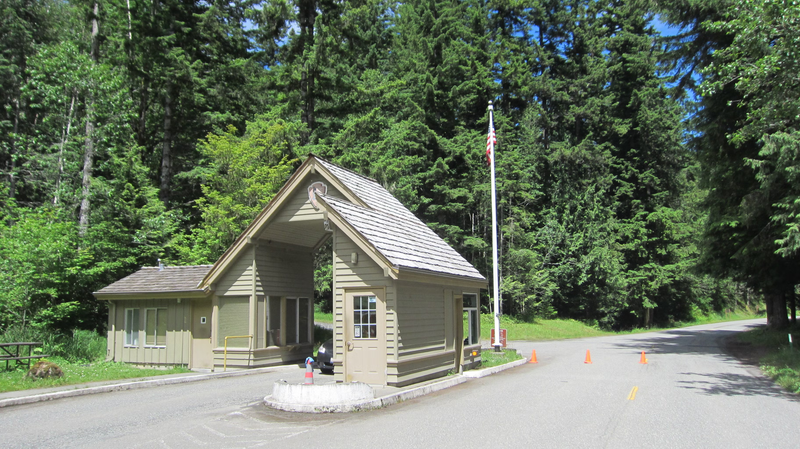
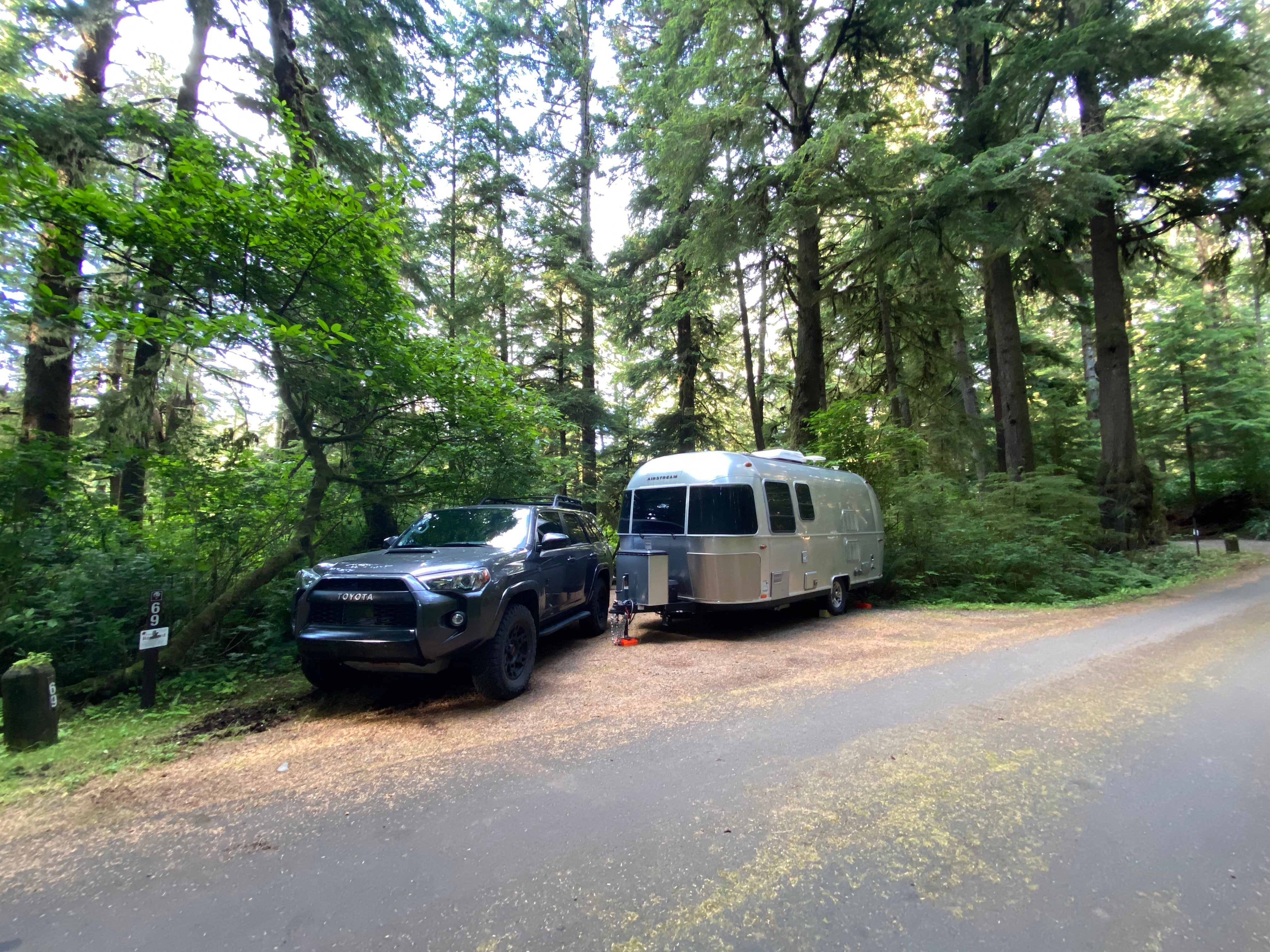
Heart O’ the Hills is useful because of where it puts you. Located near Port Angeles and the Hurricane Ridge side of Olympic, it can save time for campers whose itinerary is concentrated on the park’s northern entrance rather than the coast or rainforest.
The campground has 97 sites, potable water, and flush toilets. Most sites accommodate RVs around 21 feet, with a few longer sites up to about 35 feet. There is no dump station, and camping is first-come, first-served rather than reservable.
For some trips, that location advantage matters more than choosing a campground for ocean, lake, or rainforest scenery. It can also work well as part of a multi-campground Olympic trip instead of trying to reach every part of the park from one base.
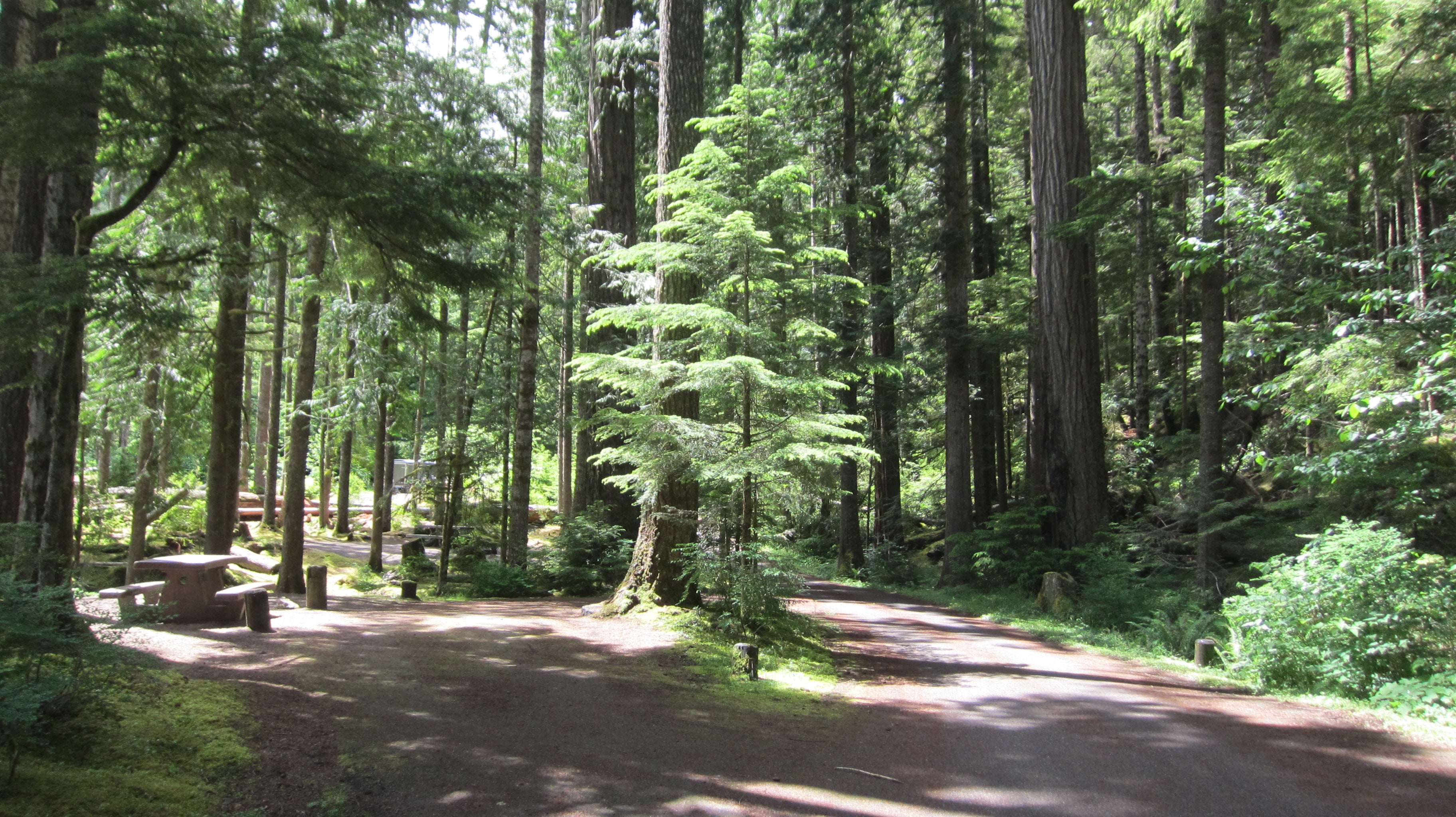
Sol Duc Hot Springs Campground: Best for Sol Duc
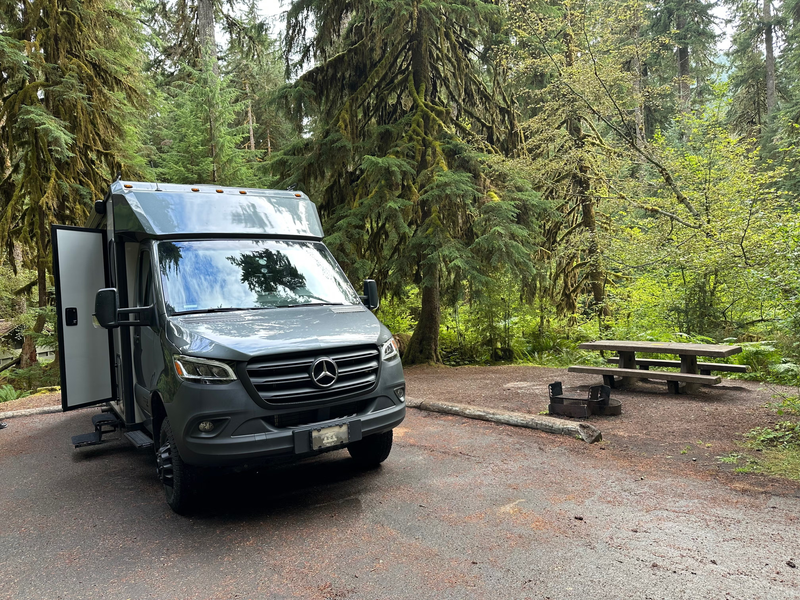
Sol Duc is the logical base when Sol Duc Falls, the hot springs, and the surrounding valley are high on your itinerary. There are two different camping setups here, and RVers should not confuse them.
Sol Duc Campground has standard campsites for tents and RVs. Most accommodate vehicles around 21 feet, with a few reaching about 35 feet. The campground has running water, flush toilets, and access to a dump station, but the campsites do not provide individual hookups.
Sol Duc RV Park is the hookup option. It has 17 RV sites with water and electricity and accommodates vehicles roughly 26 to 36 feet long. The sites are back-in spaces in a gravel parking area with limited privacy.
Both are reservation-based during the main operating season, so check which facility you are booking before assuming hookups are included.
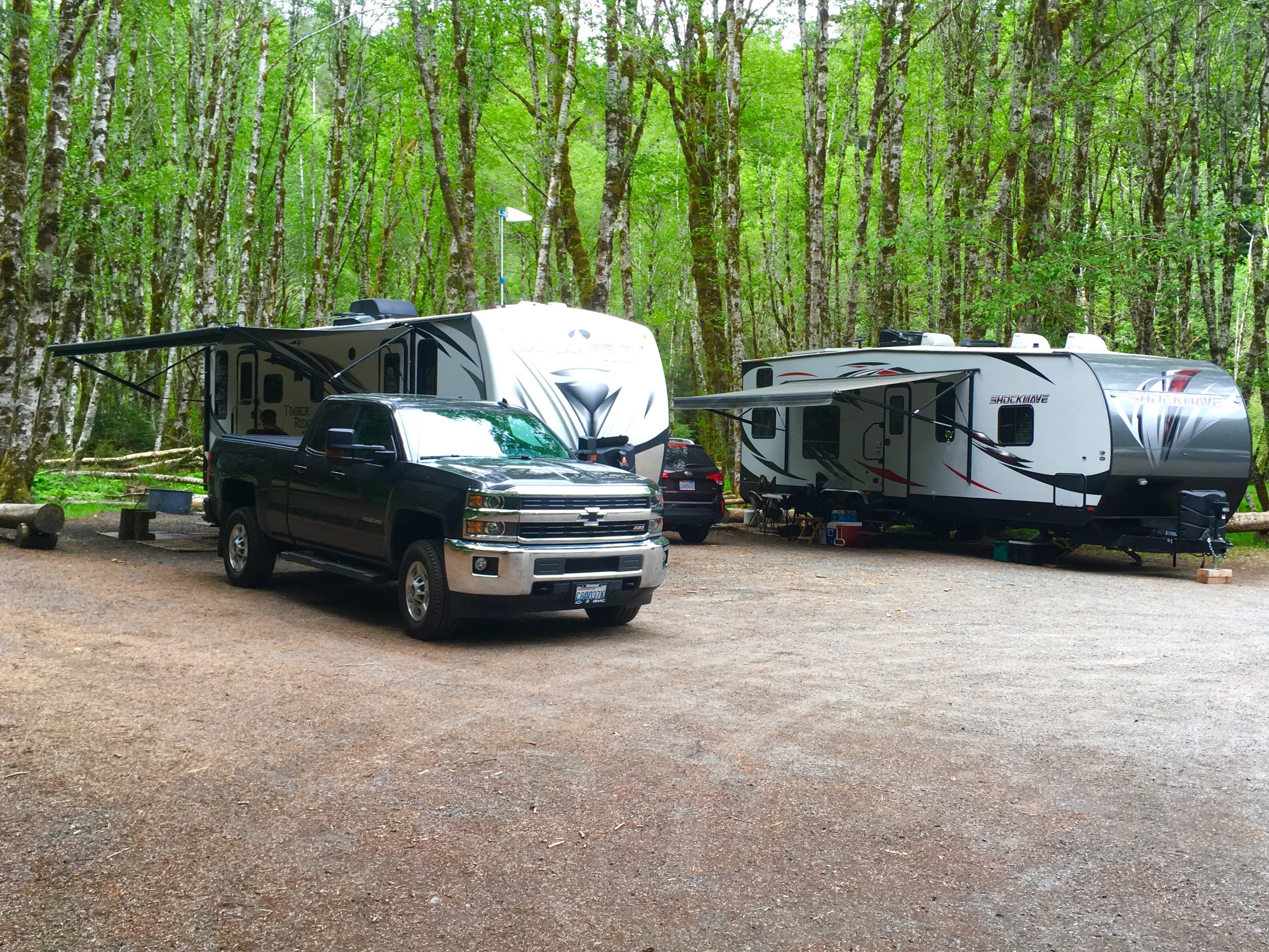
Staircase Campground: Best for the southeast side
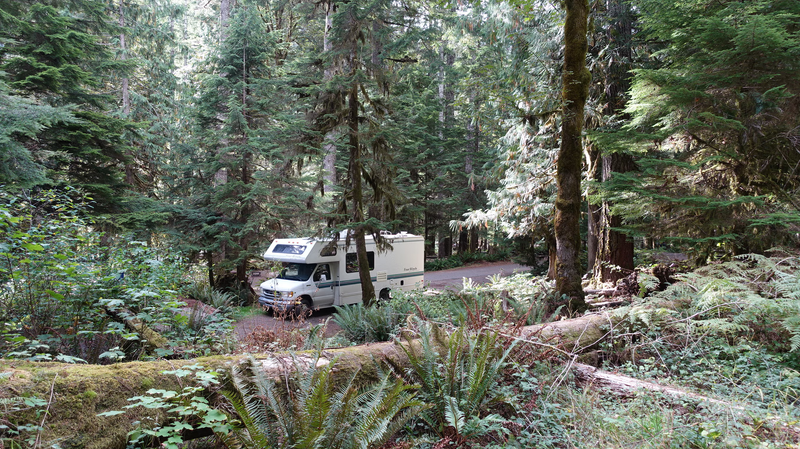
Staircase makes the most sense for travelers entering Olympic from the southeast or spending much of their trip around Staircase, Lake Cushman, and the Skokomish River.
The campground sits in old-growth forest along the river and has 49 sites. It offers potable water and flush toilets while open, with sites for RVs around 21 feet and a few accommodating vehicles up to about 35 feet. Summer reservations are required during the park’s designated reservation period.
Its location is the main reason to stay here. Campers focusing on the coast, Hoh Rain Forest, or Port Angeles would generally spend more time driving from Staircase than they would from a campground closer to those areas.
Other Olympic National Park campgrounds
The park also has several smaller or more primitive campgrounds that fit narrower trip plans:
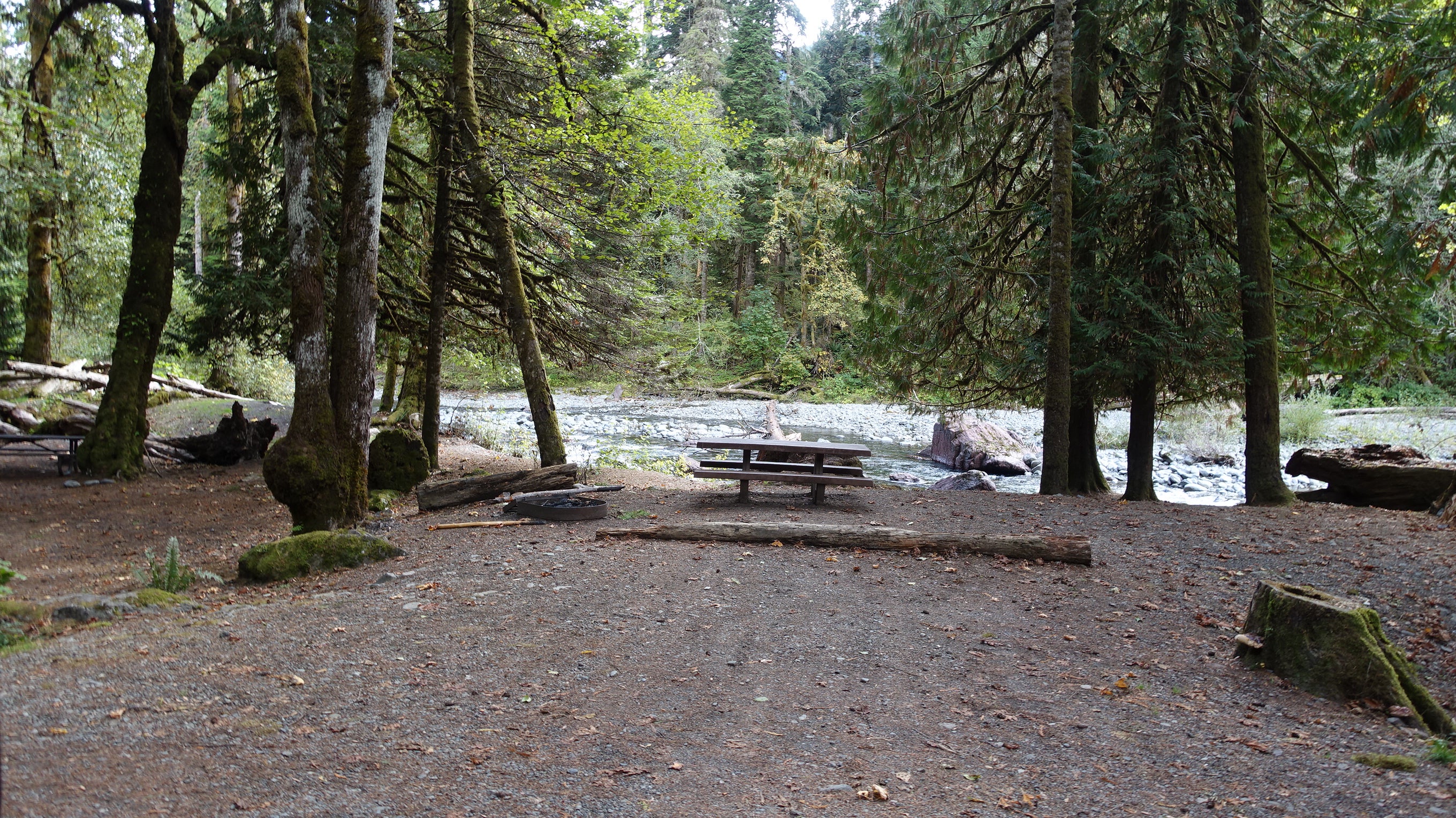
- Deer Park: Deer Park is best for tent campers who want a high-elevation mountain setting. The campground sits at 5,400 feet and is reached by a steep, winding gravel road. It has pit toilets but no potable water or trash service, and RVs are not permitted because of the access road.
- Graves Creek: Graves Creek works best for campers focusing on the Quinault Rain Forest and looking for a more primitive stay. It has 30 first-come, first-served sites, pit toilets, and no running water. RVs and trailers are prohibited because of road conditions.
- North Fork: North Fork is a small, remote option in the Quinault area, with only nine sites, pit toilets, and no running water. NPS does not recommend the access road for RVs or trailers.
- Ozette: Ozette is a good fit for trips centered on Lake Ozette and water access. The 15-site campground is first-come, first-served, with pit toilets and potable water during the main season. Some sites can flood in winter, and RVs are generally limited to about 21 feet.
- Queets: Queets suits campers looking for a quieter, more remote stay near the Queets River. The campground has 20 sites, pit toilets, and no running water, with access currently via Upper Queets Road. RVs and trailers are not recommended.
- South Beach: South Beach is best for seasonal coastal camping with broad Pacific views. The first-come, first-served summer campground has flush toilets but no potable water. Most sites accommodate vehicles around 21 feet, with a few sites fitting rigs up to about 35 feet.
RV camping in Olympic National Park
RV camping is available at several Olympic National Park campgrounds, but site size, hookups, dump stations, and road access vary. Larger rigs need more careful planning than vans, truck campers, and shorter trailers.
- RV length and campsite fit: Many Olympic campgrounds list standard RV lengths around 21 feet, with only some sites accommodating vehicles around 35 feet. That maximum does not apply to every campsite, so check the dimensions of the individual site before booking, especially with a fifth wheel, long travel trailer, or Class A motorhome.
- Campgrounds with RV hookups: Most park-operated campgrounds do not provide individual water, sewer, or electrical hookups. Sol Duc RV Park is a separate concession-operated option with water and electric hookups, while Log Cabin Resort near Lake Crescent offers full-hookup RV sites.
- Dump stations: Current NPS information lists dump stations at Kalaloch and Sol Duc, while Log Cabin Resort also provides one. Several campgrounds that accept RVs do not have dump stations, so tank capacity may affect how you plan your route through the park.
- Roads that aren’t suitable for RVs: NPS states that Deer Park Road is not suitable for RVs or trailers. Graves Creek prohibits RVs and trailers because of road conditions, while Queets is not recommended for either. Check current road conditions before driving a larger rig, since weather, flooding, maintenance, and closures can affect access.
- Large-rig camping near Olympic National Park: Nearby private, county, state, and National Forest campgrounds can be more practical for larger rigs or travelers who need hookups. Salt Creek Recreation Area near Port Angeles offers utility sites and a dump station, while Forks RV Park provides full-hookup sites on the west side. These outside-the-park options can also help when in-park sites are too short or sold out.
What campers say about Olympic National Park campgrounds
Campendium reviews add the details that campground charts often miss. Across Olympic, recurring themes include site size, privacy, road noise, facilities, and how much tree cover affects solar and connectivity. Experiences can differ even within the same campground, so individual site reports and recent photos are worth checking before you book.
- Campsite privacy and spacing: Campers often describe Olympic’s forested campgrounds as private and well separated, but the experience can depend heavily on the loop and campsite. Hoh gets strong marks for its quiet forest setting, while Sol Duc reviews range from small, close sites to larger, more private ones. Fairholme is also well treed, although spacing and usable ground vary by site.
- RV access and site size: Review patterns show that campground-wide RV limits do not tell the whole story. Campers report tight roads, low branches, uneven pads, and meaningful differences in site length at places such as Hoh and Fairholme. Check the dimensions of the individual campsite before reserving, especially with a longer trailer or motorhome.
- Bathrooms and campground facilities: Most reviews describe basic national park facilities rather than extensive campground amenities. Conditions can vary by campground, loop, season, and staffing, so recent camper reports are useful for checking restroom quality, water availability, and other practical details before arrival.
- Cell signal and connectivity: Service is inconsistent across Olympic and can vary by carrier and campsite. Campendium reports show some reception at campgrounds such as Kalaloch, Mora, Fairholme, and Heart O’ the Hills, but tree cover and terrain can make signal unreliable. Heavy canopy can also reduce solar performance.
- Rain, mud, and seasonal conditions: Wet weather is a recurring part of the camping experience. Reviews mention damp sites, muddy ground, limited solar exposure, and uneven pads, especially in heavily forested areas. Recent photos and reviews are useful when conditions have changed after periods of rain.
- Noise and campground feel: Campgrounds that look similar on a map can feel very different once you arrive. Mora is often described as quieter and more secluded, while Fairholme can feel busier and more family-oriented because of its location and activity around Lake Crescent. This kind of campground atmosphere can matter just as much as the amenity list.
- What campers wish they knew before arriving: The biggest lesson is to research the specific site, not just the campground. Check rig fit, pad slope, tree cover, proximity to roads or bathrooms, cell reports, and recent site photos before booking. Those details can make the difference between a workable campsite and an awkward one.
Frequently asked questions
There is no single best campground for every trip. Kalaloch is a strong choice for Pacific coast camping, Hoh Rain Forest Campground for rainforest access, Fairholme for Lake Crescent, Mora for Rialto Beach and Forks, and Heart O’ the Hills for Port Angeles and Hurricane Ridge.
For 2026, park-operated campground fees generally range from $15 to $24 per night, while concession-operated options cost more. Sol Duc Campground is currently $33 per night, and its RV park is $58 per night. Fees can change, so confirm current pricing before your trip.
Not always. Kalaloch, Hoh, Mora, Fairholme, and Staircase accept reservations during their summer reservation periods, while other park-operated campgrounds are generally first-come, first-served. Outside those reservation windows, several reservable campgrounds also switch to first-come, first-served camping.
Not at the park’s developed frontcountry campgrounds. Free dispersed camping can be found on eligible lands in the surrounding Olympic National Forest, where dispersed sites generally have no services or developed facilities. Check current Forest Service rules and closures before choosing a site.
No. Vehicle camping is limited to authorized campgrounds, while overnight camping in undeveloped backcountry areas requires a wilderness camping permit and must follow park regulations for the area.
Fairholme, Kalaloch, Mora, Hoh, Staircase, and Sol Duc can accommodate RVs, although many sites are sized around 21 feet and only some fit rigs closer to 35 feet. Kalaloch, Mora, and Fairholme also have dump stations, while concession-operated Sol Duc RV Park and Log Cabin Resort are better choices when hookups matter.
Most park-operated campsites do not have hookups. The concession-operated Sol Duc RV Park has water and electric hookups, while Log Cabin Resort near Lake Crescent offers full-hookup RV sites.
Hoh Rain Forest Campground is the closest option because it is located inside the Hoh Rain Forest area, near the visitor center and trail access.
Mora Campground is the closest major park campground to Rialto Beach. NPS places Mora about two miles from the beach.
In some wilderness coastal areas, yes, but you cannot simply set up camp on any Olympic beach. Coastal wilderness camping requires a permit, and some areas prohibit camping entirely. Where beach camping is allowed, camps must be placed above the high-tide line. Frontcountry visitors should use designated campgrounds such as Kalaloch or South Beach instead.
Find your Olympic National Park campground
Olympic’s campgrounds can feel very different depending on where you stay, how large your rig is, and which part of the park you plan to explore. Use Campendium to compare Olympic National Park and Olympic Peninsula campgrounds by recent reviews, photos, amenities, cell signal, RV fit, and nearby alternatives before you book.