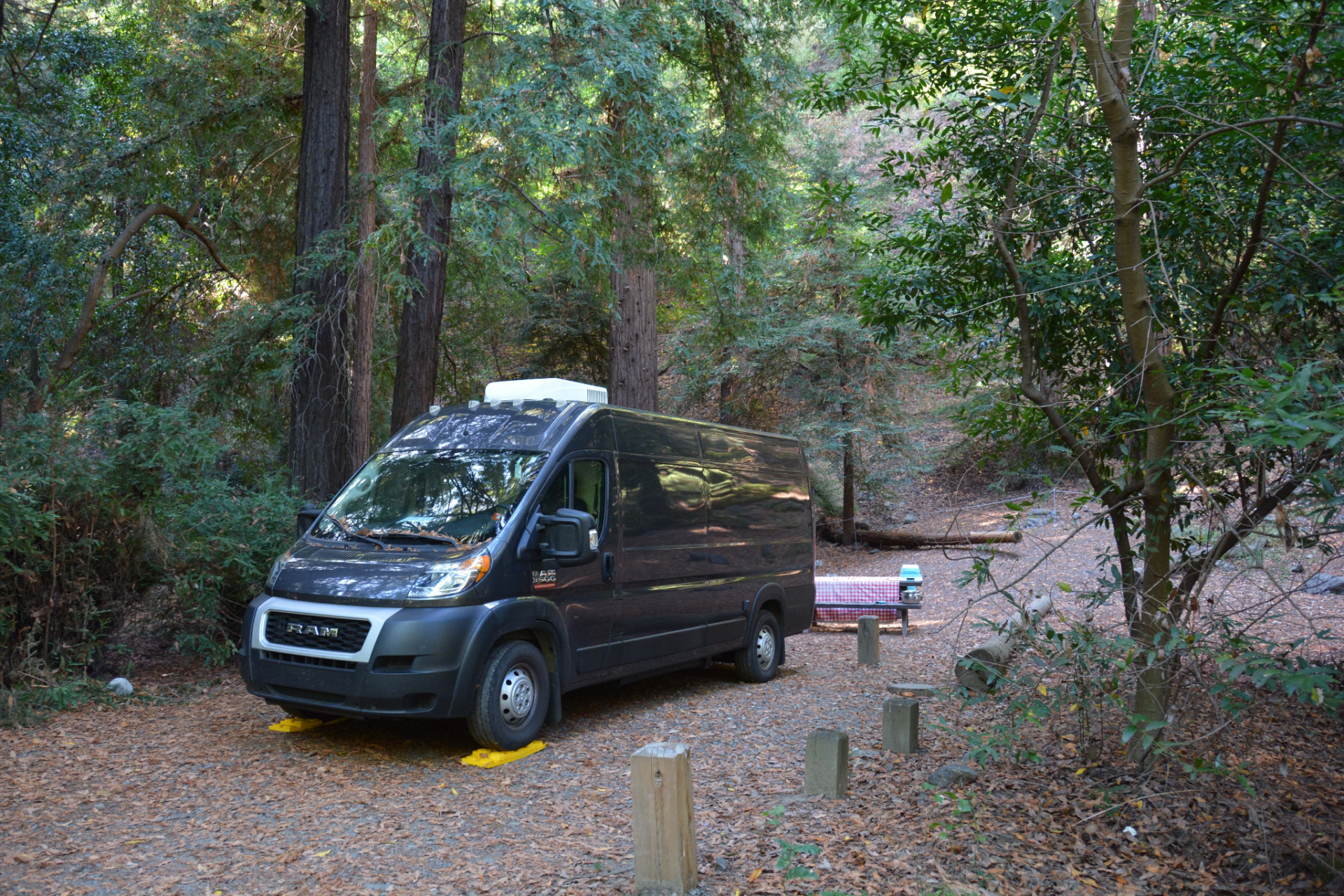
Big Sur camping is as popular as it is scenic, which means planning matters. Campgrounds can book up early, Highway 1 access can change, and not every site works for every RV, trailer, tent setup, or travel style.
This guide compares the best Big Sur campgrounds so you can choose the right place before you go. You’ll find state park campgrounds, national forest sites, private campgrounds, RV-friendly options, tent-only picks, and nearby backup areas worth saving in case your first choice is full.
And when you can, use Campendium to compare Big Sur campground listings, read recent reviews, check photos and amenities, and save backup options before you commit to the drive.
TL;DR
- Pfeiffer Big Sur State Park is the best all-around pick for redwoods, river access, and a central Big Sur location.
- Kirk Creek is the best choice for ocean-view camping, while Big Sur Campground and Cabins is a strong private option for families and RVers.
- Do not camp along Highway 1. Use designated campgrounds only, and save nearby Campendium listings as backups before you go.
Best Big Sur Campgrounds at a Glance
Big Sur has a mix of state park campgrounds, national forest campgrounds, private campgrounds, and walk-in tent sites. The right choice depends on how you camp: RVers may care most about length limits and hookups, while tent campers may want river access, redwoods, ocean views, or a quieter hike-in setup.
Use this table as a starting point, then check recent Campendium reviews, campground photos, road access notes, and reservation details before you book.
| Campground | Best for | Tent/RV/cabin/glamping | RV length notes | Hookups | Showers / restrooms | Main drawback |
|---|---|---|---|---|---|---|
| Pfeiffer Big Sur State Park | First-time Big Sur campers, redwoods, river access, central location | Tent and RV sites | RV fit varies by site; check site length before booking | No hookups | Fresh water, toilets, hot showers, and dump station | Very popular, no hookups, and limited day-of availability |
| Kirk Creek Campground | Ocean-view camping and scenic tent/RV stays | Tent and RV sites | Better for smaller or moderate setups; verify site length and road access | No hookups | Basic restrooms; bring water | No hookups, limited services, and exposed coastal conditions |
| Plaskett Creek Campground | National forest camping near Sand Dollar Beach | Tent and RV sites, plus group sites | RVs allowed, but fit varies by site | No hookups | Flush toilets, sinks, and drinking water are typically available | Popular beach-area location with no hookups |
| Big Sur Campground & Cabins | Families, RVers, cabins, riverfront private camping | Tent sites, RV sites, and cabins | Select sites can fit trailers and motorhomes up to 40 feet | Water and electric hookups; central dump station | Restrooms and campground facilities | Private campground pricing and limited availability in busy seasons |
| Fernwood Resort | Resort-style mix with camping, cabins, dining, and river access | RV sites, tent sites, cabins, tent cabins, and lodging | RV sites list a maximum length of 30 feet | Water and electric hookups at RV sites | Restrooms and resort facilities | Smaller RV length limit than some private options |
| Riverside Campground & Cabins | Riverfront private camping, cabins, and smaller RVs | Tent sites, RV sites, cabins, and rooms | Select RV sites can host trailers and motorhomes up to 30 feet | Water and electric hookups | Restrooms and campground facilities | One-vehicle site limits and smaller RV length range |
| Ventana / Alila Ventana campground | Redwood camping with a more developed, resort-adjacent feel | Tent camping and glamping-style options | Not a primary pick for larger RVs; confirm current vehicle rules | Typically no RV hookups for standard camping | Restrooms and campground facilities; verify current details | Higher cost and fewer traditional RV-camping options |
| Andrew Molera Trail Camp | Tent campers who want a walk-in state park site | Walk-in tent sites and hike-and-bike sites | No RV camping at the trail camp | No hookups | Potable water and flush toilets; no showers | Gear must be carried from the parking area to camp |
| Limekiln State Park | Smaller campground with redwoods, creek access, and coastal scenery | Tent and RV camping | RV sites are limited; verify current site lengths before booking | No hookups | Restrooms; verify current shower and facility status | Access and campground status can change after storms or Highway 1 closures |
| Saddle Mountain Ranch | Northern backup near Carmel and Monterey | RV sites, tent camping, cabins, and other lodging options | Better for RVers needing a backup outside the Big Sur core | Full hookups at RV sites | Restrooms and campground facilities | Not in the heart of Big Sur; requires a drive to reach Big Sur attractions |
Pfeiffer Big Sur Camping: What to Know Before You Book
Pfeiffer Big Sur State Park is one of the most popular places to camp in Big Sur, especially for first-time visitors who want redwoods, Big Sur River access, and a central location along Highway 1. It is also one of the hardest campgrounds to book, so treat it as a plan-ahead campground rather than a last-minute stop.
The campground has 189 RV and tent sites on or near the Big Sur River. Sites do not have hookups, but campers have access to fresh water, toilets, hot showers, and a dump station. For RVers, that makes Pfeiffer a dry-camping option with useful services nearby, not a full-hookup RV park.
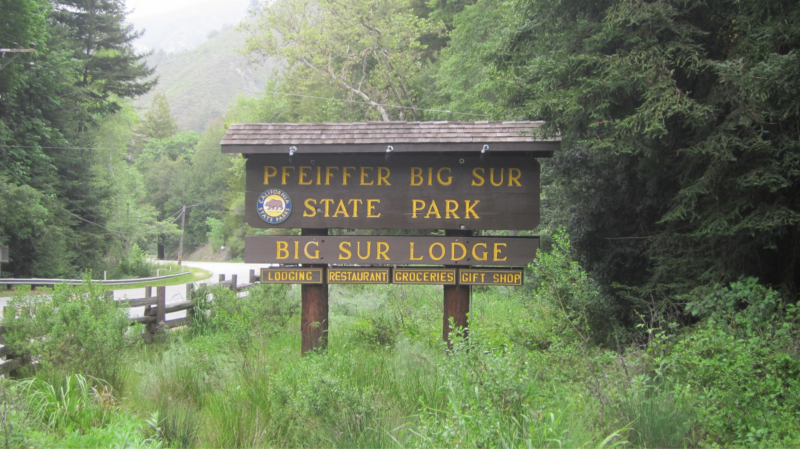
Reservations are available through ReserveCalifornia and can fill six months in advance, even outside peak summer travel. Standard sites are listed at $50 per night, while premium riverfront sites are listed at $60 per night. Fees can change, so check the official reservation page before booking.
Check-in is 2 p.m., and check-out is 12 noon. Quiet hours run from 10 p.m. to 6 a.m., and generator hours are limited to posted daytime windows. Dogs are allowed in the campground and day-use areas, but they must be leashed and are not allowed on most trails.
Do not count on walk-up availability at Pfeiffer Big Sur. Day-of openings may happen when someone cancels, but this campground is too popular to make that your only plan. Book early, check for cancellations, and save a few nearby backup campgrounds on Campendium before you drive into Big Sur. Campendium RV PRO members can also set a CAMPalert for sold-out dates and get notified if a site opens.
Big Sur RV Camping: What RVers Need to Know
Big Sur can work for RV camping, but it is not the place to wing it with a large rig. Highway 1 is narrow, winding, and exposed in places, with tight turns, steep drop-offs, limited pullouts, and road conditions that can change after storms or maintenance work.
Before you book, check the following details:
- Hookups and campground types
- Rig length and site fit
- Dump stations and water planning
- Cell signal and connectivity
Let’s expand each detail.
Hookups and campground types
Many public campgrounds in Big Sur do not offer hookups. Pfeiffer Big Sur State Park, Kirk Creek Campground, Plaskett Creek Campground, and Limekiln State Park are better treated as dry-camping options, even when they can accommodate RVs.
If you need electric, water, or easier RV services, look more closely at private campgrounds such as Big Sur Campground and Cabins, Fernwood Resort, Riverside Campground and Cabins, or backup options closer to Carmel and Monterey.
Rig length and site fit
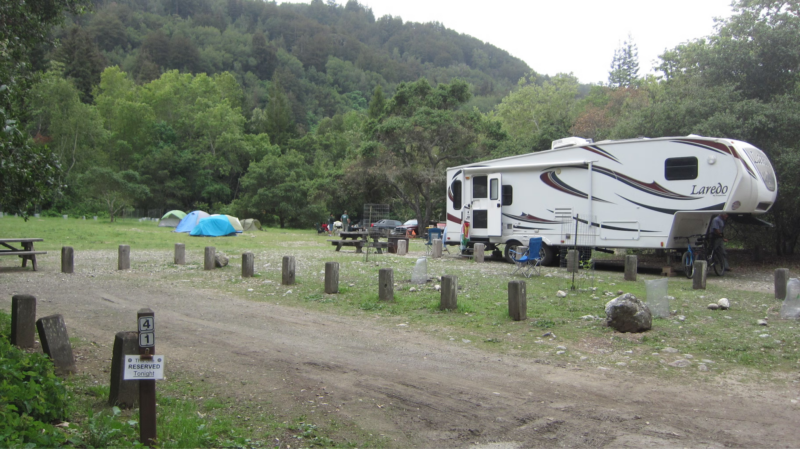
Rig length also varies by campground and even by individual site. A campground may allow RVs, but that does not mean every site can fit a long motorhome, fifth wheel, or travel trailer. Check the listed site length before booking, then read recent reviews for notes about turns, backing in, tree clearance, slope, and whether other RVers with similar rigs had trouble.
Dump stations and water planning
Dump station access is another planning point. Pfeiffer Big Sur has a dump station, but many smaller public campgrounds do not. If you are staying several nights without hookups, arrive with empty tanks, fill fresh water before you enter Big Sur, and know where your next dump station or full-service campground will be.
Cell signal and connectivity
Cell signal should also be part of your campground decision, especially if you work from the road or need service for navigation. Coverage can vary by carrier, terrain, weather, and campsite. Check Campendium cell signal reports before you book, and download maps or directions before you lose service.
Can you camp for free in Big Sur?
Generally, do not expect free roadside camping in Big Sur. Camping along Highway 1 is illegal, and the Big Sur Chamber of Commerce tells travelers to use designated campgrounds only.
Dispersed camping is not the same thing as pulling over for the night in a turnout, parking along the shoulder, or sleeping in a vehicle beside Highway 1. Legal dispersed camping depends on the land manager, current closures, fire restrictions, access rules, and whether overnight camping is allowed in that specific area.
If you are hoping to camp for free near Big Sur, start by checking official public-land rules first. Then use Campendium to look for legal dispersed camping, national forest camping, and nearby low-cost options outside the most restricted coastal corridor.
For more planning help, read Campendium’s guides to dispersed camping and boondocking before relying on a free campsite near Big Sur.
Big Sur camping reservations and backup planning
Big Sur is not a great place to count on last-minute camping. Campgrounds are limited, demand is high, and road closures or site-fit issues can make a fully booked area even harder to work around.
For Pfeiffer Big Sur State Park and other California state park campgrounds, plan to book through ReserveCalifornia as early as you can. Pfeiffer Big Sur often fills six months in advance, especially for weekends, summer dates, holidays, and riverfront sites. National forest campgrounds such as Kirk Creek and Plaskett Creek typically book through Recreation.gov, so check the correct reservation system before you start comparing dates.
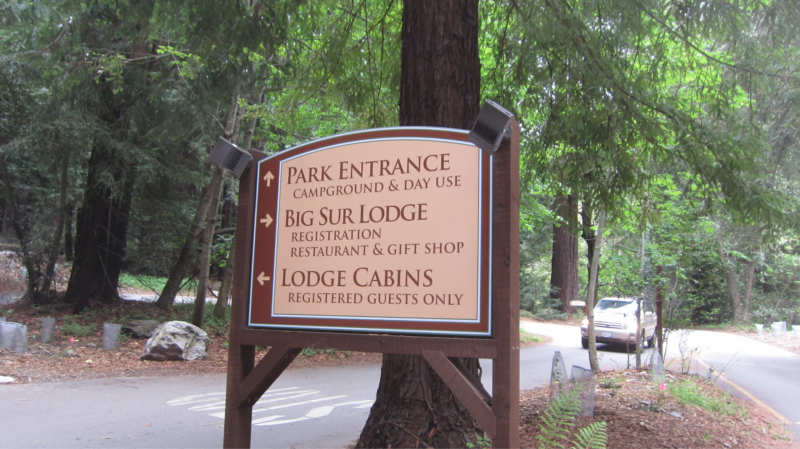
If everything is booked, do not plan to sleep along Highway 1. Instead, widen your search. Look north toward Carmel and Monterey, south toward San Simeon, and inland toward legal Los Padres National Forest options where access, fire rules, and road conditions allow. Private campgrounds can also work as backups, but they may cost more and book early during peak travel.
Campendium can help you build a backup list before your trip. Use the map to compare campgrounds near Big Sur, check recent reviews, look for RV length notes, review photos, and confirm amenities such as hookups, dump stations, water, restrooms, and cell signal. Save two or three backup options before you drive into the area, especially if you are towing or traveling in a larger RV.
Search Big Sur campgrounds on Campendium and save backup options before you drive Highway 1.
Big Sur road access, closures, and seasonal planning
Road access is one of the biggest planning variables for Big Sur camping. Highway 1 is the main route through the area, but slides, storms, construction, and seasonal repairs can affect whether you can approach a campground from the north, south, or both.
Before you leave, check Caltrans road conditions, California State Parks updates, your campground’s official page, and any current alerts from the managing agency. Do this even if you have been to Big Sur before. A campground can be open while the route you planned to take is delayed, restricted, or closed.
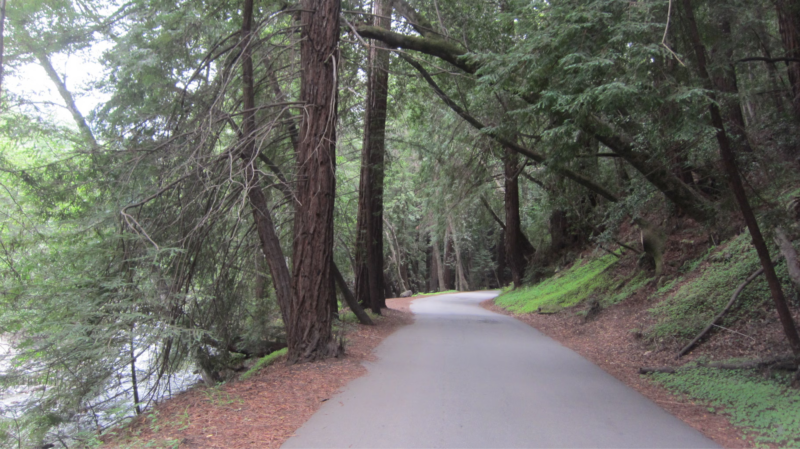
Winter and the rainy season bring a higher chance of slides, washouts, downed trees, and campground closures. Summer is usually busier, but it can still bring fire restrictions that limit campfires, charcoal grills, or open flames. Always confirm current fire rules before packing firewood or planning meals around a campfire.
Arrival timing matters even more for RVers. Narrow curves, limited pullouts, changing weather, and unfamiliar campground entrances are easier to manage in daylight. Plan to arrive before dark, keep fuel in the tank, download offline directions, and save a backup campground in case road access changes before your trip.
Big Sur Camping Rules to Know
Big Sur camping rules vary by campground, land manager, season, and current fire conditions. Always check the official campground page before you arrive, especially if you are bringing an RV, traveling with a dog, or planning to have a campfire.
To ensure a smooth trip for yourself and your neighbors, brush up on our ultimate guide to campground etiquette alongside the local mandates detailed below:
| Rule | What to know |
|---|---|
| No Highway 1 camping | Do not camp in pullouts, turnouts, shoulders, or roadside areas along Highway 1. Use designated campgrounds only. |
| Campfires only in designated areas | Campfires and BBQs are only allowed in designated campgrounds and may be restricted during high fire danger. Check current fire rules before arrival. |
| Store food and trash properly | Keep food, trash, coolers, and scented items secured. Use campground trash bins, follow posted wildlife rules, and pack out anything your campground does not accept. |
| Follow quiet hours | Quiet hours vary by campground. At Pfeiffer Big Sur, quiet hours are 10 p.m. to 6 a.m. |
| Use generators only during posted hours | Generator rules vary. At Pfeiffer Big Sur, generator use is limited to 10 a.m. to 8 p.m. |
| Check dog rules before booking | Dogs are usually allowed in campgrounds when leashed, but many trails and park areas restrict pets. At Pfeiffer Big Sur, dogs must be leashed and are not allowed on trails. |
| Know vehicle limits | Campgrounds may limit the number of vehicles per site, require parking passes, or restrict trailer and motorhome lengths. Check your site details before booking. |
| Do not count on overflow parking | Pfeiffer Big Sur does not have overflow parking, so your vehicles and camping setup need to fit the site you reserved. |
| Do not collect wood in state parks | Bring local firewood or buy it where allowed. Do not gather wood, branches, or natural materials inside state parks. |
Rules can change quickly because of fire risk, storm damage, staffing, road closures, or campground repairs. Before you go, confirm current rules with the campground, California State Parks, the U.S. Forest Service, Caltrans, or the private campground operator.
Frequently Asked Questions
The best place to camp in Big Sur depends on your camping style. Pfeiffer Big Sur State Park is a strong pick for first-time visitors who want redwoods, river access, and a central location. Kirk Creek Campground is better for ocean views, Big Sur Campground and Cabins works well for families and RVers, and Fernwood Resort is a good fit for campers who want a resort-style mix of camping, cabins, dining, and river access.
Generally, do not expect free roadside camping in Big Sur. Camping alongside Highway 1 is illegal, and campers should use designated campgrounds only. If you are looking for dispersed camping near the region, verify the land manager, access rules, fire restrictions, and current closures before relying on any free campsite.
Yes, Pfeiffer Big Sur can work for RV camping, but it is not a full-hookup RV campground. Sites have no hookups, and reservations are competitive. Campers do have access to fresh water, toilets, hot showers, and a dump station, but RVers should check site length carefully before booking.
For Pfeiffer Big Sur and other popular California state park campgrounds, plan to book as close to six months ahead as possible. ReserveCalifornia allows campsite and lodging reservations up to six months in advance, and high-demand Big Sur dates can fill quickly.
The 2-2-2 rule is an RV travel pacing guideline: drive about 200 miles, arrive around 2 p.m., and stay two nights. For Big Sur, that can be a useful approach because Highway 1 driving can be slow, campgrounds are competitive, and arriving before dark makes setup easier.
The 3-3-3 rule is a similar RV travel guideline: drive up to 300 miles, arrive by 3 p.m., and stay about three nights. It is not a formal campground rule, but it can help RVers avoid long travel days, rushed arrivals, and late setup on narrow or unfamiliar roads.
Find Big Sur Campgrounds on Campendium
Before you book your Big Sur camping trip, use Campendium to compare campground photos, recent reviews, amenities, RV access notes, hookups, dump stations, cell signal reports, and nearby backup options.
Search Big Sur campgrounds on Campendium, save a few options that fit your camping style, and keep backup campgrounds ready before you drive Highway 1.