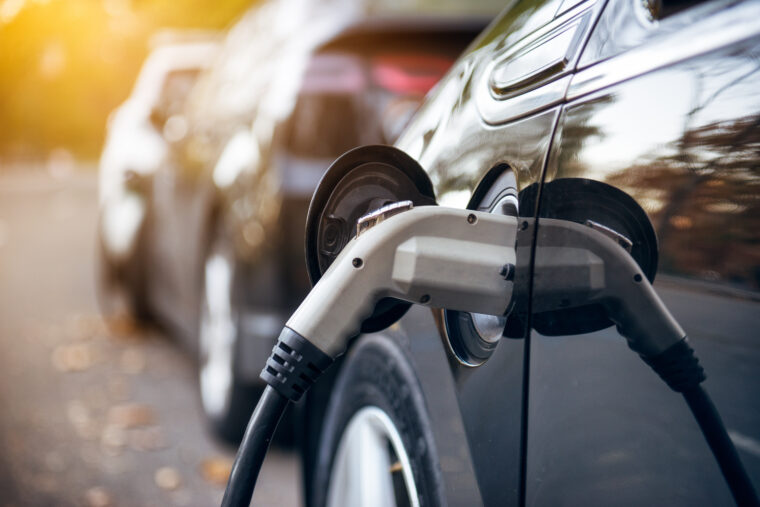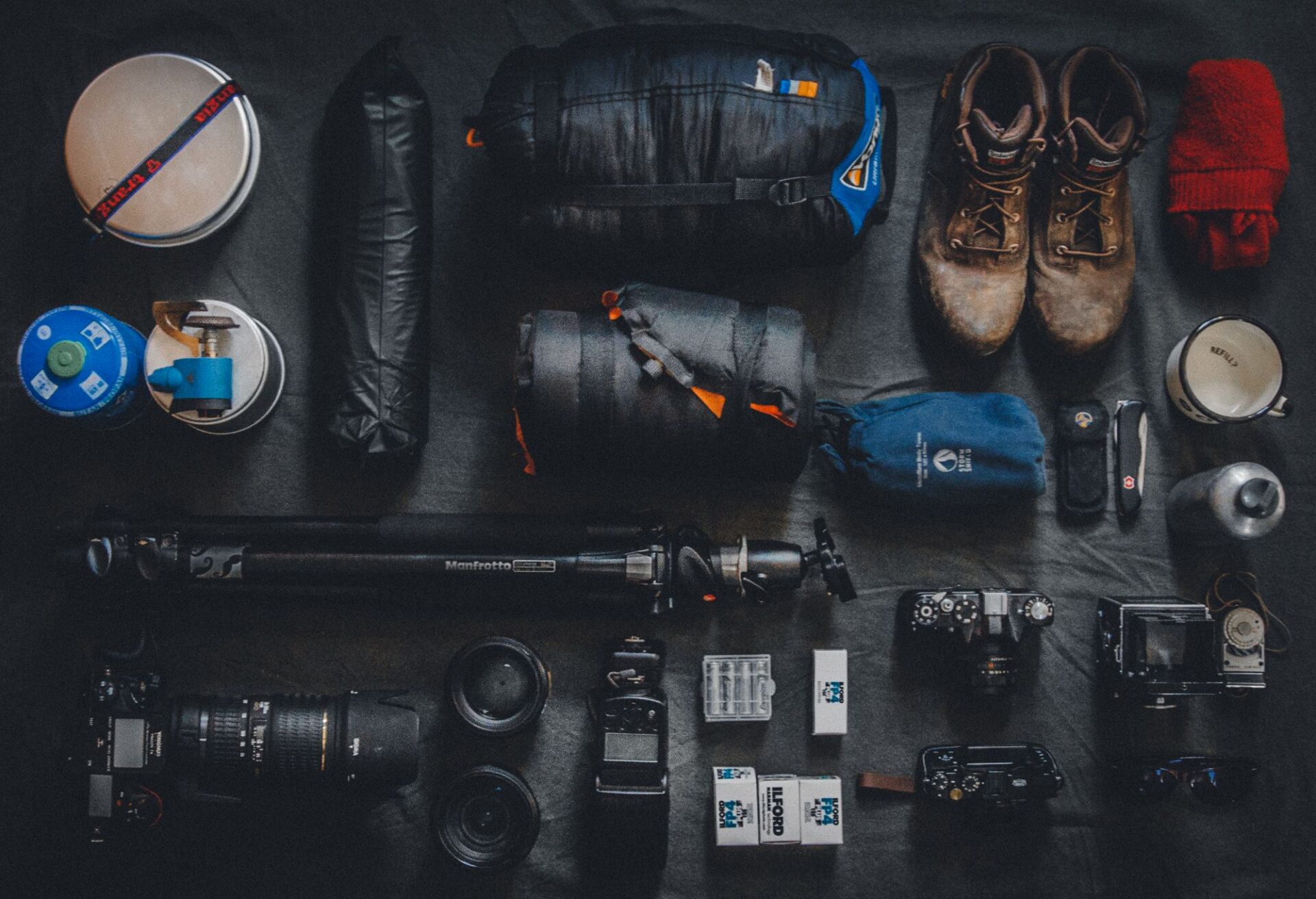
Most RV must-have lists get long fast. Before you buy every gadget that shows up in your feed, start with the gear that helps you plug in safely, connect to water, dump tanks, level your rig, and handle small problems before they turn into trip-ending ones.
This list focuses on the RV essentials most new owners should have before their first few campground stays. Some items protect your RV or your water system, while some make setup safer and less stressful. Once you’ve got these basics covered, the fun extras can come later.
Before you pack, it also helps to know what kind of campsite you’re heading into. Use Campendium to check campground reviews, photos, cell coverage notes, road access, dump station info, and whether sites have the hookups your RV needs. That way, your gear list matches the trip instead of guessing from the driveway.
Quick RV Must-Haves Checklist
Here’s a quick look at the RV must-haves worth packing before your first trip. Use this list to cover the basics for hookups, leveling, tank dumping, roadside safety, and small campsite fixes before adding comfort gear later.
- RV surge protector or EMS
- Drinking-water-safe hose
- Water pressure regulator
- Inline water filter
- RV sewer hose kit
- Disposable gloves
- Wheel chocks
- Leveling blocks or jack pads
- Electrical adapters
- RV extension cord
- Basic toolkit
- Roadside emergency kit
- First aid kit
- Flashlight or headlamp
- Spare fuses
- Tire pressure gauge or TPMS
- RV-safe toilet paper
- Backup water hose
- Backup sewer fittings
- Portable air compressor
Let’s break down each one so you know why it’s worth packing and how it helps once you’re at the campsite.
1. RV surge protector or EMS
An RV surge protector is one of the first pieces of gear to buy if you plan to plug into campground shore power. Campground pedestals can have wiring faults, voltage drops, open grounds, or other issues that are hard to see until something goes wrong.
For 2026, many RVers are better served by an Electrical Management System, or EMS, rather than a basic surge protector. A true EMS can detect more than a sudden spike. It can also shut power off when voltage is too low or too high, which helps protect air conditioners, appliances, and onboard electronics.
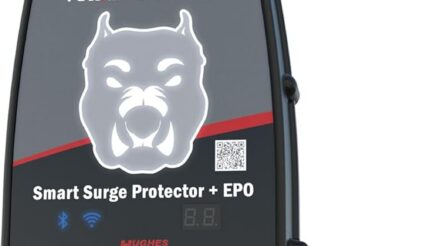
Hughes Power Watchdog Gen II EPO models are common examples in this category. The key is to choose the right amperage for your RV, either 30 amp or 50 amp, and to look for automatic shutoff protection.
2. Drinking-water-safe hose
A regular garden hose is not the right hose for your RV’s fresh water connection. You want a drinking-water-safe hose made for potable water so your water does not pick up unwanted taste or odor from the hose material.
A 25-foot hose is enough for many campground sites, but some RVers carry a second hose for odd hookups or longer reaches. Store your drinking water hose away from sewer gear so the two never touch.
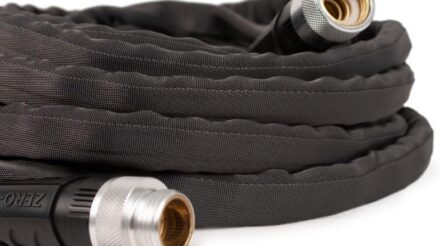
The Teknor Apex Zero-G is a popular RV water hose option because it is lighter and easier to store than stiff vinyl hoses.
3. Water pressure regulator
RV plumbing is not built for every campground water system. Some parks have high water pressure that can strain fittings and tubing inside the RV. A water pressure regulator helps keep that pressure in a safer range.
This is a small item, but it can prevent a very expensive mess. Put it at the spigot before connecting your hose so the whole line is protected.
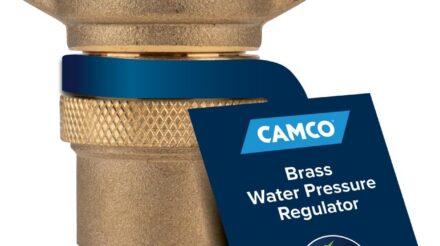
The Camco 40055 is a simple fixed brass regulator often used for RVs. Adjustable brass regulators with gauges are another option, though they add more parts that can crack, leak, or lose accuracy.
4. Inline water filter
Campground water can vary a lot by location. An inline water filter can help reduce sediment, chlorine taste, and odors before water enters your RV.
For weekend trips and beginner campers, a basic inline filter is usually enough. RVers who boondock often or travel in areas with questionable water may want a more advanced canister system.
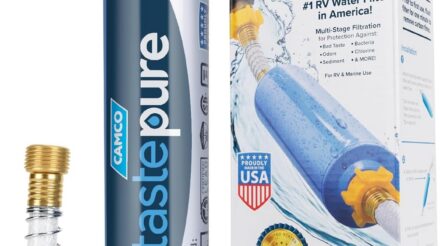
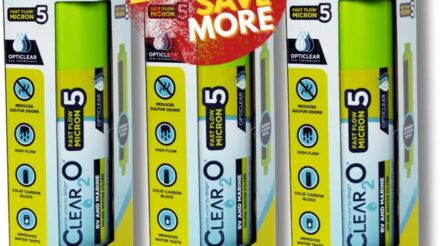
The Camco TastePURE is a common starter inline filter for reducing sediment, chlorine taste, and campground water odors. It’s a simple, affordable add-on for weekend trips and basic hookups, though frequent travelers may eventually want finer filtration like the Clear2O CRV1005.
5. RV sewer hose kit
Your sewer hose is not the place to wing it. A sturdy RV sewer hose kit helps you dump black and gray tanks with less mess and fewer leaks.
Look for a kit with secure fittings, a clear elbow, and enough length for typical campground dump connections. Some sites have sewer hookups placed in inconvenient spots, so a hose that can handle bends and rough ground is worth having.
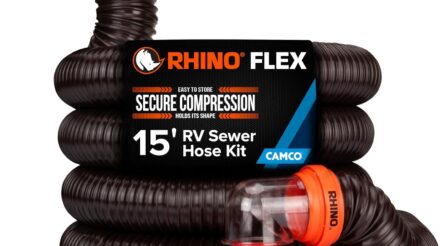
Camco RhinoFLEX is a common starter sewer hose kit with sturdy construction and the basic fittings most RVers need for dumping. It’s a practical first pick for beginners who want something more reliable than a thin, bargain hose without jumping into a more complicated setup.
6. Disposable gloves
Tank dumping is part of RV camping, and disposable gloves make the job cleaner. Keep a box or roll of gloves in the same storage area as your sewer hose so you never have to search for them at the dump station.
Nitrile gloves are a good pick because they hold up better than thin food-service gloves. Toss used gloves right away and wash your hands after dumping.
Any heavy-duty disposable nitrile gloves can work here. Choose a size that fits well enough to handle fittings without slipping.
7. Wheel chocks
Wheel chocks help keep your RV from rolling once you are parked. They should go in place before unhitching a trailer and before relying on stabilizers.
Do not confuse stabilizing gear with true wheel chocks. X-style stabilizers can reduce movement on some tandem-axle trailers, but they are not a replacement for solid chocks on the ground.
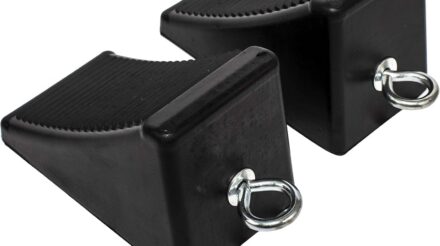
Heavy-duty rubber wheel chocks are a reliable choice; MaxxHaul rubber chocks are a common budget-friendly example.
8. Leveling blocks or jack pads
Leveling matters for comfort, door function, shower drainage, and some RV appliances. Leveling blocks help raise the low side of the RV, while jack pads can spread weight under stabilizers or jacks on soft ground.
New RVers often underestimate how uneven campsites can be. A small stack of blocks can make setup much easier.
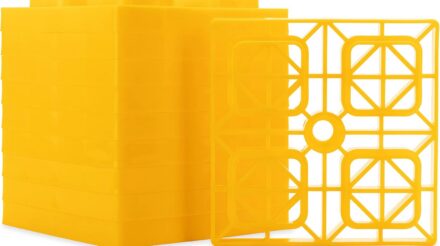
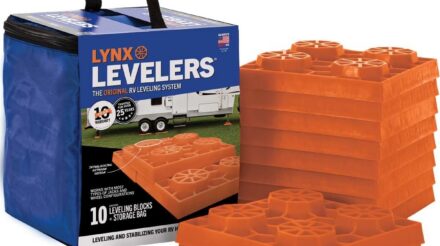
Camco Heavy Duty Leveling Blocks and Tri-Lynx blocks are common interlocking options that can be stacked to raise the low side of your RV. They’re also useful under stabilizers or jacks when you need a wider base on gravel, dirt, or softer campsites.
9. Electrical adapters or dogbone adapters
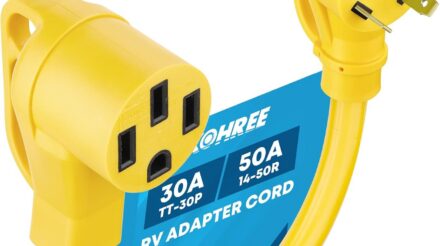
Not every campsite pedestal will match your RV plug perfectly. A dogbone adapter lets you connect your RV to a different outlet type when needed.
For example, a 30-amp RV owner may need an adapter for a 50-amp pedestal, or a 50-amp RV owner may occasionally need to use a 30-amp hookup. You still need to manage power use based on the lower available amperage.
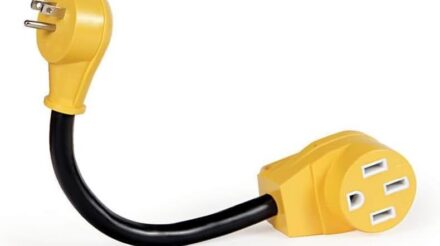
Link to product: Amazon.com: Camco RV Dogbone Electrical Adapter with Innovative 180 Degree Bend Design and PowerGrip Handle – 15 Amp Male to 50 Amp Female, 12″ (55168)
Camco and Kohree both make common yet reliable RV dogbone adapters. Choose adapters that match your RV’s plug type and the hookups you expect to use.
10. RV extension cord
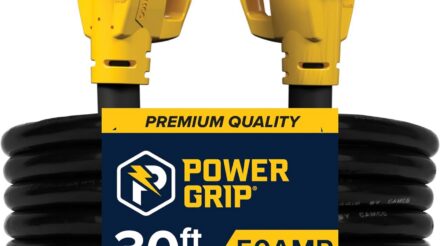
Sometimes the power pedestal is farther away than expected. An RV-rated extension cord gives you extra reach without relying on household cords that are not meant for this job.
Match the cord to your RV’s amperage. A 30-amp RV needs a 30-amp RV extension cord. A 50-amp RV needs a 50-amp cord.
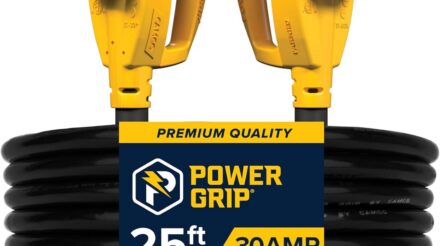
A Camco PowerGrip extension cord is one good common option. For 50-amp RVs, take note that cords are heavier and take up more storage space.
11. Basic toolkit
You do not need a full garage on wheels for your first trip, but you should have enough tools for small fixes. Loose screws, cabinet latches, hose fittings, battery terminals, and minor adjustments are common on RV trips.
A starter RV toolkit can include screwdrivers, pliers, adjustable wrenches, a socket set, utility knife, tape, zip ties, work gloves, and a tire pressure gauge.
A basic household tool kit from brands like Craftsman, DeWalt, or Husky can work. Add RV-specific items over time as you learn what your rig needs.
12. Roadside emergency kit
An RV roadside stop takes up more space than a regular car stop. You want other drivers to see you early, especially if you are towing or parked on a shoulder.
A roadside kit should include reflective triangles, a safety vest, jumper cables or a jump starter, basic tools, and a flashlight. Keep it somewhere reachable without unpacking half the storage bay.
AAA-style roadside emergency kits are easy starter options. Add heavier-duty reflective triangles if your kit only comes with small markers.
13. First aid kit
A first aid kit belongs in every RV. Campsites, trails, hitch equipment, campfires, and kitchen prep can all lead to small cuts, burns, stings, or scrapes.
Choose a kit that covers basics like bandages, antiseptic wipes, gauze, tweezers, burn cream, and pain relief. Check it at the start of each season so expired or used items get replaced.
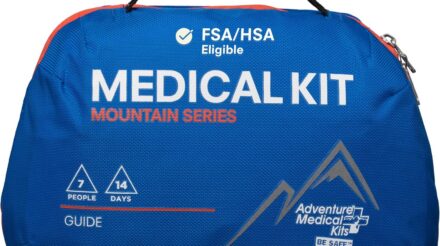
Adventure Medical Kits and First Aid Only kits are common, reliable choices. Consider also adding personal medications and any family-specific supplies.
14. Flashlight or headlamp
RV setup does not always happen in daylight. A flashlight or headlamp helps when backing into a site, checking hookups, connecting a sewer hose, or finding a tripped breaker after dark.
A headlamp is especially useful because it keeps both hands free. Keep one near the driver’s seat or entry door, not buried in a drawer.
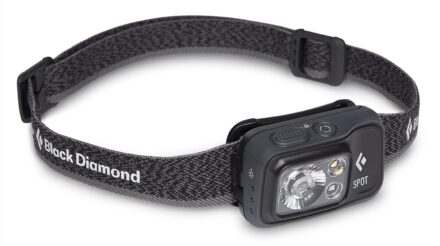
Black Diamond and Energizer headlamps are easy-to-find options. A rechargeable work light is also useful for storage bays and roadside stops.
15. Spare fuses
A small pack of spare fuses can save a surprising amount of frustration. RV lights, fans, slides, pumps, and other 12-volt systems may use blade-style fuses.
Check your owner’s manual or fuse panel so you know which sizes your RV uses. Keep spares in a labeled container near your toolkit.
Assorted automotive blade fuse kits are widely available. Make sure the kit includes the amperages used in your RV.
16. Tire pressure gauge or TPMS
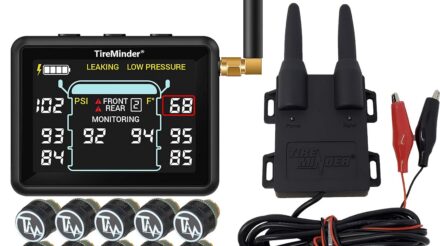
Tires are one of the biggest safety items on any RV. A tire pressure gauge helps you check pressure before travel days, while a Tire Pressure Monitoring System can monitor pressure and temperature while you drive.
For trailers and larger motorhomes, a TPMS is one of the smartest 2026 safety upgrades because it can warn you about slow leaks and heat buildup before a tire failure.
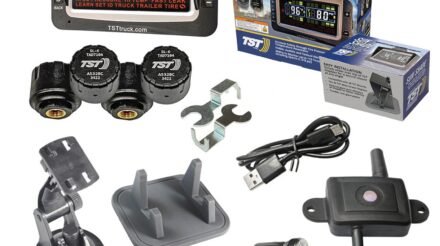
TST 507 and TireMinder i10 are common RV TPMS options. For a basic gauge, choose one rated for the pressure your RV or tow vehicle tires require.
17. RV-safe toilet paper
RV black tanks need paper that breaks down easily. The label “RV toilet paper” is one option, but many septic-safe papers can work if they break apart quickly in water.
The bigger rule is to use plenty of water in the black tank and keep the black tank valve closed until you are ready to dump. Leaving the valve open can let liquids drain away while solids stay behind.
18. Backup drinking-water hose
A second potable water hose can help if your first hose leaks, freezes, gets contaminated, or is not long enough for a weird campsite layout.
You do not always need to connect both hoses, but having a clean backup gives you options.
A second 25-foot Teknor Apex Zero-G or Camco drinking-water-safe hose can work well as a spare.
19. Backup sewer hose or fittings
A cracked sewer fitting can make dumping tanks difficult fast. Carrying a spare fitting, clear elbow, gasket, or short backup hose is cheap insurance.
This is especially useful if you use campground sewer hookups often, visit older parks, or dump at busy stations where fittings get bumped around.
20. Portable air compressor
A portable air compressor lets you adjust tire pressure without hunting for a station that can handle RV or trailer tires. This matters even more if your RV tires need higher PSI than a typical passenger vehicle pump can provide.
For larger rigs, choose a compressor built for higher pressures and longer run times.
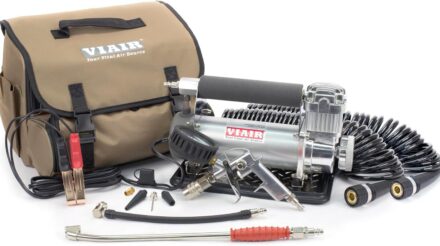
Viair 400P-RV and Viair 450P-RV are common RV-focused portable compressors. The 450P-RV is often chosen by RVers who want longer continuous run time.
Helpful Soon, But Not Always Needed on Trip One
These aren’t the first things you need to buy, but they’re worth adding once your core setup is covered. Think of them as backup gear and problem-solvers: items that can save you from a minor to moderate inconveniences.
- Holding tank treatment: Useful for odor control and waste breakdown. Product example: Unique RV Digest-It Ultra.
- Sewer hose support: Helpful at full-hookup sites where the hose needs a steady slope. Product example: Camco Sidewinder.
- Spare tire tools: Useful if your RV has a spare and you are comfortable changing a tire safely.
- Bottle jack and torque wrench: Important for RVers who plan to handle tire changes themselves. Product example: Pittsburgh bottle jacks and a properly rated torque wrench.
- Setup checklist: A printed checklist or notebook helps new RVers avoid missed steps during arrival and departure.
How to Decide What You Actually Need
The best RV gear list depends on where you camp. A full-hookup RV park, a dry camping site on public land, and a one-night stop on a long travel day all call for slightly different gear.
Before each trip, check Campendium for campground details, reviews, photos, road notes, cell coverage, dump station info, and nearby camping options. If reviews mention tight sites, older hookups, rough roads, or limited services, you can pack with fewer surprises.
Power Tip: Buy the gear that prevents the most common first-trip problems first. That means power protection, water pressure control, sewer gear, chocks, leveling gear, tire safety, and basic tools before comfort accessories.
Frequently Asked Questions
Start with an RV surge protector or EMS, drinking-water-safe hose, water pressure regulator, water filter, sewer hose kit, disposable gloves, wheel chocks, leveling blocks, electrical adapters, basic tools, a first aid kit, a roadside kit, and tire pressure gear.
The main RV hookup essentials are a surge protector or EMS, RV power cord, dogbone adapters, potable water hose, water pressure regulator, inline water filter, sewer hose kit, clear sewer elbow, and disposable gloves.
Yes. They protect different systems. A surge protector or EMS protects your RV from electrical problems at the pedestal. A water pressure regulator protects your plumbing from high campground water pressure.
For many towable RVs and motorhomes, yes. A TPMS can alert you to pressure loss or heat buildup while driving. A handheld tire pressure gauge is still useful, but it only helps when you are stopped.
Comfort items can usually wait. Outdoor rugs, upgraded chairs, speakers, coffee gear, storage accessories, and patio decor are nice to have, but they are not as important as the gear that helps you hook up safely, dump tanks, level the RV, and monitor tires.
Pack the Gear, Then Find the Right Campsite
Once the basics are covered, your first RV trip gets a lot easier: safer hookups, smoother setup, cleaner tank dumping, and fewer last-minute fixes at the campsite. But before you head out, use Campendium to find campgrounds that fit your rig, check reviews and photos, and confirm details like hookups, cell coverage, road access, and dump station availability.