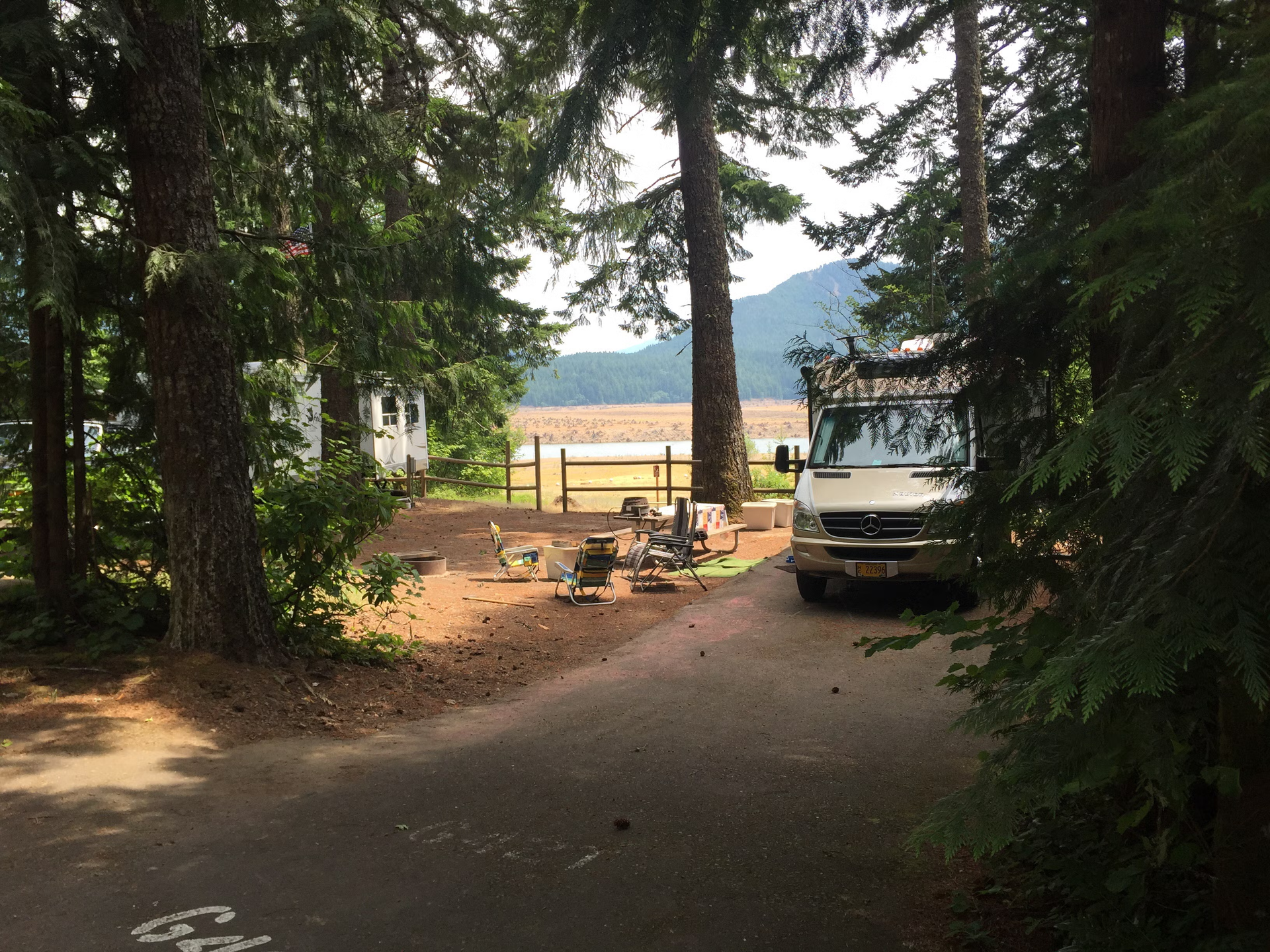
Detroit Lake offers a mix of camping experiences, from the large, developed Detroit Lake State Recreation Area to smaller Forest Service campgrounds around the reservoir and nearby forest. Some sites are better suited to RVs and offer hookups, while others appeal more to tent campers looking for a quieter stay or easier access to the water.
This guide compares Detroit Lake campgrounds by RV and tent suitability, hookups, lake access, amenities, reservations, and overall camping experience. You can also use Campendium’s Detroit Lake map and campground listings to compare locations, read camper reviews, browse photos, and check practical details before choosing a site.
TL;DR
- Best developed option for RVs: Detroit Lake State Recreation Area has the broadest mix of developed facilities and RV-friendly sites, including hookup options.
- Best for a smaller, quieter campground: Southshore at Detroit Lake offers a more low-key setting than the larger state park while still providing access to the lake.
- Best way to choose: Compare recent camper reviews, site photos, amenities, RV details, and map locations on Campendium before reserving.
Detroit Lake Campgrounds at a Glance
The main campgrounds around Detroit Lake differ quite a bit in size, facilities, and access to the water. Detroit Lake State Recreation Area is the strongest choice for campers who want hookups and more developed facilities, while the Forest Service campgrounds trade some amenities for smaller settings and a more wooded camping experience.
| Campground | Best For | RV/Tent | Hookups | Lake Access |
|---|---|---|---|---|
| Detroit Lake State Recreation Area | RVs, families, and developed camping | RV + tent | Full hookups and electric/water sites available | Direct reservoir access, swimming areas, and moorage |
| Southshore at Detroit Lake | Smaller, quieter lake camping | RV + tent; some walk-in tent sites | None | Shoreline and boat-launch access |
| Cove Creek Campground | Forest camping with showers and lake recreation nearby | RV + tent | None | Shoreline day-use area and boat access |
| Humbug Campground | Quiet forest and river camping | RV + tent | None | Breitenbush River rather than direct Detroit Lake frontage |
Detroit Lake State Recreation Area currently lists 107 full-hookup sites, 68 electric-and-water sites, and 96 tent sites. Southshore has 30 campsites and is specifically described as being farther from the busier portions of Detroit Lake.
Cove Creek has 60 campsites, drinking water, flush toilets, and coin-operated showers, while Humbug offers a smaller, nonelectric campground beside the Breitenbush River.
Explore Detroit Lake campgrounds on Campendium to compare these options on the map, see campsite photos and amenities, and read recent camper reviews that can help clarify details such as site feel, RV fit, lake access, and current conditions before you reserve.
Best Campgrounds Around Detroit Lake
The best Detroit Lake campground depends on how developed you want your stay to be. Some options put you close to the reservoir with hookups and showers, while others trade those conveniences for smaller campgrounds, forest settings, or river access.
Detroit Lake State Recreation Area
Best for: RV hookups, families, and developed lake camping
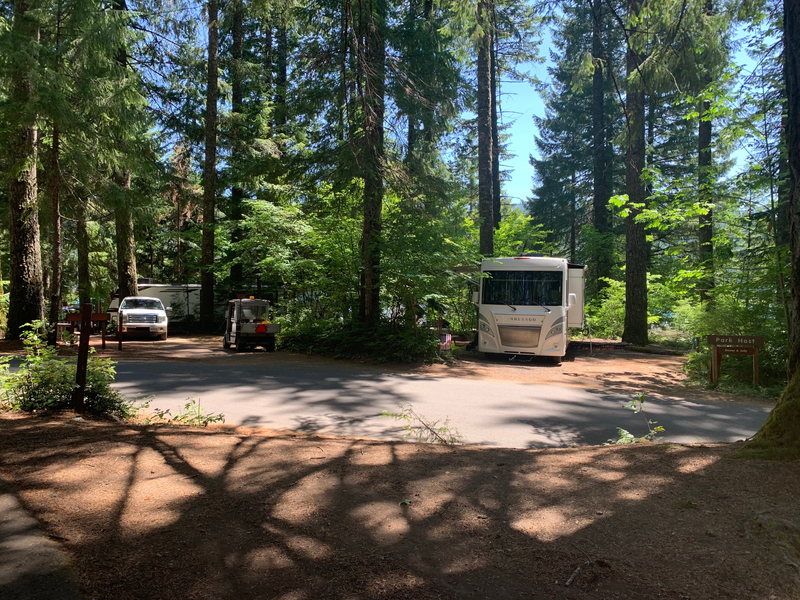
Detroit Lake State Recreation Area is the most developed camping option around the reservoir. The campground has nearly 300 sites, including 107 full-hookup sites, 68 sites with electricity and water, and 96 tent sites with water nearby. Flush toilets, hot showers, swimming areas, boat ramps, moorage, and a fishing dock make it a practical choice for families and campers who want more facilities close at hand. Reservations can be made up to six months in advance.
For RV travelers, the full-hookup inventory is the main draw. RVs can also use some non-hookup tent sites, although length limits apply. One limitation is worth planning around: the campground does not have a dump station. Oregon State Parks recommends reserving a full-hookup site if sewer access is necessary. Generators are also prohibited.
Southshore at Detroit Lake
Best for: A smaller, quieter campground
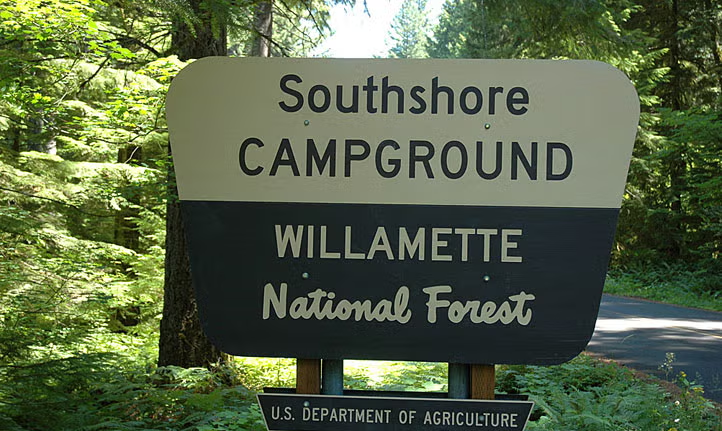
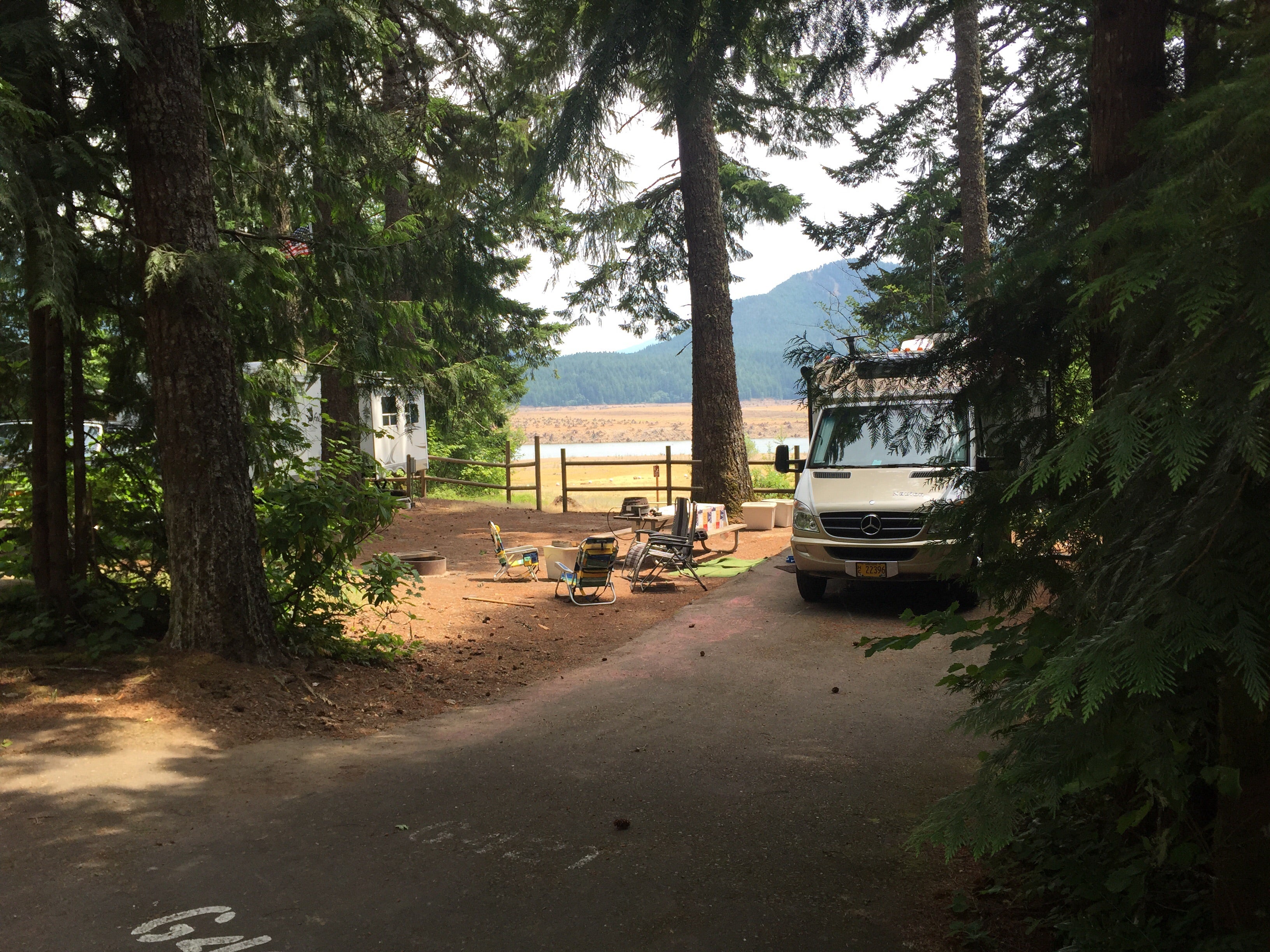
Southshore is a better match for campers who want to stay close to Detroit Lake without the scale and activity of the state recreation area. The Forest Service campground has 30 campsites split between 25 single and five double sites, with a mix of wooded and more open settings. Recreation.gov specifically describes it as being farther from the busier parts of the lake.
There are no hookups, but drinking water, vault toilets, shoreline access, a boat launch, and courtesy docks are available. Coin-operated showers are about a mile away at Cove Creek. Sites can accommodate trailers up to 30 feet, while sites 4 through 11 are walk-in, tent-only sites. The campground is fully reservable, although an unreserved site may sometimes be used first come, first served for one night.
Cove Creek Campground
Best for: Forested lake camping with showers and boating access
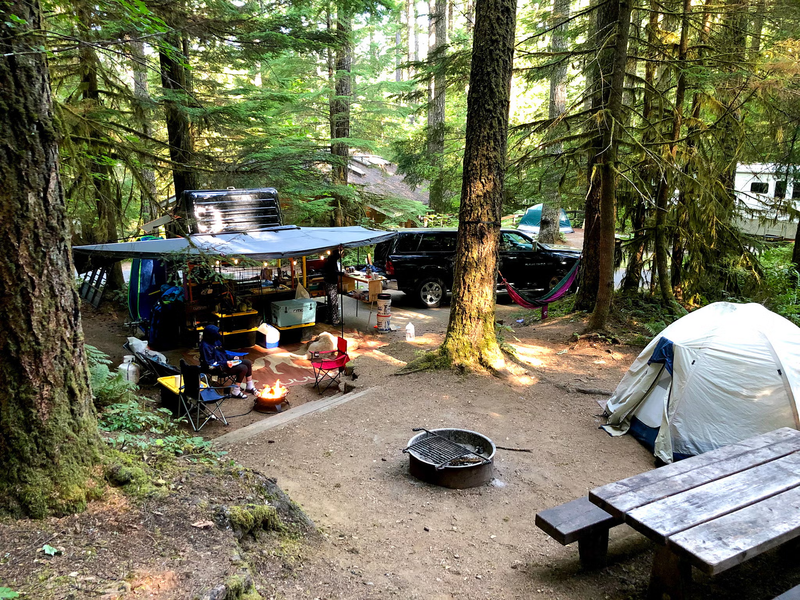
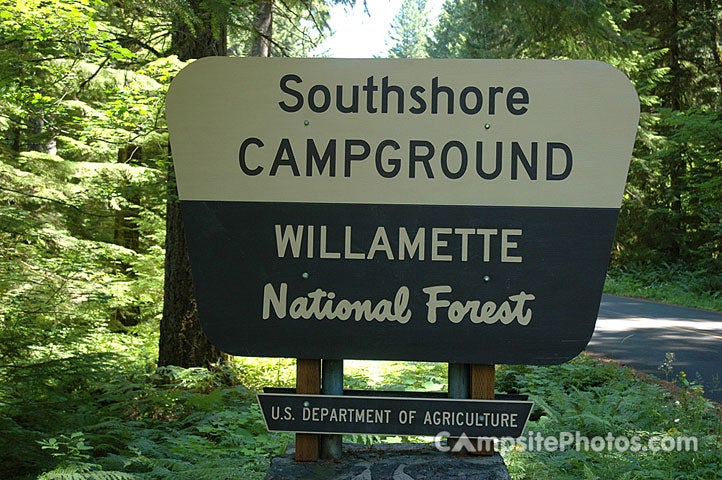
Cove Creek sits near Detroit Reservoir in a wooded Forest Service setting. Its 60-site campground includes both reservable and first-come, first-served sites, with trailers up to 30 feet accommodated. Drinking water, flush toilets, coin-operated showers, and trash service make it more developed than some of the other Forest Service options around Detroit Lake, even though there are no hookups.
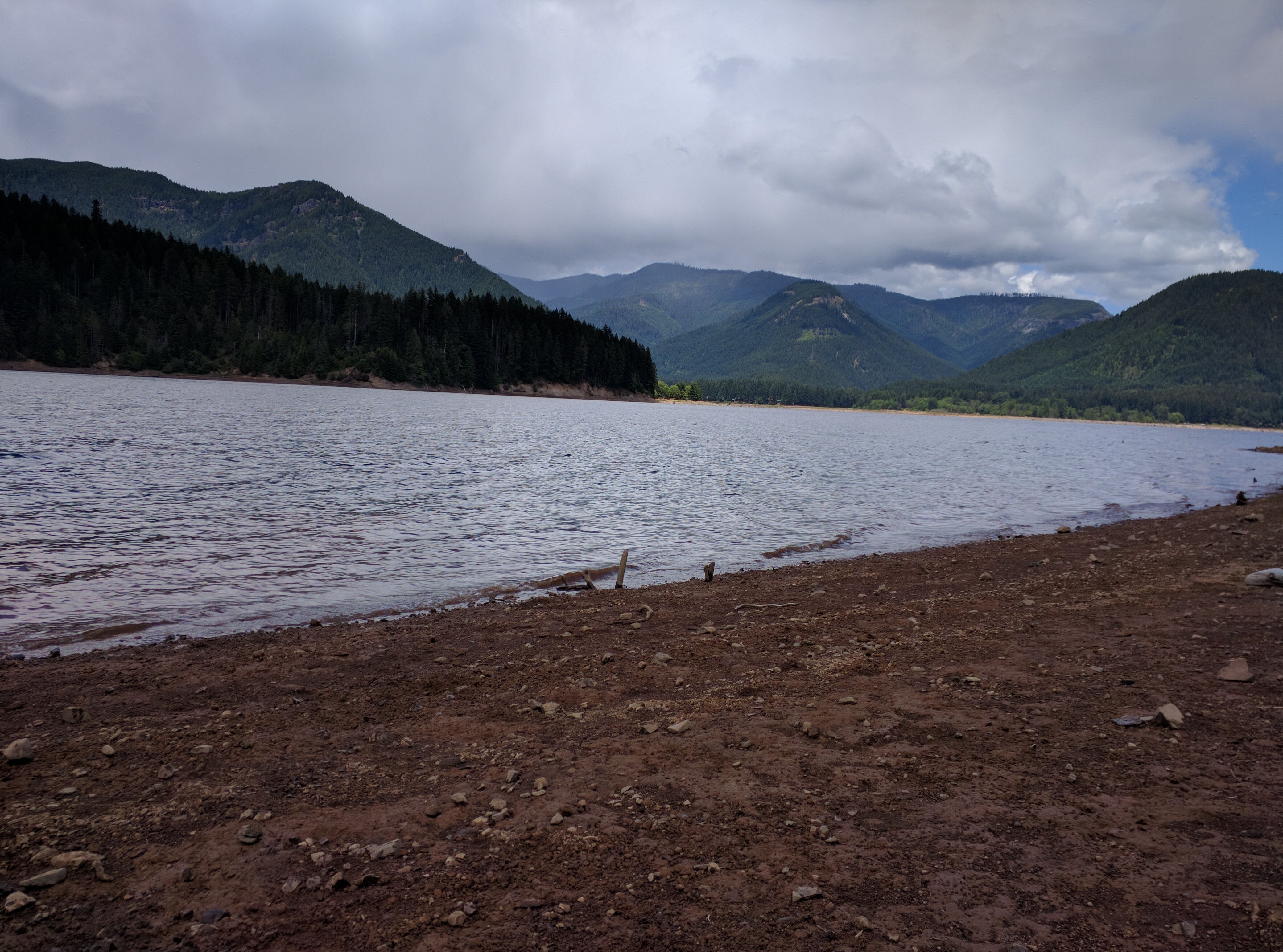
A day-use area provides about 1,000 feet of shoreline along with a boat launch and courtesy docks. The campground itself is close enough to hear passing boats but does not offer clear lake views from every site. Stahlman Point Trail also starts about a quarter-mile from the campground entrance.
Humbug Campground
Best for: Forest camping near the Breitenbush River
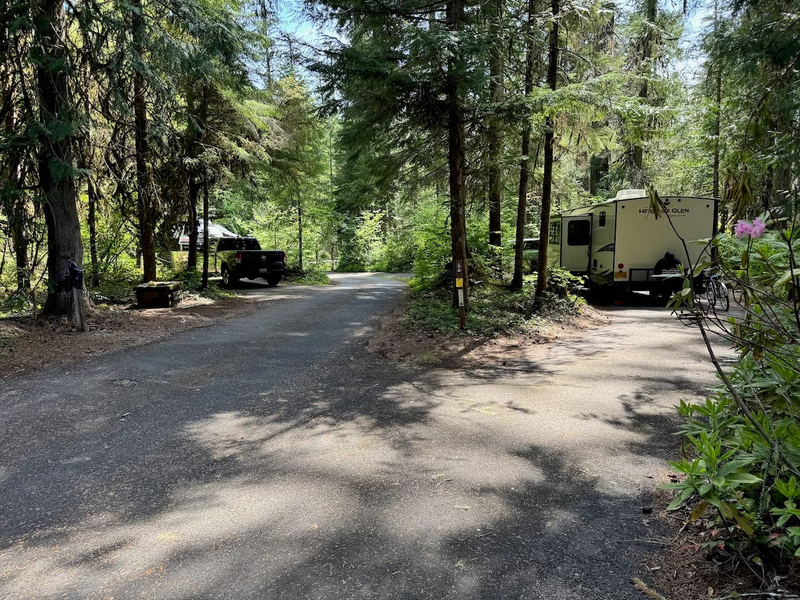
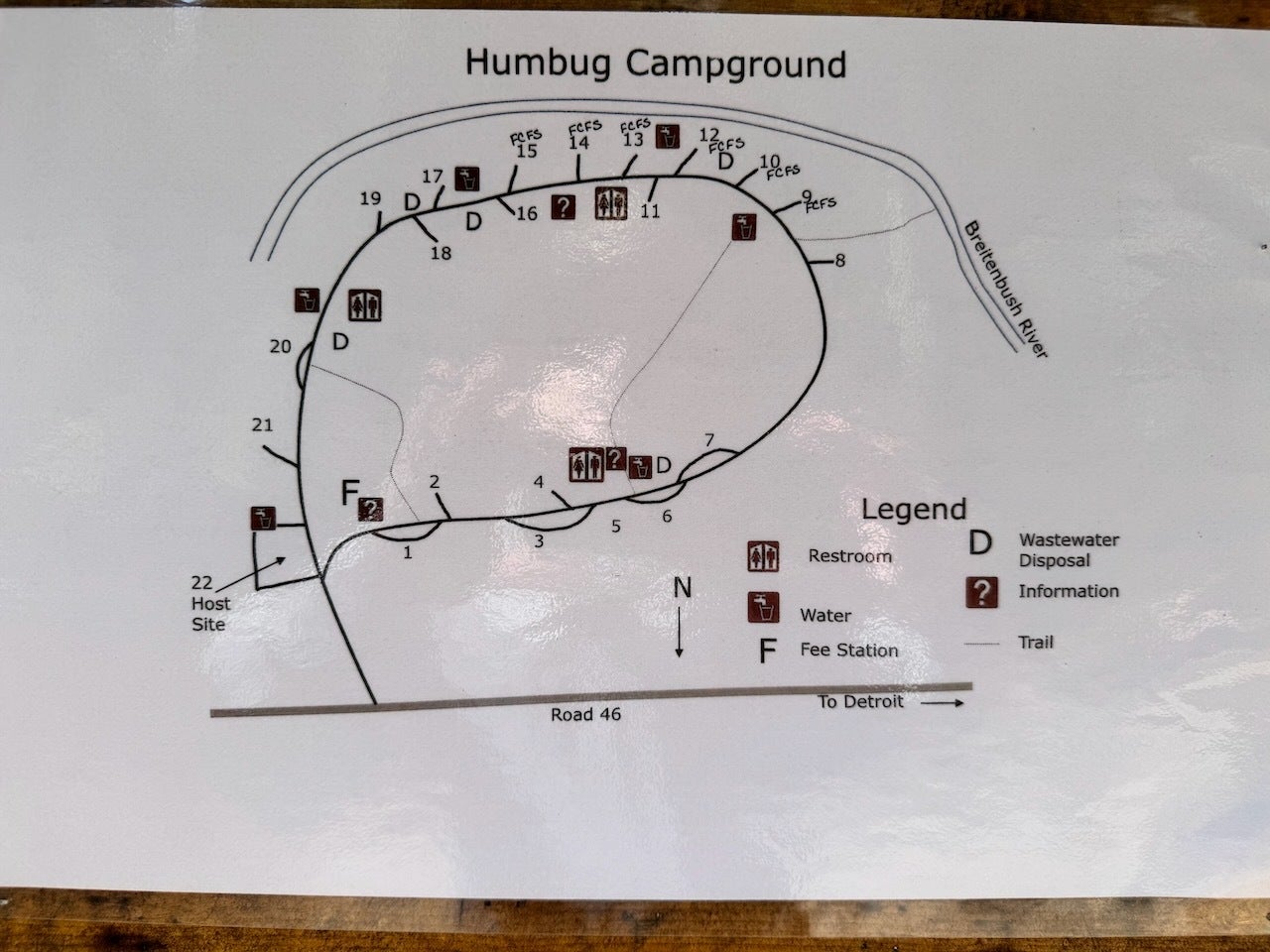
Humbug offers a different experience from the reservoir campgrounds. Located about 4.6 miles northeast of Detroit in Willamette National Forest, it sits along the Breitenbush River rather than directly on Detroit Lake. Campsites have picnic tables and grills, with vault toilets and drinking-water spigots available throughout the campground. There are no electric hookups.
The river setting is the main reason to choose Humbug. Many campsites have river views, and fishing and wading are nearby activities. Individual sites vary substantially in vehicle fit, with Recreation.gov listings showing everything from short van-friendly pads to larger RV and trailer sites, so RV campers should check the dimensions of the exact site before reserving.
Other Campgrounds Near Detroit Lake
If the main campgrounds are full, Hoover Campground is one of the strongest backups near the reservoir. It has 35 standard campsites, 21 of which are reservable, along with flush toilets, a boat launch, shoreline access, and a fishing platform. There are no hookups, and Recreation.gov recommends against trailers longer than 30 feet for the campground overall. Individual sites vary, however, and some campsite listings accommodate longer RVs. Campendium also lists Hoover as a seasonal Detroit Lake option with tent camping and water access.
Breitenbush Campground is another alternative farther east of Detroit for campers who are comfortable trading Detroit Lake frontage for river camping. It has 29 sites, 23 reservable, beside the Breitenbush River and no electrical hookups.
Use Campendium’s Detroit Lake map to compare these backups with the main campgrounds, especially when your first choice is unavailable. Photos, campground details, and camper reports can help narrow the list by RV fit, setting, and access before you commit to a reservation.
RV Camping at Detroit Lake
Detroit Lake State Recreation Area offers the most developed setup for RV camping around the lake. Its inventory includes 107 full-hookup sites with power, sewer, and water, plus 68 sites with electricity and water. RVs can use some non-hookup tent sites as well, although Oregon State Parks notes that length limits apply in most tent areas.
The Forest Service campgrounds are more basic. Southshore, Cove Creek, Humbug, and Hoover do not offer RV hookups, so campers need to plan around their own power, wastewater, and freshwater needs. Southshore does provide drinking water throughout the campground, while other facilities vary by location.
Site fit deserves extra attention, particularly outside the state park. Recreation.gov’s individual Southshore records show how much sites can differ: one lakefront site has a 73-foot paved back-in driveway with a moderate grade, while another has a 30-foot pull-through driveway. Other sites have slopes, stairs, or equipment restrictions that aren’t obvious from a campground-wide maximum length alone.
Wastewater planning is especially important at Detroit Lake State Recreation Area. Despite its large RV inventory, there is no dump station at the campground. Campers who need sewer service should reserve a full-hookup site; Oregon State Parks currently lists the nearest available dump stations in Salem or Sisters, roughly 55 miles away. Generators are also prohibited at the state park.
Reservations, Seasons and What to Know Before You Go
Camping around Detroit Lake requires a little more planning than simply choosing a campground. Check the latest information from the relevant land manager before you leave, especially if boating, campfires, or specific campground facilities are important to your trip.
Reservations
Booking systems vary by campground. Detroit Lake State Recreation Area accepts reservations through Oregon State Parks up to six months before arrival, with same-day reservations available when sites remain open.
Southshore is reservable through Recreation.gov, where campsites can also be booked up to six months in advance. Unreserved Southshore sites may sometimes be used first come, first served for one night at a time.
Other Forest Service campgrounds around Detroit Lake may have a mix of reservable and first-come, first-served sites, so check the individual campground before arriving without a booking.
Lake levels and water access
Detroit Lake is a reservoir, which means shoreline conditions, boat launches, docks, and swimming access can change as water levels rise or fall. A campsite may remain open even when boating access is more limited than expected.
Campers planning around the water should check the U.S. Army Corps of Engineers’ current Detroit Dam and reservoir data before leaving. Oregon State Parks also recommends checking lake conditions before a visit. A deep reservoir drawdown is planned to begin after November 1, 2026, making current information particularly important for late-season trips.
Campfires and fire restrictions
Campfire rules can change during the camping season and may differ between Oregon State Parks and Forest Service campgrounds. A campground that normally provides fire rings may still prohibit fires when wildfire risk increases.
Check the current rules for your specific campground shortly before your trip rather than relying on what was permitted during a previous stay. Restrictions can apply to wood fires, charcoal, propane fire pits, or other flame-producing equipment, while some cooking appliances may remain permitted under certain restrictions.
Current conditions
Check official Oregon State Parks and Willamette National Forest updates before heading to Detroit Lake. Temporary closures, wildfire activity, road conditions, facility changes, algae advisories, and reservoir operations can all affect a camping trip.
As of September 1, 2026, Oregon State Parks is also advising visitors to watch for possible blue-green algae blooms and to check current health advisories. Recent Campendium reviews can help with camper-reported details such as site conditions or access, but official land-manager sources should be used for active closures, restrictions, and safety notices.
Frequently Asked Questions
Detroit Lake State Recreation Area offers year-round camping, although some facilities and site types vary by season. Other campgrounds around Detroit Lake, including Forest Service campgrounds, operate on their own seasonal schedules, so check the individual campground before planning a winter or shoulder-season trip.
It depends on the campground. Southshore is fully reservable, but an unreserved site may be used first come, first served for one night at a time. Other Forest Service campgrounds may have a mix of reservable and first-come, first-served sites, so verify the policy for the specific campground before arriving without a reservation.
There is National Forest land around Detroit, but dispersed camping is not allowed everywhere. The Detroit Ranger District has specific areas where dispersed camping is prohibited, including portions around Detroit Lake and the Breitenbush corridor. Check current Willamette National Forest maps, closure orders, and posted restrictions before choosing a dispersed site.
No. Oregon State Parks states that Detroit Lake State Recreation Area does not have a dump station. RV campers who need sewer service should reserve a full-hookup site. The park currently lists Salem and Sisters, about 55 miles away, as the nearest dump-station options.
Recreation.gov lists pets as allowed at Southshore campsites, while Forest Service rules require dogs at developed recreation sites to be leashed or otherwise physically restrained. Check the specific campground’s current pet rules before your trip, especially if you’re staying outside Southshore.
Find Your Detroit Lake Campsite with Campendium
Detroit Lake campgrounds can differ widely in hookups, site size, lake access, facilities, and overall setting. Compare Detroit Lake campgrounds on Campendium to browse camper reviews, campsite photos, amenities, RV details, and nearby options on the map.
Checking recent reviews before you reserve can also help you spot useful notes about site conditions, access, water levels, and what the campground is like in practice.