Planning an RV trip is not the same as planning a regular road trip. You are not just picking a destination and following the fastest route. You are thinking about rig size, drive time, fuel stops, overnight stays, campground access, cell coverage, amenities, and whether the place you book will actually work once you arrive.
The best RV trip planner is the one that fits the way you travel. For some RVers, that means plotting a scenic route with fun stops along the way. For others, it means finding reliable campgrounds, checking reviews, and building a trip around places that match their rig and camping style.
Campendium can help with one of the most important parts of that process: finding places to camp with real reviews, photos, amenities, and stay details from other RVers.
TL;DR
- The best RV trip planner depends on how you camp, not just where you are going.
- A regular map app can help with directions, but RVers also need to think about rig size, road access, campground fit, drive time, fuel stops, cell coverage, and backup places to stay.
- For many RVers, campground research is the most important part of trip planning. A route only works if the places you stop can actually fit your rig, routine, and travel style.
What Makes an RV Trip Planner Different From a Regular Map App?
A regular map app can get you from one address to another, but RV travel usually takes more planning than that. RVers often need to think about:
- Rig height, length, and weight
- Narrow roads, steep grades, and tight turns
- Campground availability
- Dump stations, water fills, and fuel stops
- Daily driving limits
- Cell service and Wi-Fi needs
- Pet rules, hookups, site size, and road access
- Backup places to stay if plans change
A good RV trip planning process helps you answer two questions before you leave:
- Can I get there safely?
- Will this stop actually work for the way I camp?
Features That Matter Most in an RV Trip Planner
Not every RVer needs the same setup. Before choosing a trip planning tool, start with the following features that matter most for your route, rig, and camping style.
- RV-safe route planning
- Campground discovery and filtering
- Stop-planning and daily drive limits
- Discovery along the route
- Budget planning
Let’s dive into each feature you should look out for.
RV-safe route planning
If you drive a larger RV, tow a trailer, or travel through mountain passes, route safety matters. RV-specific route planning can help account for road restrictions, low clearances, steep grades, and tight roads that may not show up as a concern in a regular map app.
This is especially helpful for long travel days, unfamiliar regions, and trips that cross rural or mountainous areas.
Campground discovery and filtering
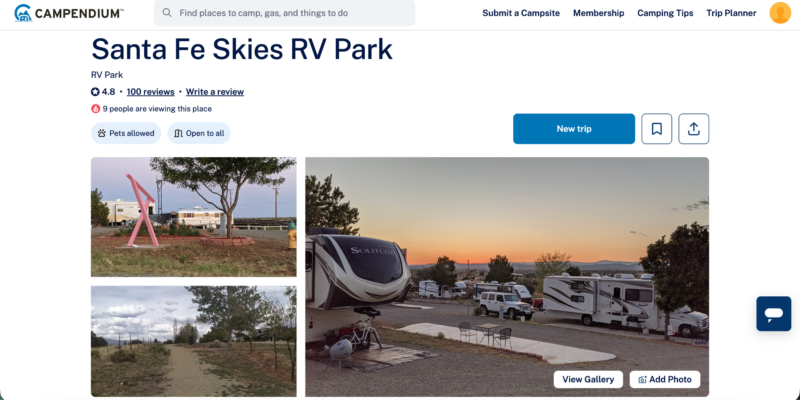
For many RVers, the hardest part of planning is not choosing the road. It is choosing the right place to stay.
Campground research can help you compare:
- Site types
- Hookups
- Amenities
- Pet rules
- Cell coverage
- Road access
- Photos
- Reviews
- Big-rig friendliness
- Nearby dump stations or water fills
Campendium is especially useful here because it gives RVers a way to compare campgrounds using real-world stay details, not just a pin on a map.
Stop-planning and daily drive limits
RV travel days can be tiring. A route that looks easy in a car may feel very different in a motorhome or while towing.
A useful RV planning workflow should help you build realistic travel days by thinking through:
- How many miles you want to drive
- How long setup and breakdown take
- Whether you want one-night stops or longer stays
- Where you can refuel or rest
- How much daylight you will have when you arrive
Discovery along the route
Some travelers want the most direct path. Others want scenic drives, roadside stops, small towns, hikes, restaurants, or local attractions.
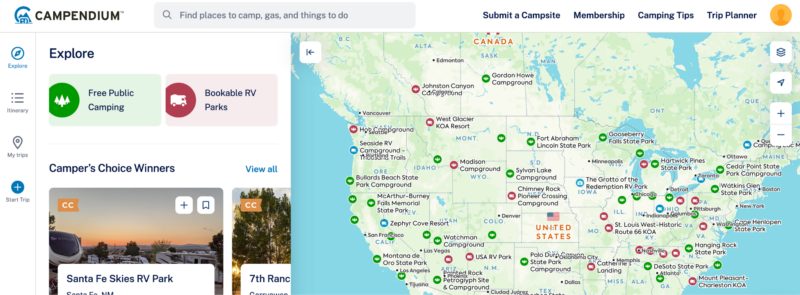
Campendium’s built-in trip planner can help RVers build a route, add stops, and shape a trip around the places they actually want to camp. The trip planner is a paid feature currently available on the web, with mobile app access coming soon. It includes tools for searching along a route, adding waypoints, customizing routes, adding dates, exporting trips, and managing trip details.
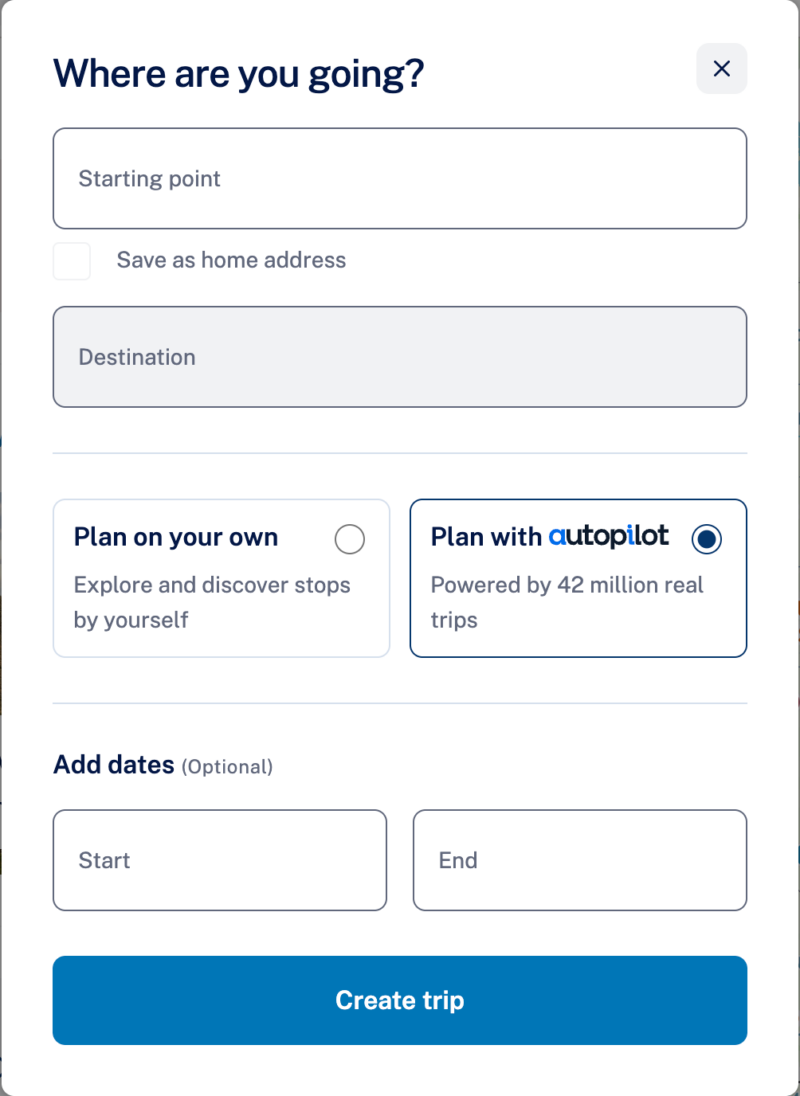
For RVers, this works best when route planning and campground research happen together. You can map out your trip, then use Campendium to compare nearby campgrounds, reviews, photos, amenities, cell coverage, and access notes before locking in each overnight stop.
Budget planning
Campsite fees, fuel, tolls, activities, and food can add up fast. A good planning process should help you see where your money is going before you are already on the road.
At a minimum, estimate:
- Campground costs
- Fuel costs
- Extra driving from detours
- Overnight stop fees
- Park passes or attraction costs
- Reservation deposits or cancellation fees
The Best RV Trip Planner Depends on How You Travel
There is no single best RV trip planner for every RVer. The right choice depends on what kind of trip you are planning; your travel style.
Let’s define each style and know what an RV trip planner should have for every one of them.
Best for campground-first planners
Some RVers build the trip around where they want to stay. This is common for families, full-timers, remote workers, pet owners, and anyone traveling with a larger rig.
Campground-first planners should focus on:
- Reliable campground reviews
- Photos from other campers
- Cell coverage reports
- Hookup details
- Road access notes
- Big-rig information
- Amenities that match their routine
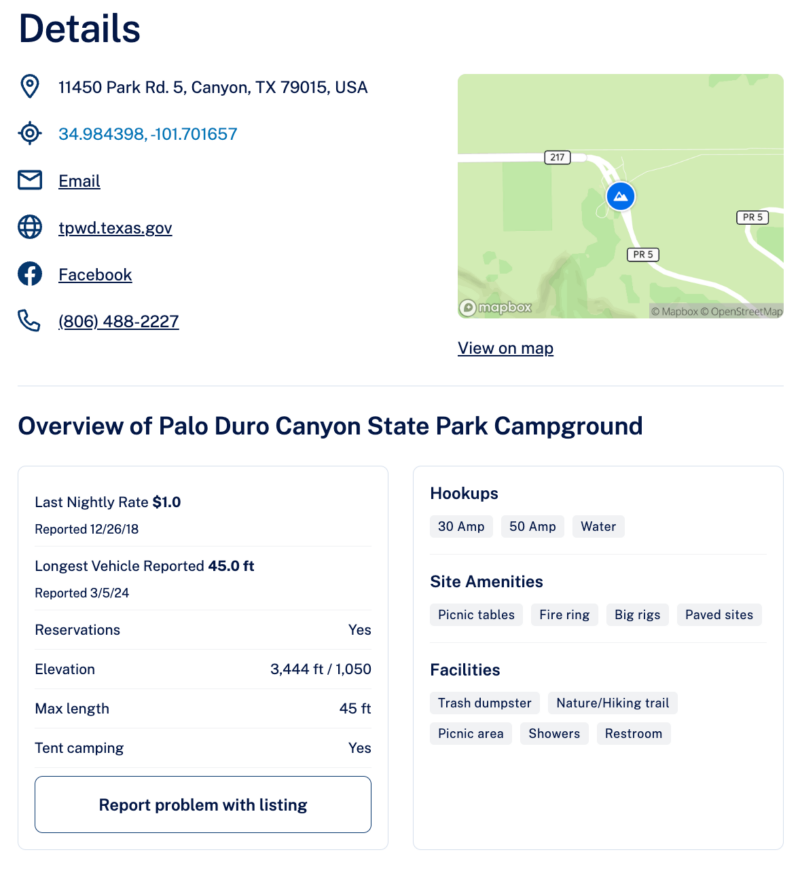
Campendium fits naturally into this kind of planning because it helps you compare campgrounds before you book, not after you pull in and realize the site is not a good fit.
Best for scenic road trips and detours
If the fun of the trip is the drive itself, you may want a planner that helps you find scenic stops, unusual attractions, small towns, hikes, or restaurants along the way.
Campendium can help you find campgrounds near the stops you want to build into your route. Check reviews, photos, amenities, cell coverage, and access notes before you commit, because a scenic detour only works if the overnight stop fits your rig and travel style.
Best for long-haul travel days
If you are covering a lot of miles, the best RV planner is one that helps you keep travel days realistic. Safe routing, fuel stops, overnight parking, and campground availability matter more than sightseeing.
For this kind of trip, focus on:
- Reasonable daily mileage
- Easy-in, easy-out campgrounds
- Fuel access
- Road conditions
- Backup stops
- Arrival times before dark
Campendium can help you identify practical overnight stops along the way. With the Measure Tool, RV PRO members can enter a drive time or mileage goal from a routed stop, see where that lands on the map, and search nearby for campgrounds, dump stations, fuel stops, or other useful places to stop.
Best for budget-conscious RVers
Free tools can work well for simple trips, especially if you already know the area or are comfortable piecing together your own route.
A free or lighter planning setup may be enough if:
- Your route is simple
- You travel in a smaller rig
- You do not need RV-specific routing
- You are staying in familiar campground types
- You are comfortable doing more manual research
Paid tools may be worth considering when you want more route detail, RV-specific settings, or built-in trip organization. Either way, campground research should still be part of the plan.
Best for beginners
New RVers often do best with a simple workflow. Too many tools can make planning feel harder than it needs to be. A beginner-friendly approach might look like this:
- Choose your destination.
- Set a comfortable daily driving limit.
- Pick a few possible stop zones.
- Use Campendium to compare campgrounds in each area.
- Check reviews, photos, amenities, and cell coverage.
- Save a backup option for each travel day.
- Confirm arrival rules, site size, and cancellation policies before booking.
Common RV Trip Planning Mistakes
Even experienced RVers make planning mistakes. Here are a few to watch for.
- Choosing a planner before knowing your travel style: Do not start with the tool. Start with the trip. A weekend at a state park, a six-month cross-country route, and a scenic national parks trip all call for different planning needs.
- Ignoring campground fit: A campground can be in the right location and still be wrong for your trip. Reviews, access notes, site size, hookups, and cell coverage all matter.
- Planning travel days like car travel days: RV travel usually takes longer. Fuel stops, slower speeds, setup time, and road conditions can make a 300-mile day feel much longer than expected.
- Forgetting backup options: A backup campground is not just for emergencies. It gives you breathing room if the first option is full, noisy, muddy, too tight, or farther from your route than expected.
- Paying for features you do not use: A feature-rich planner can be helpful, but only if those features match your needs. If campground research is your biggest challenge, make sure that part of your planning process is covered.
Frequently Asked Questions
The best RV trip planner for beginners is one that keeps the process simple. Start with your destination, set a comfortable daily driving limit, choose possible stop zones, and use Campendium to compare campgrounds before booking.
You may need an RV-specific trip planner if you drive a large RV, tow a trailer, travel through mountains, or want help avoiding roads that may not be suitable for your rig. For simpler trips, a basic map plus campground research may be enough.
You can use a regular map app for general directions, but it may not account for RV-specific concerns like height, weight, road grades, or campground access. Many RVers use a regular map alongside campground research and RV-specific planning tools.
Start by choosing your route and daily driving limits. Then identify stop zones along the way. Use Campendium to compare campgrounds in each zone based on reviews, photos, amenities, cell coverage, and access notes.
A free planner may be enough for simple trips, smaller rigs, or familiar routes. Longer trips, larger rigs, and more complex routes may call for more detailed planning tools. Either way, campground research should still be part of your process.
Before booking, check site size, hookups, pet policies, road access, recent reviews, photos, cell coverage, fees, check-in rules, and cancellation policies. Campendium can help you compare many of these details before you commit.
Choose the Planner That Matches Your Camping Style
The best RV trip planner is not always the one with the longest feature list. It’s the one that helps you plan a safer, easier, more realistic trip.
For some RVers, that means RV-safe routing. It may also mean scenic stops and flexible detours for others. Or it could start with finding the right campground for many.
Use Campendium to compare campgrounds, read reviews, check photos, review amenities, and look for the stay details that matter before you book your next stop.